






Table of Contents

Key Takeaways:
- Keep brand-wide performance expectations distinct from personnel evaluation authority at independently operated franchisees.
- Test corporate, local manager and employee permissions using actual ownership and reporting relationships.
- Use twelve acceptance checks for templates, audit context, approvals, transfers, privacy, reporting and exports.
- Do not convert location-level brand audit scores directly into individual employee performance ratings.
- Verify current product features and data-sharing approvals before creating a network-wide review workflow.
Franchise performance reviews need a clear boundary between network-wide brand expectations and the employment decisions made by authorized local managers. A franchisor may define service, customer experience or operational standards under a franchise agreement, while each franchise business can have its own employer responsibilities, reporting structure, performance criteria and personnel policies. Buyers should require software vendors to demonstrate who sets each standard, who observes an employee, who may access the results, and who can approve the final review.
A unified dashboard can conceal that distinction. Imagine a network with corporate-owned stores and independently operated franchise locations. Headquarters wants consistent customer service behaviors, but a local franchisee manages its employees, schedules and coaching. If the system automatically gives corporate users unrestricted access to every employee's private appraisal, or treats a brand inspection score as a worker's performance rating, it may not fit the governance model the business actually needs.
This article gives franchisor teams, franchise operators and HR buyers a 12-point software evaluation checklist, a fictional three-location demo, practical review-ownership rules, and vendor RFP questions. It focuses on franchise-specific authority and standardization, rather than generic multi-location administration. See our multi-location performance management buyer guide for the broader software landscape and our retail store manager review tests for district-level employee evaluation within one operating model.
Corporate standards vs local manager reviews: what is different?
Corporate or franchisor standards can address brand presentation, expected customer experience, product consistency and operational practices as allowed by the franchise relationship. Local employee performance reviews assess an individual's work against the applicable job expectations and policies, using the evidence and authority available to that employer. A brand compliance audit is not automatically a personnel evaluation.
The FTC's Franchise Rule Compliance Guide discusses franchise disclosure and the relationship between the franchisor's business model and franchisees. It does not establish that a franchisor is the employer of every worker in the network. Employer and joint-employer questions depend on applicable law and the actual working relationship; requirements and standards can differ by legal context and jurisdiction. Seek qualified counsel on questions of employment control and data access rather than relying on a software vendor's default franchise hierarchy.
For performance evaluations, the EEOC advises employers to communicate standards, apply them consistently, document relevant facts and address discrimination complaints. Those are useful guardrails for the employer's review process, regardless of whether the employer runs one location or many. They do not mean every franchisee must use a single numerical score or give the franchisor approval rights over individual employees.
Who owns the review in a franchise network?
Begin with the actual organizational and contractual facts, not the software's role label. In an independently owned franchise, the franchisee or another appropriately authorized local employer representative may own formal employee evaluations. In a company-operated location, the employer's district or store management structure may be different. A brand field consultant can inspect compliance with franchisor standards without necessarily gaining authority to approve an employee's personnel review.
A workable responsibility matrix defines four decisions: who publishes a recommended template, who can adapt it for local roles and policy, who contributes firsthand evidence, and who finalizes and retains the personnel record. Ask the vendor to demonstrate these as distinct permissions within performance review software, rather than accepting a hierarchy diagram as proof. The difference between contributor and decision-maker is also covered in our review approval workflow buyer tests.
For the employee, clarity matters just as much: which expectations apply, who will evaluate them, how they can respond and what happens after a manager transfer? The employee review experience and manager workflow should be tested separately when a network includes both corporate-owned and franchise-operated businesses.
Build a realistic franchise demo dataset
Illustrative company: Harborline Eats operates three locations. Central Square is company-owned. Eastview is operated by independent franchisee Alder Foods LLC. Westbrook is operated by independent franchisee Birch Retail LLC. All follow agreed brand expectations, but each employer's personnel authority and workforce policies must be confirmed. The business asks about a common customer-service behavior framework, not a single corporate score imposed on every employee.
Use three fictional employees and their actual hypothetical relationships: E-201 is a shift lead at Central Square, E-202 is a crew trainer employed by Alder Foods at Eastview, and E-203 works for Birch Retail at Westbrook. Add a corporate brand field consultant, one store manager per location, one local franchisee HR account, and a limited network reporting account. An Eastview employee has a partly completed review, and a service audit has highlighted a store-level issue.
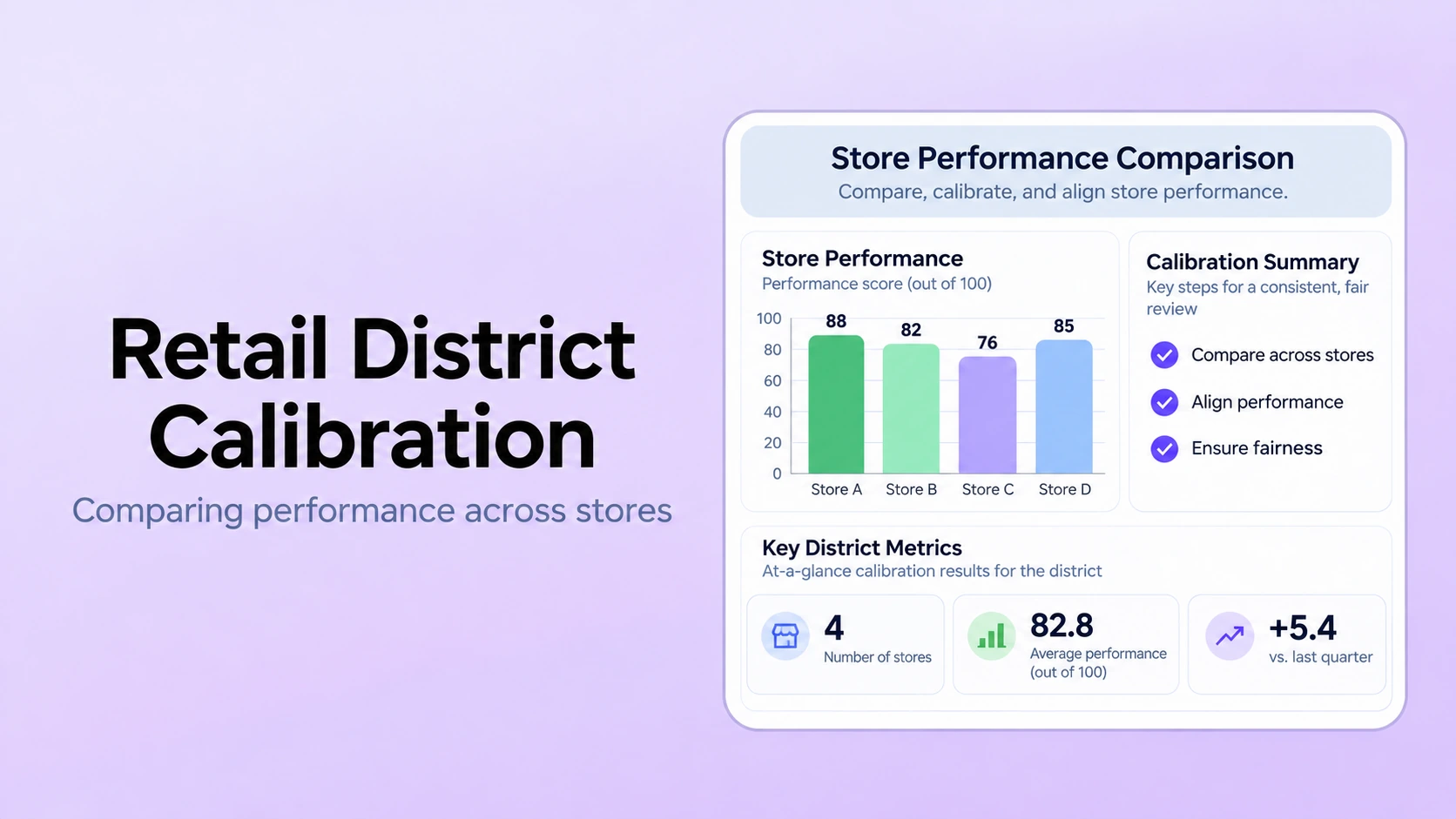
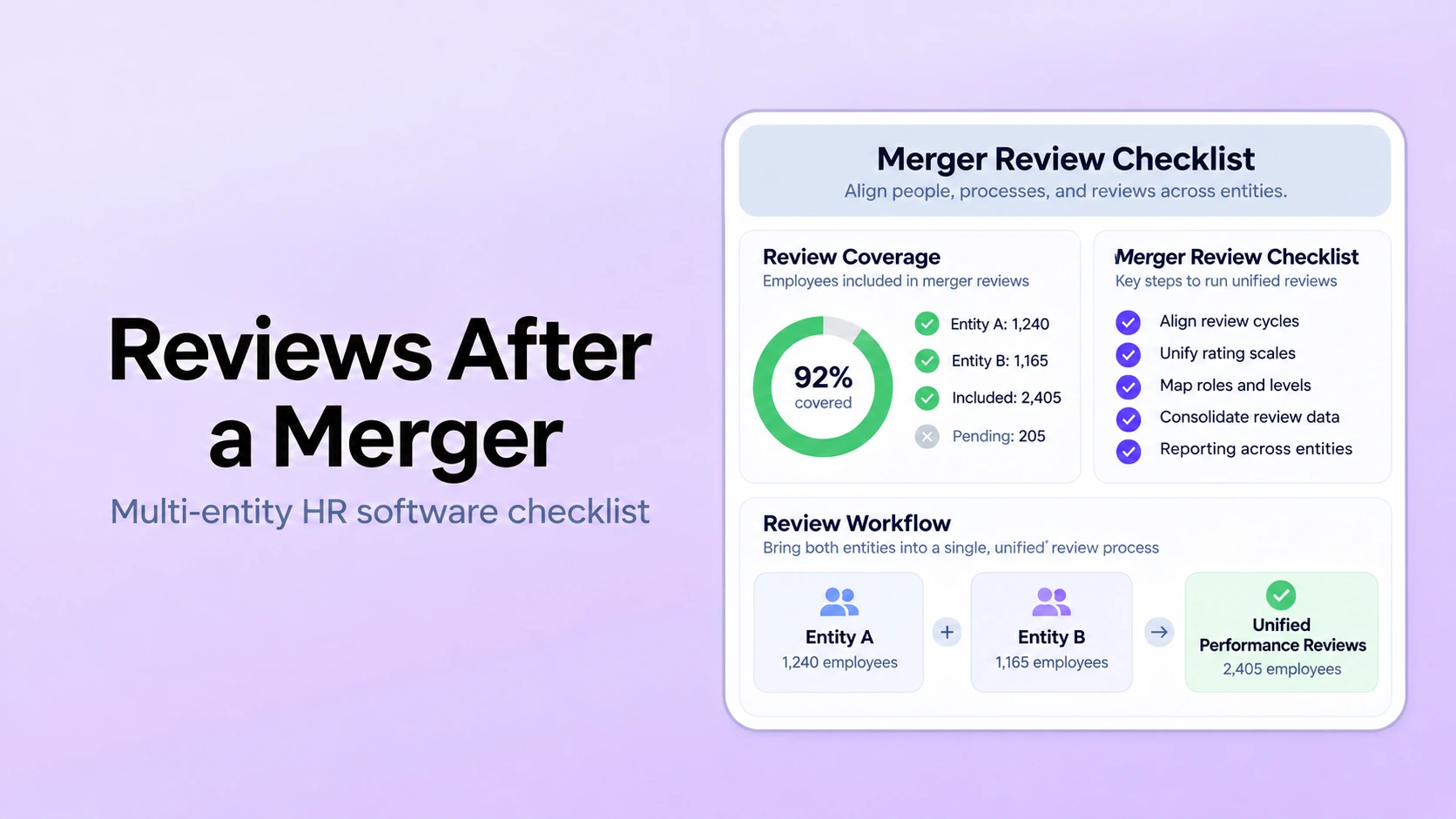
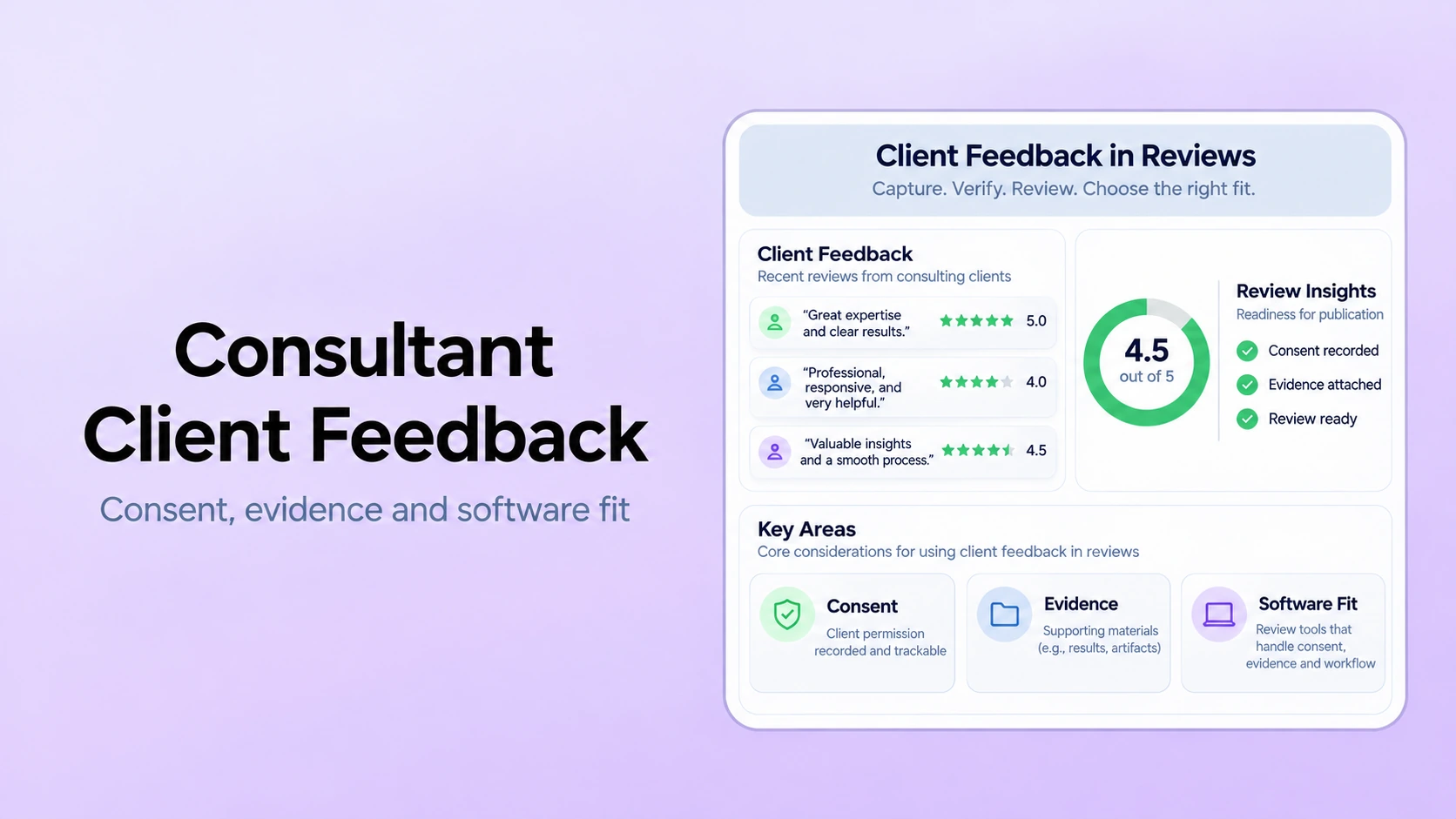
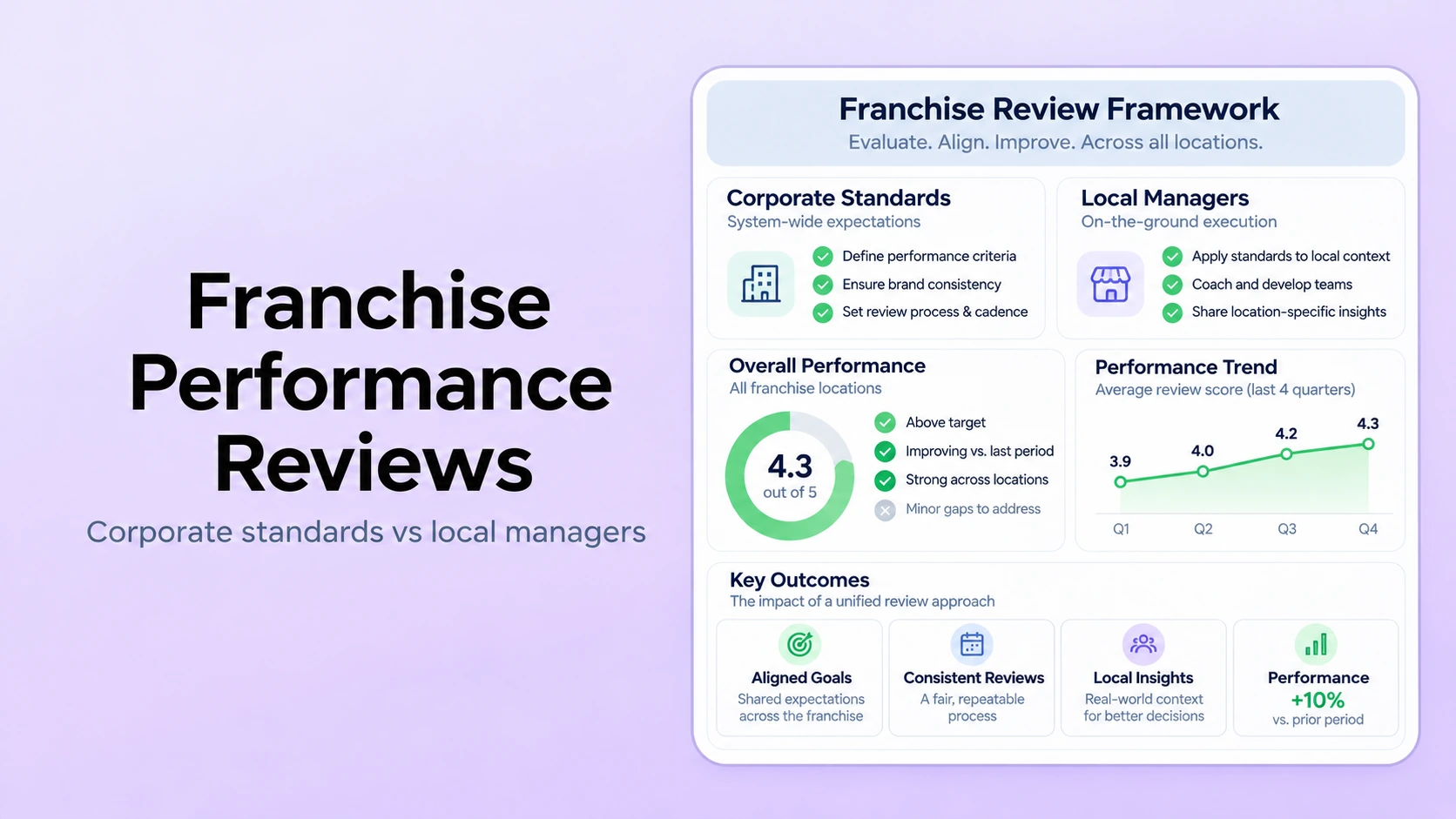
The vendor should make the same scenario work for review creation, local approval, brand audit context, permissions and optional aggregated reporting. Use synthetic personnel records only. The thumbnail's scorecards and improvement percentages are illustrative design content, not evidence of PerformSpark customer outcomes or a promised result.
12 software tests for franchise performance reviews
1. Separate franchise ownership from location and reporting hierarchy
Test: assign Central Square to the corporate employer, Eastview to Alder Foods, and Westbrook to Birch Retail. Show each worker's employing entity, location, direct manager and effective dates. Add a corporate user who oversees brand standards but is not a local personnel approver.
Pass: the vendor can represent each relationship without automatically giving all network administrators access to HR records. A location name should not be treated as the legal employer. Ask whether the organization model is supported natively, through configuration, or through separate environments.
2. Publish common standards without rewriting local evaluation policies
Test: create a proposed customer greeting and service escalation competency for the network, then apply the relevant parts to two locally approved review templates. Change the network guidance for the next quarter. Pass: previously completed reviews retain the original criteria and dates, while future templates can reflect updated standards after appropriate local approval.
Use role-specific appraisal criteria to define job-relevant expectations. A shared brand requirement is not, by itself, a companywide performance-rating formula.
3. Respect the local manager's final approval authority
Test: have Eastview's store manager enter a firsthand observation for E-202 and complete a locally authorized employee review. Ask the corporate field consultant to view the brand compliance audit separately, then attempt to finalize E-202's personnel appraisal.
Pass: the final approval route follows approved employer policy and franchise arrangements. The field consultant cannot acquire employment-review authority merely from being a senior brand account. Confirm exceptions with the parties' actual documents and legal advisers.
4. Keep brand audit results separate from individual employee evidence
Test: record a fictional poor service-audit finding at Eastview and an employee observation showing that E-202 followed the approved escalation procedure during a supply problem. Open the employee review and ask how the two records relate.
Pass: the reviewer can consider relevant circumstances without automatically assigning every worker a low score from the location audit. A site-level customer experience result may reflect staffing, equipment, allocation or policy factors outside one employee's control. Separate store compliance and authorized personnel evidence.
5. Apply role-based visibility across independent franchisees
Test: sign in as Birch Retail's manager and attempt to view Eastview's confidential reviews, HR responses and development plans. Repeat as the corporate field consultant and an explicitly authorized network reporting user.
Pass: access is limited to the roles, employers and data-sharing arrangements actually approved. Aggregated reporting is not a blanket license to inspect named employee records. Test the specific security and permissions configuration and the scenarios in our confidential review permissions checklist.
6. Handle local staffing, language and review timing differences
Test: Central Square runs quarterly check-ins and annual reviews. Eastview uses a different employer-approved cycle, while Westbrook has seasonal employees with shorter assignments. Ask whether common competencies can coexist with distinct schedules and permitted forms.
Pass: the tool does not create duplicate final reviews or inappropriate corporate deadlines for a separate employer. Review the multiple review-cycle buyer guide and check whether smart notifications reach the authorized owner, not the wrong corporate mailbox.
7. Preserve local coaching and employee response rights
Test: the Eastview manager documents an observed service interaction, invites E-202's response and creates a coaching action. The corporate field consultant sees only the permitted brand-level information. Ask what happens if E-202 disputes a factual statement.
Pass: the local employer's review preserves the observation, employee response, corrected facts and approver history. A suitable manager check-in or development plan can own the follow-up if demonstrated. Do not assume the franchisor may open a formal employee improvement process.
8. Handle employee transfers between independently operated locations
Test: E-202 leaves Alder Foods and is later hired by Birch Retail. Ask whether a prior employee review moves, remains with the prior employer, or can be shared by an explicitly authorized process under applicable agreements and law.
Pass: the software does not merge independent employers' personnel records merely because the worker has the same name or network ID. Any approved sharing requires verified identity, appropriate purpose, permissions and retention rules. Cross-check multi-entity HR record governance, recognizing that an inter-franchise job move is not necessarily a corporate merger.
9. Distinguish feedback from corporate brand advisers and local observers
Test: have a field consultant submit a brand compliance note, a local manager record firsthand employee behavior, and a peer contribute optional work-related feedback. Ask how each source is identified, disclosed and evaluated.
Pass: source attribution remains intact and the person authorized to make the employee decision can explain the relevance of each item. Feedback and surveys and 360-degree feedback are product areas worth evaluating; they do not automatically grant external franchise users access to protected reviews.
10. Correct ratings and manage complaints within the right employer
Test: E-202 disputes a low rating attributed solely to a brand audit during a supplier shortage. Ask the local authorized manager and HR reviewer to inspect evidence, record the response and follow their approved correction process.
Pass: the audit history identifies who changed the rating, why and when. The EEOC's guidance for evaluation complaints recommends prompt, thorough and impartial handling of potential discrimination concerns. A franchisor brand escalation channel should not automatically replace the local employer's required personnel or legal process.
11. Report network trends without misrepresenting local employee data
Test: create two employees at each of the three locations, including one unfinished review and a manager with two feedback entries. Generate a company-owned report, a franchisee-level report and a corporate network view restricted to data the relevant operators have approved for sharing.
Pass: the network report distinguishes participating locations, review records and unique employees; aggregate metrics show a meaningful denominator and scope. Named personnel details are withheld where not authorized. Validate with reporting and analytics and our reporting reconciliation demo tests.
12. Demonstrate onboarding, exit, ownership changes and exports
Test: add a fourth franchise location, terminate a field consultant's access, replace a local store manager and export a franchisee's authorized review records at contract exit. Ask how policy versions, data ownership, permissions and audit logs are retained.
Pass: the operator can identify which records belong to its employer and export them in a documented format, while access and continuity survive legitimate organizational changes. The integration options should be verified for each HRIS, franchise directory or data-import workflow. A generic API claim does not prove a specific connector or tenant-isolation capability.
Franchise Performance Reviews
Test local manager reviews without exposing franchise HR records
Bring a corporate-owned location and two independently operated franchisees to a demo. Check review authority, shared criteria, permissions and reporting in the current product.
How to score a franchise performance software demonstration
Use three evidence categories for each of the twelve tests: Demonstrated when the proposed user roles successfully complete the full scenario; Conditional when configuration, a partner system or an approved manual step is necessary and documented; and Not demonstrated when the vendor describes a feature without showing it.
Make unauthorized cross-franchise access, unclear final-review authority, lost source history and irreconcilable employee reporting hard gates. A vendor should not pass just because its dashboard can filter by franchise location. Record whether the evaluation uses one tenant, different accounts or another architecture, and who administers the rights.
In a controlled software pilot, test the same scenario with an actual representative local operator and approved fictitious records. Have legal and security teams review data-sharing and employment-control assumptions before inviting independent franchisees to participate.
Four implementation decisions to settle before rollout
- Define the decision rights. Document which network expectations are mandatory under agreements, what is optional guidance, and which employer owns employee review, response and retention decisions.
- Approve data-sharing boundaries. Separate corporate brand audit data from named personnel data. Specify who may access aggregates, under what conditions, and whether cross-operator transfers allow any prior records to be shared.
- Configure and test the review workflows. Validate local templates, time zones, relevant language and accessibility needs, deadlines, author attribution, employee acknowledgment, reminder routing and local manager approval.
- Reconcile and monitor. Check participation rates and denominators, review overdue tasks, inspect permission exceptions and validate export behavior before wider rollout.
Organizations that operate both corporate and franchise locations may need different workflow branches. The purpose is not to prescribe a single network-wide personnel policy but to make each party's responsibilities and the applicable common expectations transparent.
What should franchisor and franchisee buyers ask in the RFP?
- Can your system distinguish independently owned franchisees, corporate-owned units, legal employers, locations and authorized reviewers?
- Can network guidance be distributed without giving headquarters control of local personnel ratings by default?
- Can local managers adopt relevant common competency criteria while preserving their own approved review cycles and history?
- How are brand audits separated from employee-specific observations, ratings and confidential HR notes?
- Which users can read, change, export or approve records across franchisee ownership boundaries?
- How is employee identity and record transfer handled when a worker moves between separate franchise businesses?
- Can the system show local and network-wide reporting only within agreed sharing permissions, with clear denominators?
- What costs and limitations apply to separate environments, integrations, permission configuration, exports and contract exit?
Use this franchise-specific list alongside the broader performance management software RFP checklist. It should help buyers distinguish software convenience from employment authority. The actual franchise agreements, organization structure and applicable legal requirements control what access and decisions may be appropriate.
Where PerformSpark fits in franchise performance management
PerformSpark presents product pages for performance reviews, goals, feedback, manager check-ins, calibration and reporting and analytics. Those product areas make it relevant to evaluate for a distributed franchise workforce. They do not, on their own, establish that every separate-franchise tenant, network permission, location-specific policy, franchise employee transfer or aggregate reporting rule described here is supported out of the box.
Ask the PerformSpark team to demonstrate Harborline Eats with the corporate, Alder Foods and Birch Retail user roles. Request clear documentation of current capabilities, configuration, data-sharing prerequisites, unavailable features and any third-party dependencies. A successful software demo must show who can not see a record, as well as who can complete the review.
Final recommendation: standardize expectations without assuming common employment authority
Franchise performance reviews work best when brand expectations are clear and local managers retain the responsibilities actually assigned to them. HR systems should connect role-relevant feedback, consistent standards, coaching and reporting where permitted, without turning brand oversight into unauthorized personnel control.
Use the twelve tests to verify the proposed design before implementation. Focus on approved review ownership, meaningful evidence, franchise-to-franchise access boundaries, accurate reporting and a practical export path. This guide is educational, not legal advice; use qualified counsel for franchise employment and data-sharing decisions.
Franchise and Multi-Location HR Teams
Evaluate performance reviews across your franchise network
Explore performance reviews, feedback and reporting with PerformSpark. Bring the twelve franchise software acceptance tests and verify real configuration and permission boundaries.
Book a PerformSpark Demo →Bring your three-location franchise evaluation scenario