






Table of Contents

Key Takeaways:
- Define each review cycle's purpose, employee population and assigned reviewer.
- Test overlapping annual, new-hire and project reviews with sample employees.
- Verify supervisor changes, due dates and reminders without losing review history.
- Calculate completion by cycle and distinguish employees from review assignments.
- Compare vendors with eight demonstrations and clear permissions checks.
Multiple performance review cycles software lets HR coordinate different review schedules for distinct employee groups without losing track of assignments, feedback, deadlines or completion. A buyer should test how the system handles employees assigned to two cycles, different review templates, late or changed due dates, reviewer transfers, and reports that keep each cycle's population separate.
Consider a hypothetical organization where corporate employees complete an annual assessment, new hires have an early milestone review, and a project team also runs a quarterly reflection. One employee is assigned to the annual and quarterly processes in the same month. The goal is not to send that person two indistinguishable forms or mix the results into one unexplained rating. It is to keep the purpose, evidence, owner and deadlines of each process clear.
This article is a buyer's guide to software for multiple review cycles. It focuses on configuration and workflow tests, not advice on whether quarterly or annual reviews are universally better. For that separate question, see the existing annual versus quarterly review frequency guide. For a product overview, see PerformSpark's performance review software page.
What counts as a separate performance review cycle?
A performance review cycle is a defined process with an eligible employee group, purpose, steps, reviewers, dates, and rules for completing the assessment. Multiple cycles may run simultaneously, but that does not mean every conversation should become a formal appraisal. CIPD's 2026 performance management factsheet describes ongoing objectives, feedback, reviews, and development as connected but different practices.
Compare review cycle types by purpose, owner and evidence
- Annual formal reviews: typically assess a defined performance period and may inform developmental or organizational decisions. Test full-history access, manager assessment and any required sign-off.
- Mid-year development reviews: examine progress, shifting responsibilities and support needs. Test whether development notes can inform the annual review without becoming an unintended second final rating.
- Quarterly performance snapshots: focus on shorter-term results or changing goals. Test a lighter template and distinct deadlines instead of duplicating a lengthy annual form.
- New-hire or probationary checkpoints: target an employee-specific employment milestone. Confirm eligibility dates, supervisor ownership and policy requirements. An organization should not assume all employees have identical probation arrangements.
- Project-based reviews: collect relevant feedback when an engagement ends, often from a project lead who is not the employee's line manager. Confirm access rights and whether the input feeds a separate annual decision.
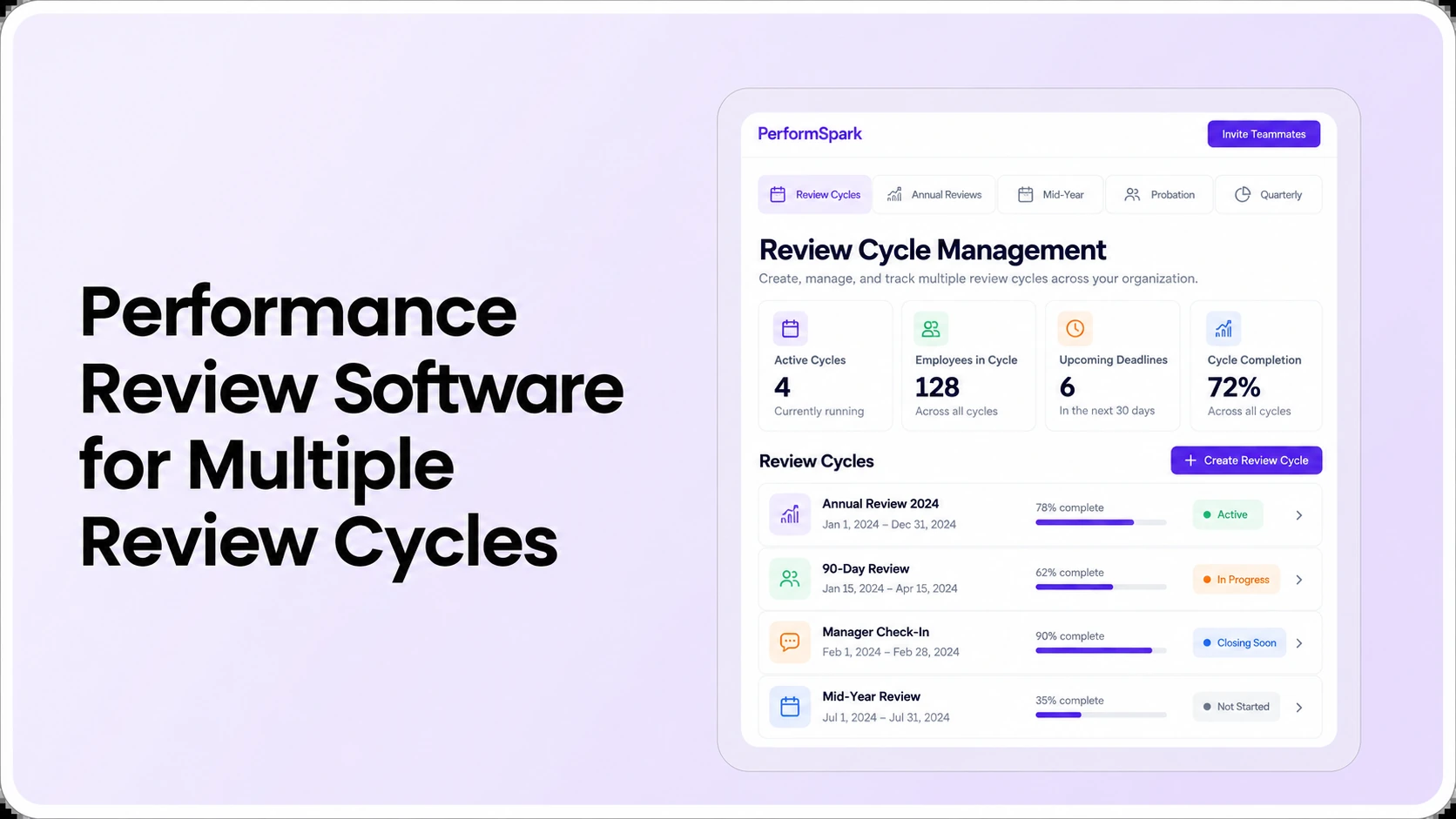
This role-and-purpose comparison works as a practical checklist. It is not a claim that every listed process is enabled by default in every vendor plan. PerformSpark's published review cycles overview mentions annual, quarterly, project-based, mid-year and probation review workflows, but your actual configuration and approval requirements still need testing.
Six capabilities to test in multiple review cycles software
1. Eligibility rules for different employee groups
Before configuring a cycle, HR needs to define who belongs in it. An annual review might include eligible active employees as of a cutoff date, while a new-hire cycle could start from an individual's hire date. Ask whether eligibility can consider employee group, role, team and approved exceptions without manually rebuilding each list.
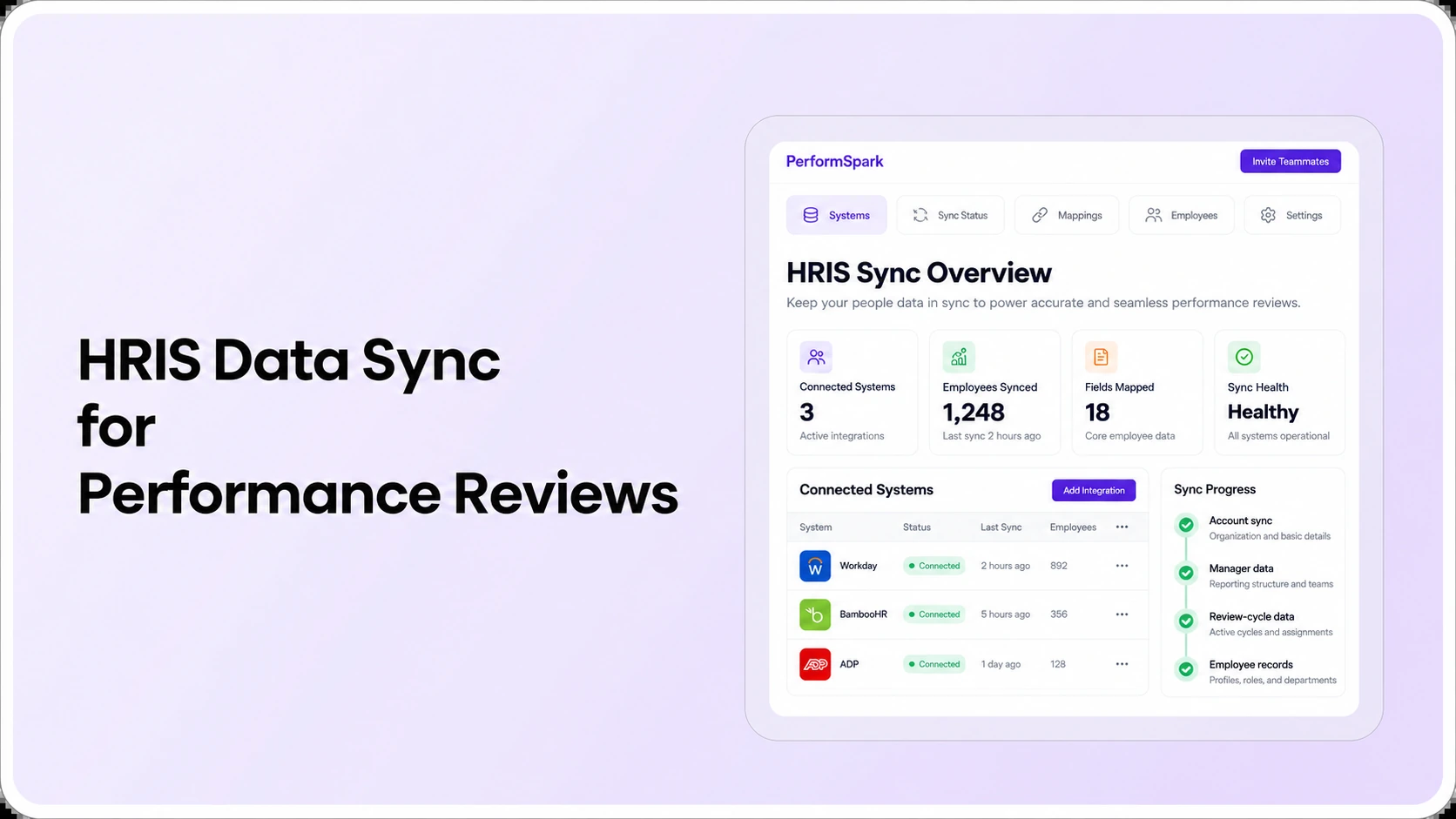
In the demonstration, add a newly hired employee who should receive an onboarding milestone review but not a full-year annual rating. Confirm the task list and absence of accidental duplicate invitations. Check how eligibility is maintained through the employee data integration workflow and verify that the actual HRIS connection supports the fields your organization needs.
2. Distinct templates without inconsistent assessment standards
Some cycles need different questions. Quarterly discussions may emphasize short-term progress; formal annual appraisals might require additional evidence or a manager assessment. Use shared definitions where employees hold comparable roles, but do not compare ratings from substantially different rubrics as if they were interchangeable.
Review goal tracking alongside the appropriate performance review template. If an employee's objectives change in the middle of a period, ask how the system distinguishes current goals from historical goals used to assess previous work. Document who may edit templates once a review is active.
3. Overlapping assignments that remain understandable
Run the hardest case: one employee has an open annual self-review, a quarterly conversation and a pending project assessment. Do the employee and manager see three clearly named tasks, or are they confused by several messages that appear to describe the same work?
Check whether relevant evidence can be referenced without being blindly copied between cycles. One review's final outcome should not automatically overwrite another process without an approved rule. The organization should decide which conversation owns development follow-up and which has consequences for formal decisions.
4. Reviewer changes, deadlines and reminders
The right reviewer can change when employees move departments, a project ends or a manager leaves. Test the treatment of work already submitted and of drafts still awaiting review. Ask who may reassign a task, whether employees receive a corrected notification and whether authorized historical notes remain available under policy.
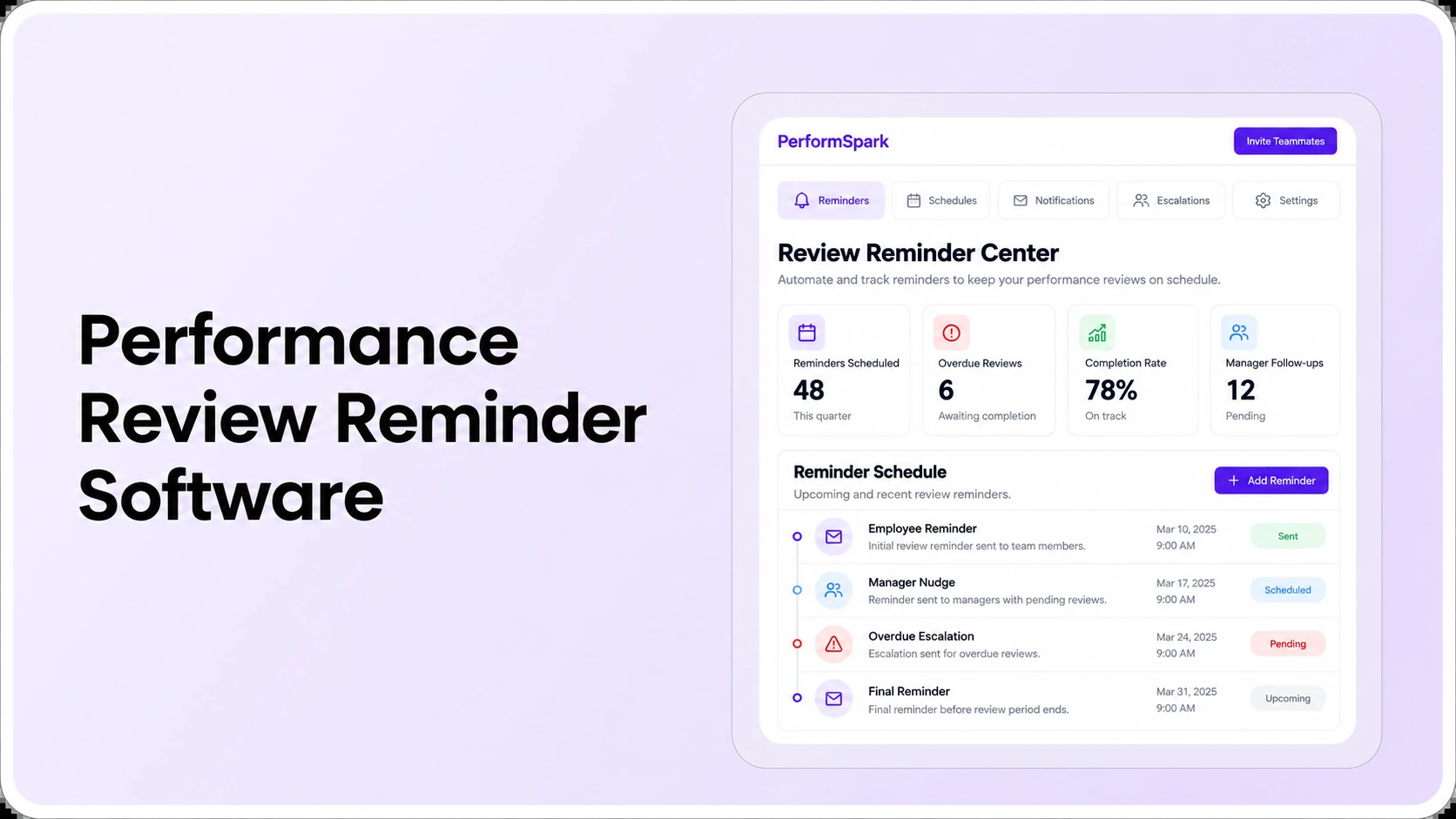
A live demonstration of smart notifications should include a changed deadline and a completed review. Check whether obsolete reminders stop and whether an overdue task is visible to HR. For detailed buyer tests on triggers and escalation, see the separate review reminder software guide; this article remains focused on managing several cycles together.
5. Reporting with cycle-specific denominators
HR needs to distinguish an assignment count from an employee count. If the same employee appears in an annual and quarterly cycle, that could represent two review assignments but only one person. Reports must make their unit of measurement explicit.
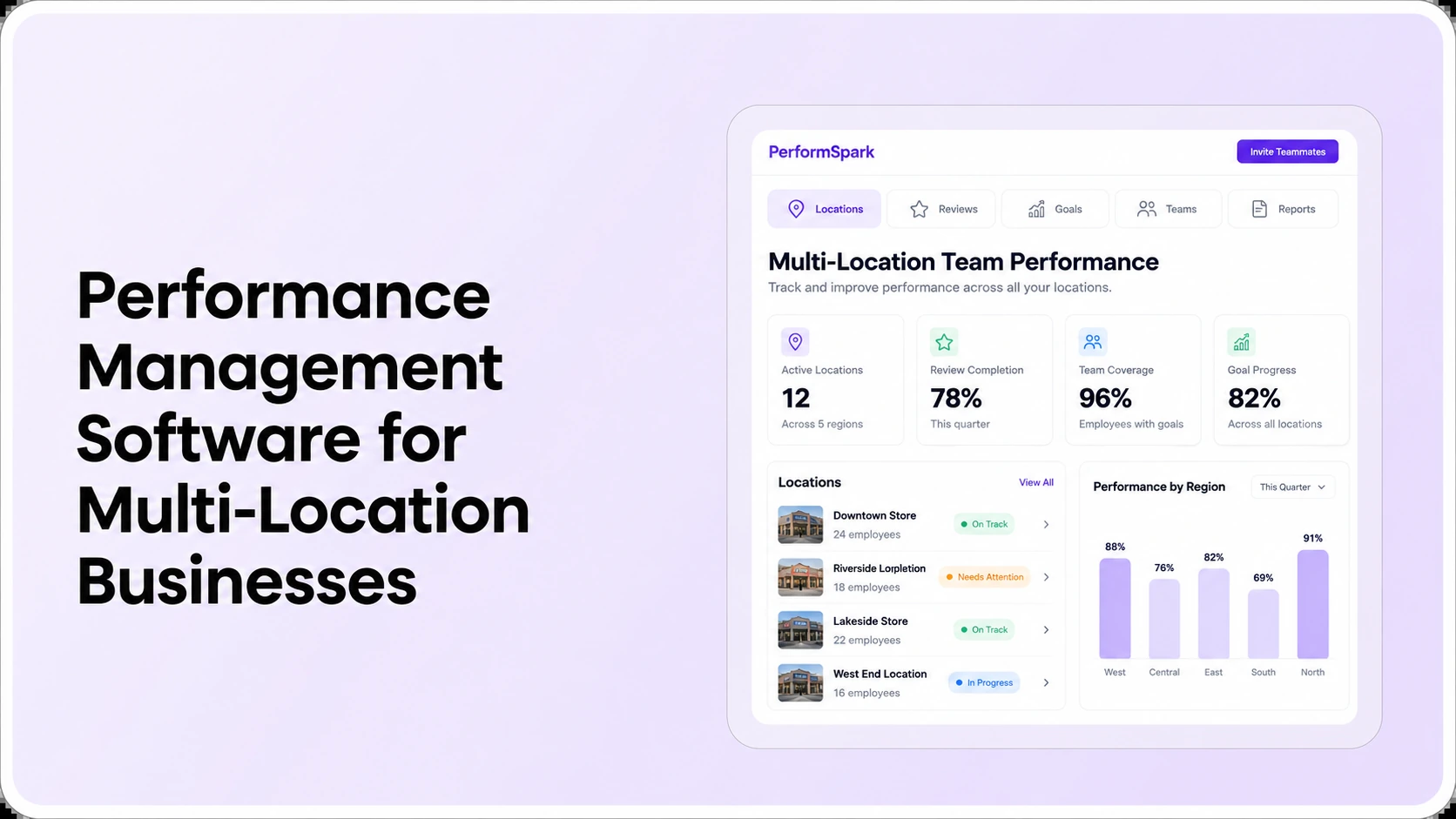
In performance reporting and analytics, test filters for selected review cycle, manager, employee group and due date. Ask whether a closed cycle retains its historical counts after team changes. If a rating summary draws from different templates or timeframes, demand the definitions before a leadership presentation.
6. Development and next-cycle continuity
A meaningful review does not end when HR closes a task. The conversation may generate a coaching action, adjusted objective, or learning priority. Test whether a manager can move that action into an individual development plan and return to it through manager check-ins and 1-on-1s.
Formal performance improvement plans have different procedural purposes from ordinary development conversations. Buyers should not assume an annual review, a new-hire checkpoint and a corrective process share the same approvals or confidential fields.
Example: How should HR report concurrent review completion?
Take a fictional pilot with 30 employees. There are 30 annual review assignments and 8 employees also have a separate new-hire or project review, producing 38 assignments. If 24 annual and 6 additional assignments are complete, the correct annual completion rate is 24 ÷ 30 = 80%. Completion across all assignments is (24 + 6) ÷ 38 = 78.9%.
Neither measure says that 30 different employees finished a review. HR should state whether a report measures people, review assignments, or stages of a review. It should also identify exclusions, canceled assignments, open approvals and reporting dates. Those figures are an illustrative calculation, not PerformSpark usage data.
A related reporting risk arises when one manager closes a review while another cycle is still active. Ask the vendor to show whether status changes are limited to the correct cycle and whether historical report exports remain consistent after deadlines or reporting lines change.
Eight vendor demo tests for managing multiple review cycles
Run the same scripted scenarios with each shortlisted vendor. Use fictional employee data. Record an observable result for each test as demonstrated, requires configuration, not demonstrated, or does not meet the requirement. Do not give credit for a yes/no answer without the workflow being shown.
- Two cycle types: configure an annual formal review and a shorter milestone review with different questions and dates.
- Eligibility: enroll one established employee only in the annual review and a new hire only in the milestone process where policy requires it.
- Concurrent enrollment: assign another employee to two cycles at once and inspect every employee and manager task.
- Deadline change: adjust one cycle's due date and inspect assigned tasks and any scheduled reminders.
- Manager transfer: change the supervisor during an active cycle and verify reviewer ownership and confidential record visibility.
- Reporting separation: reconcile completion counts for annual, milestone and all assignments against a known sample population.
- Closed-cycle history: close one assessment while the other remains open and check that statuses and prior responses stay intact.
- Development action: capture an agreed improvement objective and demonstrate how the next appropriate review or check-in references it.
Ask to see the workflow with employee, manager and HR accounts. For sensitive access questions, compare security and permission controls with the actual records each role can view. Where multi-rater input is involved, test visibility separately in 360-degree feedback and feedback and survey workflows.
Review Cycle Evaluation
Test overlapping review cycles before you buy
Bring your annual and new-hire schedules, one overlapping assignment and a manager change. Review the actual tasks, permissions and HR status views.
How to choose review cycle software without overcomplicating HR
A dedicated performance management system, an HRIS module and a structured manual process can all be considered. The decision depends on how many employee groups and schedules you manage, whether the reviewers change often, what reporting is required and whether administrators can reliably maintain the process.
- Manual scheduling: may be adequate when a small team has one or two simple cycles with a dependable owner; assess missed assignments, document access and reporting work.
- HRIS performance module: may reuse core employee data; test support for concurrent cycles, flexible forms, reviewer exceptions and detailed reporting rather than inferring them from existing employee profiles.
- Dedicated review software: may support deeper cycle management and connected goals; compare integration effort, training burden, access controls, and total cost.
Use a simple scorecard: cycle eligibility and configuration (25%), reviewer usability (20%), concurrent assignment and exception handling (20%), permissions and reporting (20%), and implementation and cost (15%). These are illustrative weights, not industry research benchmarks. Set your organization's non-negotiable privacy and policy gates first; a high aggregate score cannot justify failing them.
The software RFP checklist can turn the eight demo tests into vendor questions. For a broader selection process, use the performance software buying guide, then review current PerformSpark pricing information and confirm any project-specific configuration or contract terms directly with the vendor.
Rollout checklist: launch multiple review schedules safely
- Map each cycle: write down its purpose, eligible population, required form, reviewer, opening date, due date and final sign-off.
- Identify overlaps: list where the same employee can appear in more than one cycle and determine what the person should see.
- Set permissions: confirm who may read private notes, edit deadlines, reassign reviewers and export results.
- Check identity data: verify hiring dates, department membership and manager relationships before sending invitations.
- Pilot one collision: use a sample employee with an annual review and a new-hire or project checkpoint at the same time.
- Validate reports: calculate expected completion totals independently before relying on the dashboard.
- Train reviewers: show employees and managers how to distinguish cycles and find their next step.
- Review exceptions: confirm who fixes late tasks, incorrect assignments and inaccurate review populations after launch.
Be careful about fairness when different cycles affect employment decisions. EEOC guidance on performance evaluations advises communicating expectations, applying standards consistently and explaining assessments with relevant facts. A different schedule does not remove the need for fair, job-related expectations. For consequential decisions, involve qualified HR leadership and legal counsel as appropriate; this article is educational, not legal advice.
Mistakes that create confusion across concurrent reviews
- Using one template for every purpose: an onboarding checkpoint and annual assessment often ask different questions.
- Duplicating the same long form: repeating a complete annual assessment each quarter can create avoidable review work.
- Assuming two assignments mean two employees: mixed denominators can distort completion reporting.
- Overwriting closed reviews: history and previously communicated ratings should be governed by defined retention and correction rules.
- Automating the wrong owner: reminders sent to departed managers will not fix the underlying reporting-line error.
- Conflating feedback with ratings: regular coaching or project feedback should not automatically become a formal score.
- Skipping access tests: peer contributors and temporary project reviewers may not require unrestricted access to the employee's full record.
How PerformSpark fits the multi-cycle software evaluation
PerformSpark's published review documentation describes annual, quarterly, mid-year, project-based and probation cycles alongside centralized review workflows. Its performance management platform connects reviews with goals, feedback and development. These descriptions provide a relevant starting point, but they do not prove that a specific approval sequence, concurrent enrollment rule or HRIS integration works in your exact configuration.
Bring two actual cycle requirements and one overlapping-employee scenario to the demonstration. Ask to see the tasks, notifications, access boundaries and cycle-specific HR reporting views that matter to your team. Record configuration questions before treating a capability as confirmed.
Multiple Review Cycles
See how PerformSpark handles your review calendars
Walk through concurrent review cycles, reviewer assignments, due-date changes, reminders and cycle-specific reporting with your own criteria.
Book a PerformSpark Demo →Bring your annual and new-hire review scenarios