
Performance Management Built for How IT Services Teams Actually Work
Run project-aligned review cycles, compare rating patterns across client accounts, connect certification milestones to development plans, and review manager check-in activity.


Concurrent review cycles by practice area
Partner-track and staff-track IDP configurations
Review account visibility and rating patterns together
.svg)
IT Services vs. SaaS — Why These Are Different PM Environments
Platforms built for product-focused tech companies were designed for OKR-driven engineering sprints and continuous deployment cadences. IT services firms and MSPs run on project-based billing, client relationship metrics, and service delivery accountability — a different environment that needs a different review framework.

SaaS / Product Companies
IT Services / MSP
SaaS / Product Companies
IT Services / MSP
SaaS / Product Companies
IT Services / MSP
SaaS / Product Companies
IT Services / MSP
SaaS / Product Companies
IT Services / MSP
SaaS / Product Companies
IT Services / MSP
SaaS / Product Companies
IT Services / MSP
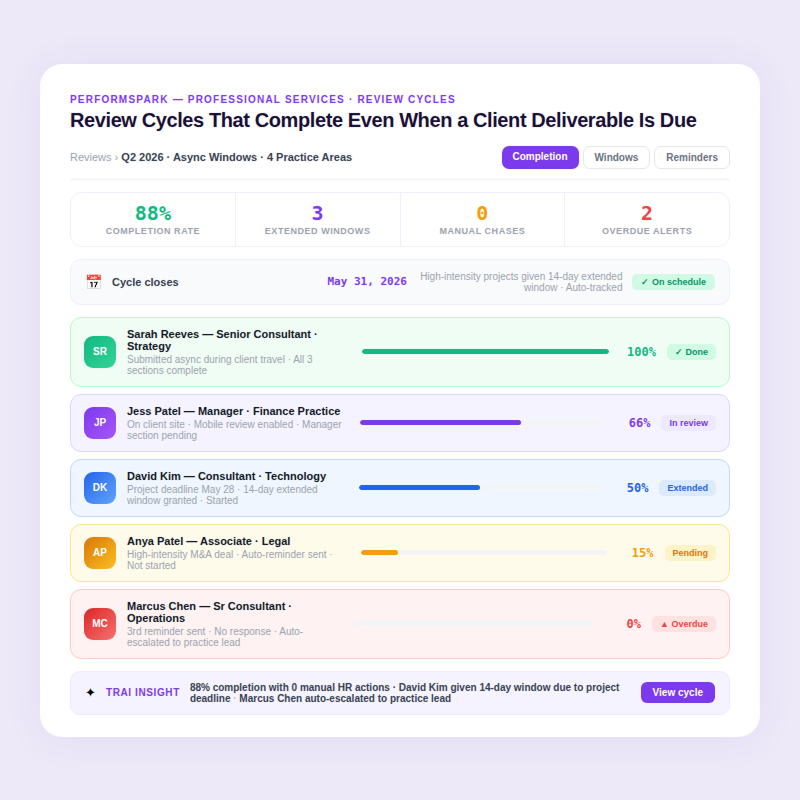
Project-Based Teams Do Not Fit Calendar-Year Review Cycles
IT services engagements run on client timelines, not organizational ones. A team assembled in March for a 9-month engagement dissolves in December. A team assembled in September is mid-project when a calendar-year cycle launches, reviewed on incomplete evidence, mid-deliverable.

The Client-Account Halo Effect Quietly Skews Every Calibration Session
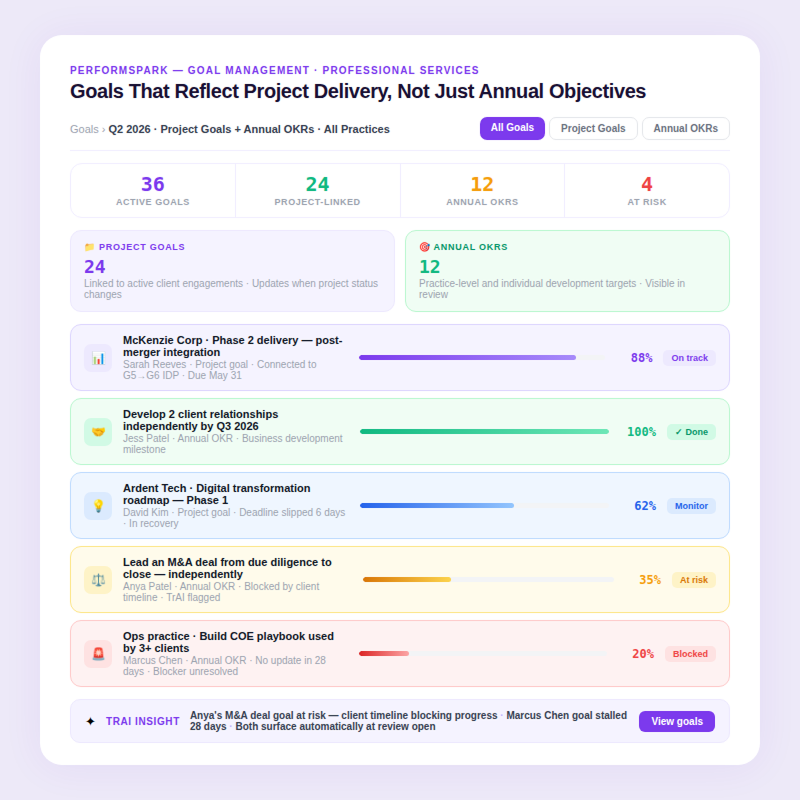
Engineers on a firm's largest or most strategic accounts get more management attention, more leadership opportunities, and more positive visibility than engineers on smaller engagements. Managers rate the visible engineer more generously, regardless of whether the underlying performance quality is actually higher. The problem compounds when the practice manager is also the account manager on the flagship engagement.
Technical Certifications Are Development Obligations, Not Optional Extras
A Microsoft-certified practice needs engineers with current MCSE credentials. An AWS-focused MSP needs certified cloud architects. A cybersecurity services firm needs CISSP-certified staff. In most IT services organizations, this lives in a spreadsheet, managers aren't reminded, and lapses surface in a capability report, not a coaching conversation.
PerformSpark connects certification renewal milestones to IDP records and surfaces them in check-in agendas, so the coaching conversation happens before the lapse risk, not after.
Keep Manager Check-in Activity Visible Across Distributed Teams
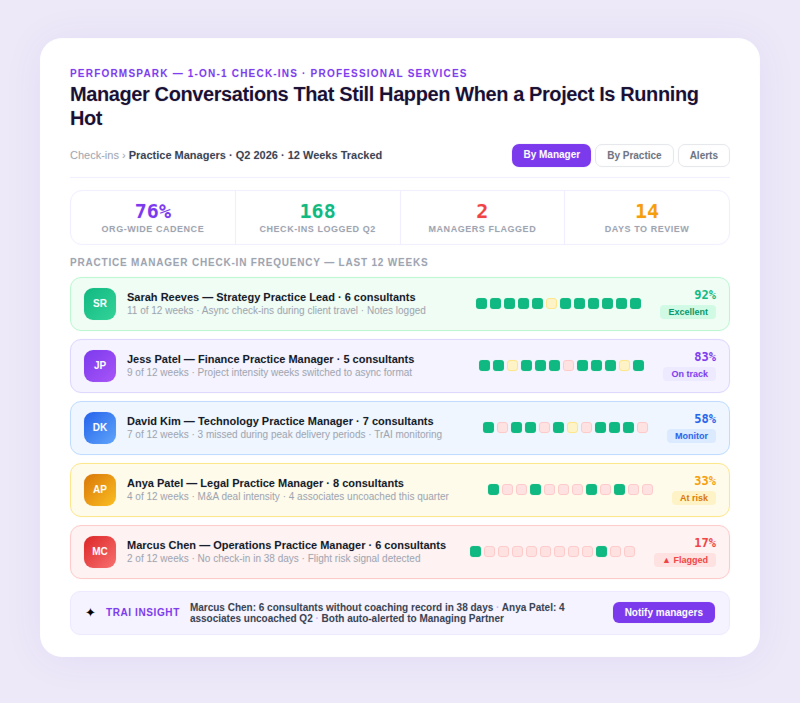
Distributed and client-site teams can make manager activity harder for HR to review. PerformSpark can track configured check-in cadence and surface overdue or missed workflow activity. A cadence change is a prompt for human follow-up, not evidence that an employee will resign or that a manager caused a retention risk.
IT Services, MSPs, and Software Development — Different Subcontexts, One Platform
IT companies aren't one buyer persona. PerformSpark configures around how your firm actually delivers work.

IT Services Firms
Consulting, system integration, and digital transformation engagements have the client-account halo effect most acutely - especially where the practice manager doubles as the account lead. Most valuable for firms with 5+ practice managers running concurrent engagements. 360 feedback from client stakeholders can become structured performance evidence, not just an informal note.
.svg)
Managed Service Providers
Help desk and L1/L2 support need both quantitative metrics (resolution time, ticket closure rate, CSAT) and qualitative assessment (communication, escalation judgment, client relationship management), in the same review. Engineers serving multiple clients simultaneously make the 1-on-1 the manager's only full window into the week.

Software Development Firms
Custom development and IT outsourcing sit between IT services and SaaS, project-based structures like IT services, but review criteria closer to product engineering: code quality, delivery cadence, technical judgment, and collaboration with client product teams. Competency-based and project-outcome reviews run in the same cycle.

FAQs
Your questions answered
Have questions about PerformSpark? Here are some of the most common queries to help you get started.
Ready to Manage Performance Fairly and Effectively?
Create structured, transparent PIPs that guide improvement and protect your organization.
What is performance management for IT companies?
Is IT performance management different from performance management for tech companies?
What is the client-account halo effect in IT services performance management?
How does CPE tracking connect to performance management?
How should IT companies track technical certification requirements in performance management?
How does TrAI help IT companies with performance calibration?
PerformSpark works across every industry in your sector

Financial Services
Compliance-aware performance cycles for investment firms, advisory practices, and regulated financial organizations.

Professional Services
Project-based review cycles for consulting, legal, and professional services organizations with billable client teams.
.svg)
IT Companies
Client-account halo detection and certification tracking for IT services firms and managed service providers.
.svg)
Healthcare Organizations
Shift-schedule-aware pulse surveys and burnout signal tracking for clinical and administrative healthcare staff.

Make performance reviews your growth lever
No credit card required • Setup and training included • Annual contract minimums may apply



.svg)

.svg)
.svg)