






Table of Contents

Key Takeaways:
- Evaluate production, maintenance and quality roles using job-relevant evidence.
- Test shift changes and supervisor reassignment during unfinished reviews.
- Keep employee assessments separate from plant-wide output and safety incident metrics.
- Validate completion reporting by plant, department, manager and review cycle.
- Use eight live vendor tests and verify permissions, development and integrations.
Manufacturing performance management software should make employee reviews practical for production, maintenance, quality, and plant leadership teams without reducing individual performance to output numbers. The best buying test is a complete supervisor workflow: job-specific expectations, evidence captured during normal work, a fair review conversation, development follow-up, and reporting that HR can reconcile.
Imagine an operator on a production line, a quality technician investigating defects, and a maintenance supervisor planning preventive work. All contribute to reliable operations, but they influence different results. Giving every employee the same numerical productivity target would ignore differences in job responsibility. This is an illustrative example, not a PerformSpark customer case or proof of business results.
This guide helps plant HR managers and operations leaders evaluate manufacturing employee performance review software. It concentrates on shift-based supervision and practical software selection rather than treating the performance platform as a manufacturing execution, quality, safety incident or training compliance system. Review PerformSpark's performance management platform for product context and the broader software buying guide for general procurement criteria.
Why do manufacturing teams need role-specific performance reviews?
Manufacturing work is interdependent. A production operator can follow standard procedures and identify an abnormal condition while overall line throughput falls because of a machine fault. A quality technician may uncover a recurring issue that temporarily slows output but prevents future defects. A maintenance technician may spend a shift addressing equipment problems that were not under that person's control.
Managers therefore need evidence about assigned work, communication, escalation, improvement and agreed job expectations. A structured performance review can support consistent conversations, while goal management provides a place to discuss objectives appropriate to the role. Neither tool should be used as a substitute for a plant's operating, quality or EHS records.
Performance review discussions should distinguish personal conduct from team or equipment outcomes. For example, "reported a machine fault promptly and followed the escalation procedure" is a more specific employee observation than "line output was below plan." HR should review any assessment criteria that could penalize an employee for conditions outside the person's influence.
Manufacturing role comparison: What should supervisors evaluate?
Start with a role-to-evidence map. This comparison is intended as a procurement worksheet and can be adapted to job descriptions, collective bargaining arrangements, company policies and local requirements. It is not an approved rating model for all manufacturing employers.
- Production operator: correct execution of assigned procedures, quality checks within the role, communication of abnormalities and appropriate teamwork. Useful evidence: dated examples of work practices and supervisor coaching.
- Quality technician: accurate inspection activity, clear documentation, investigation participation and effective escalation. Useful evidence: relevant quality tasks, findings and follow-through, not merely a raw defect count.
- Maintenance technician: preventive work responsibilities, fault diagnosis within assigned duties, coordination and documentation. Useful evidence: work-order context, observed practices and development needs.
- Production supervisor: coaching, fair workload allocation, staff communication, appropriate escalation and review completion. Useful evidence: manager check-ins, team support and documented leadership behaviors.
- Plant HR or people leader: consistent reviewer assignments, fair evaluation procedures, privacy, completion reporting and access to agreed development outcomes. Useful evidence: cycle status and policy adherence rather than individual machine-output totals.
The same organization can use clear, comparable rating definitions while tailoring competencies to different jobs. When purchasing software, create sample forms for three of these roles and ask the vendor to demonstrate whether HR can change job-specific questions without breaking common review governance.
Six software capabilities to evaluate in a plant environment
1. Supervisor workflows that work across shifts
A shift supervisor may manage workers on different schedules and spend little time at a desk. Ask how assigned reviews appear, whether progress can be saved and how a supervisor returns to an incomplete assessment. Test the experience using the actual devices and authentication methods permitted by the organization. Do not assume every employee has a company email address or an always-available computer.
The key software question is whether manager check-ins and one-on-ones and the final assessment can reflect useful feedback without requiring duplicate entry. A quick observation during the quarter should not vanish simply because a manager changes shifts.
2. Job-specific templates with shared rating definitions
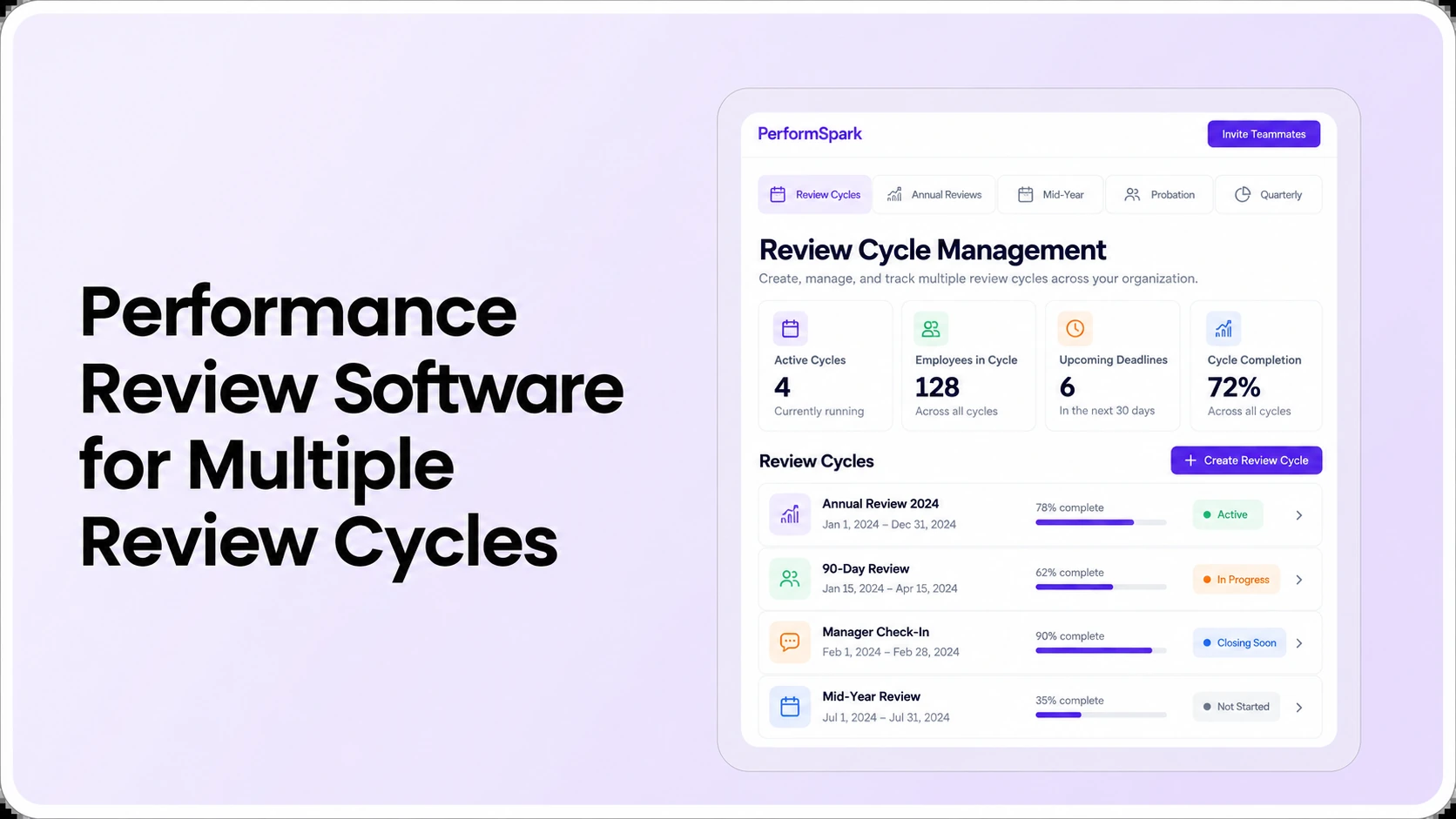
A manufacturing review template should make it clear what a person is expected to do. Some questions may apply across roles, such as communication or collaboration, while others should follow the actual job. Test how performance calibration helps HR discuss inconsistent rating interpretations across departments without imposing arbitrary quotas or replacing professional judgment.
Request a sample review for an operator, a maintenance technician and a supervisor. See who can edit the template, whether previously completed records retain their meaning after changes and how the organization would explain the final decision to the employee.
3. Feedback and development between annual appraisals
A formal review becomes more useful when managers can refer to prior conversations rather than reconstructing months of work. Assess whether employee feedback is appropriate for specific situations and whether a coaching discussion can lead to a tracked individual development plan.
For serious performance concerns, distinguish ordinary coaching from a formal performance improvement plan. Employers should apply policy consistently, communicate expectations clearly and involve qualified HR leadership in consequential employment decisions.
4. Transfers, supervisor changes and missed reviews
Manufacturing employees may move between lines, departments, plants or shifts. A transfer can happen while the previous supervisor has an open review. Test who receives the unfinished assignment, who may see historical notes and how HR can resolve a delay. The answer may depend on employer policy and software configuration.
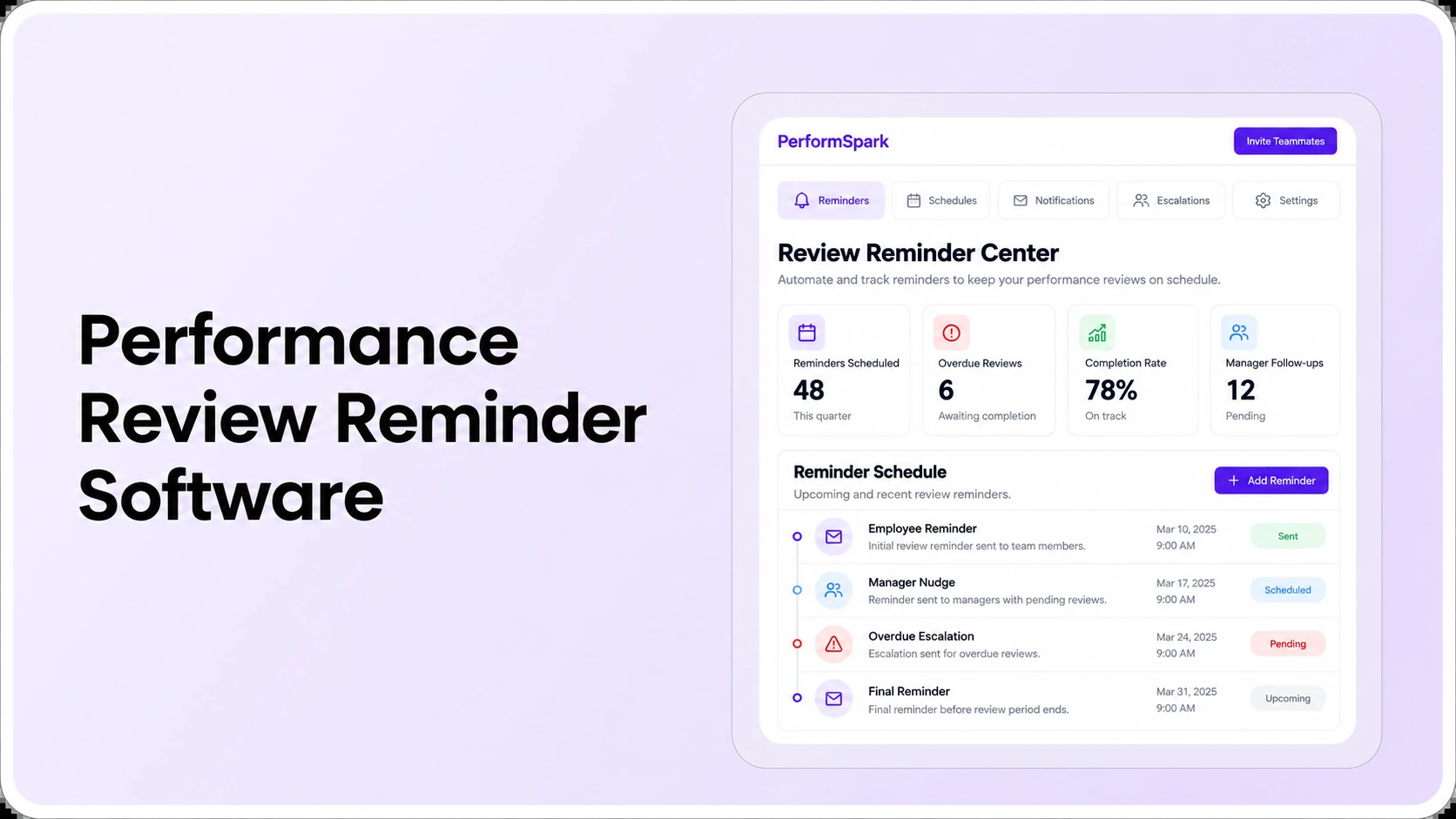
Use review notifications and reminders as part of the test: a message to a manager who no longer supervises the employee will not resolve the task. HR should see the correct current owner and the state of the evaluation before considering escalation.
5. Plant reporting with clear employee denominators
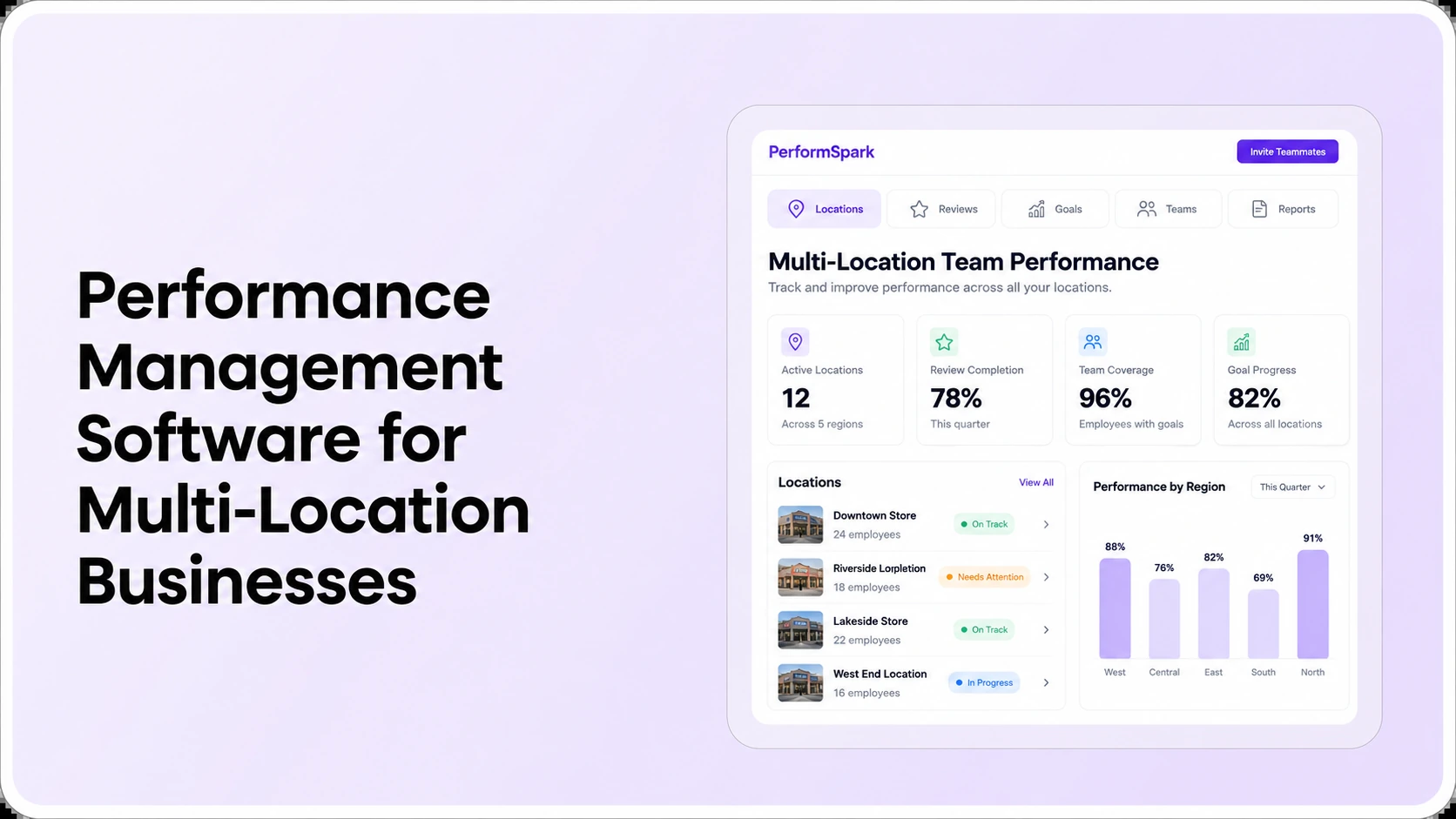
In reporting and analytics, request filters for department, plant, supervisor and review cycle where relevant. Validate completion counts against a known sample. If an employee appears in two review cycles, two assignments should not be presented as two different people without explanation.
Compare review completion across plants carefully. A percentage does not establish whether employee performance, safety practices or coaching quality improved. Use the separate performance review dashboard testing guide to check the definitions, exports and permission limits behind a chart.
6. Permissions, integrations and data boundaries
Plant HR and line managers should see only records their responsibilities require. Check access and data security information with realistic manager and employee test accounts. Ask how user records and reporting lines are maintained through performance software integrations and review the integration catalog for relevant systems. A listed connector is not confirmation that every HRIS field or business rule is supported.
Keep detailed safety incidents and sensitive employee records inside the systems and procedures approved for them. A general employee review platform should not be described as the authoritative safety incident, environmental compliance or manufacturing execution system.
Safety-related performance criteria: A critical manufacturing HR safeguard
Manufacturing evaluations sometimes include attention to safe work practices, but companies should be careful about incentives or ratings that discourage workers from reporting injuries, illnesses or hazards. OSHA's guidance on injury reporting and incentive programs explains that disciplinary or incentive arrangements must not retaliate against workers for exercising their right to report. OSHA's worker-participation guidance also encourages meaningful worker input and reporting of safety concerns.
For example, avoid an evaluation rule that automatically lowers a supervisor's score whenever an employee reports a workplace injury. Instead, work with qualified safety and HR professionals to define legitimate responsibilities such as following established procedures, reporting hazards and responding appropriately to unsafe conditions. The exact policy and its legal implications depend on facts and applicable law; this article is educational, not legal advice.
Ask a software vendor to show that performance criteria can be configured appropriately and that access to sensitive notes follows policy. Do not infer that a generic review dashboard validates a safety program or guarantees any compliance outcome.
Eight vendor demo tests for manufacturing performance software
Use fictional employees in distinct manufacturing roles. Each vendor should demonstrate the same scenarios. Record the outcome as demonstrated, requires configuration, needs verification or does not fit the requirement.
- Role differences: configure operator, quality specialist and supervisor reviews with distinct competencies and shared evaluation definitions.
- Supervisor usability: have a sample production supervisor locate assignments and finish a review without a scripted administrator completing the steps.
- Shift transfer: move an employee to a different shift during a review and inspect task ownership and historical feedback visibility.
- Manager departure: reassign an unfinished assessment when a supervisor leaves the department.
- Evidence quality: compare a specific behavior-based observation with a plant-wide productivity figure and inspect how each is documented.
- Development handoff: turn relevant feedback into an improvement action and verify that the responsible person can find it later.
- Overdue and plant reporting: simulate an overdue review, then reconcile department and supervisor completion counts from sample records.
- Permissions and exports: check that unauthorized users cannot read an unrelated employee review and that exports follow the intended access rules.
A useful demonstration ends with a gap log rather than a list of vendor promises. Teams can adapt the performance management software RFP checklist to capture unanswered questions, must-have workflows and written product confirmations.
Manufacturing Reviews
Test plant supervisor reviews with real scenarios
Bring three example roles, a shift transfer and your plant reporting requirements. Ask to see how managers complete reviews and track development.
How should manufacturing HR compare plant review completion?
Use known assignments and state what each metric measures. In an illustrative example, Plant A has 40 assigned reviews and 32 completed, giving 80% completion. Plant B has 20 assigned and 18 completed, giving 90%. The combined completion rate is (32 + 18) ÷ (40 + 20) = 83.3%. It is not the simple average of the two plant percentages.
Define who counts as assigned, what qualifies as completed and how transferred employees or unfinished approvals are handled. Report the review cycle and measurement date. A plant with a high completion percentage has completed its review workflow; the figure alone says nothing about the quality of those assessments or employee contribution.
A manager-facing report may need direct-report task status while regional or corporate HR needs a broader view. Test aggregated numbers separately from access to private narrative feedback, especially for small teams.
Choosing the right option: Spreadsheets, HRIS module or dedicated platform
- Spreadsheets and shared documents: may work when the workforce is small, the policy is simple and an accountable owner maintains appropriate privacy and follow-up. Ask how manager transfers and reporting are controlled.
- HRIS performance module: may reduce the need to maintain employee identities in separate systems. Test review form depth, shift supervisor usability, access rules, reporting and feedback continuity rather than assuming those workflows are included.
- Dedicated performance platform: may connect reviews, goals and development more closely. Evaluate integration responsibilities, licensing, training, administration and implementation scope against what the plant actually needs.
Score vendors against observed behavior, not feature counts. An example weighting could be 25% role and template fit, 20% supervisor usability, 20% assignment and exception handling, 20% permission-controlled reporting, and 15% rollout cost and ownership. These are planning weights, not research-based benchmarks. Treat material privacy and employee-data errors as independent decision gates.
Use published PerformSpark pricing information to start a commercial conversation, but request written terms for the plant's actual staff count, modules, manager access, integrations, onboarding and support needs. Do not assume a manufacturing discount or fixed deployment duration without vendor confirmation.
Implementation checklist for plant HR teams
- Map employee groups: identify production, maintenance, quality, supervisory and other roles included in the review program.
- Approve the assessment rubric: define common evidence principles and role-specific competencies with HR and operations.
- Set reviewer ownership: document how shift changes, absences, promotions and transfers affect review assignments.
- Confirm access and data boundaries: decide who needs individual narratives, department aggregates and exported records.
- Pilot with real roles: use approved test records and ask a representative supervisor and HR administrator to complete the entire workflow.
- Reconcile status reports: compare dashboard results with known sample assignments across two departments.
- Train managers: explain how to document meaningful observations, conduct feedback conversations and create next steps.
- Review the first cycle: note exceptions, late tasks, confusing templates and reporting definitions before extending the system to more teams.
The right sequence depends on your business. A plant with established review practices may need only selective configuration. An organization replacing fragmented paperwork may first need to standardize assessment policies. Neither case justifies assuming a specific implementation timeframe or a universal model.
What to ask PerformSpark before choosing it for manufacturing teams
PerformSpark describes a connected set of performance review workflows, goals, check-ins and reports. These are relevant starting points for manufacturing HR, but buyers should verify the specific role templates, supervisor access requirements, line or shift transfers, notification controls and integration behavior their plants need.
A practical buying decision identifies the employees affected, the failure the system should fix, a set of test scenarios and the people responsible for adoption. Ask the product team to show those workflows using representative fictional records. Any specialized capability not demonstrated should remain a written follow-up, not an assumed feature.
Manufacturing HR
See how PerformSpark supports plant performance reviews
Walk through role-based review forms, supervisor tasks, progress reports and development follow-through with your plant HR requirements.
Book a PerformSpark Demo →Bring your manufacturing review evaluation checklist