
.svg)





Table of Contents

1. Choose the system type first: OKR platform, project/work platform, or performance-management suite.
2. Test goal alignment, recurring updates, manager visibility, review connections, reporting, integrations, and administration with the same scenario across vendors.
3. Goal completion can inform performance reviews, but it should not automatically determine the overall employee rating.
4. Changed priorities, manager transfers, and failed integrations are important demo tests because they reveal governance and recovery gaps.
5. Public product information was reviewed on August 28, 2026; verify current plans, security, integrations, services, and commercial terms directly with each vendor.
Goal management software helps organizations set measurable objectives, align company, team, and individual priorities, track progress, and keep goals visible throughout the performance cycle. The right platform depends on what the organization needs to connect: strategic OKRs, individual performance goals, project execution, manager check-ins, or formal performance reviews.
For HR and performance teams, that distinction matters. A project-goal tool can connect objectives to tasks but may not be designed to carry approved goal evidence into a performance review. A performance platform may connect goals to reviews and manager check-ins but may not provide the strategy-execution depth required by an enterprise OKR office.
This 2026 buyer guide compares 10 current goal management software options for employee-performance and organizational goal use cases. It is not a claim that one product is universally best.
How We Evaluated Goal Management Software
The comparison uses a consistent set of buyer questions rather than feature-count scoring:
- Goal model: Does the platform support the frameworks the organization actually uses, such as OKRs, SMART goals, KPIs, or custom objectives?
- Alignment: Can company, team, shared, and individual goals be connected without creating an unreadable hierarchy?
- Progress workflow: Can employees and managers update, discuss, revise, and close goals throughout the cycle?
- Manager visibility: Can a manager see current goals and open issues where coaching conversations happen?
- Performance connection: Can relevant goal evidence inform reviews or development without making completion percentage the entire performance rating?
- Reporting: Can HR and leaders investigate progress, ownership, stale goals, and exceptions?
- Integrations and administration: Can the platform fit the organization's systems, permissions, ownership changes, and data-quality requirements?
This article does not represent hands-on testing of every vendor. Public product pages can change, and plan availability, implementation quality, security controls, integrations, services, and commercial terms should be verified directly with each vendor. PerformSpark is included because this article is published by PerformSpark, which creates a commercial interest. Buyers should apply the same demonstration script and evidence standard to PerformSpark as to every other finalist.
If the requirement is specifically OKR administration rather than a broader software comparison, use the OKR software guide for HR teams. For framework definitions, compare OKRs vs. KPIs and the SMART goal alignment guide.
10 Goal Management Software Tools to Compare in 2026
| Tool | Best fit to evaluate | Publicly documented goal approach | Performance connection | What to verify in a demo |
|---|---|---|---|---|
| PerformSpark | Performance teams that want goals inside the same workflow as check-ins and reviews | Company, team, and individual goals with alignment and progress tracking | Goals connect with manager conversations, reviews, and reporting | Exact framework configuration, permissions, integrations, and rollout requirements |
| Lattice | Teams evaluating OKRs inside a broader people and performance platform | OKRs with alignment, transparency, and progress tracking | Goals sit alongside performance and people workflows | How goals appear in manager workflows and which configurations are available for the required process |
| 15Five | Teams that want OKRs connected to frequent manager check-ins | Company and individual OKRs, collaborative goals, progress review | OKRs connect with weekly check-ins and performance reviews | Required cadence, reporting depth, permissions, and workflow flexibility |
| Culture Amp | Organizations evaluating goals within an employee experience and performance platform | Individual and group goals, goal alignment, goal trees, progress visibility | Goals connect with 1-on-1s, feedback, reviews, and calibrations | Goal structure, access rules, reporting, and fit with the organization's performance cycle |
| Leapsome | Teams that need flexible goal frameworks in a broader people platform | OKRs and SMART goals, goal trees, progress analytics, automated cycles | Goals connect with reviews, meetings, feedback, competencies, and development | Which modules and integrations are required for the intended workflow |
| PerformYard | HR teams prioritizing goal tracking tied closely to formal performance reviews | Cascading goals, individual and team progress, visual goal reporting | Goal progress can be brought into review workflows | Goal configuration, review linkage, reporting, and manager administration |
| Betterworks | Organizations evaluating goal alignment as part of continuous performance management | Goals and OKRs aligned to business outcomes with ongoing progress visibility | Goals connect with feedback, conversations, and performance processes | Fit for organizational structure, reporting, integrations, and governance |
| WorkBoard | Organizations where strategy execution and enterprise OKR operating cadence are the primary problem | Strategy, outcomes, OKRs, KPIs, portfolios, and operating cadence | Performance is positioned around outcomes and strategy execution | Whether HR performance workflows or strategy-execution depth should own the primary use case |
| Weekdone | Teams that want OKRs paired with weekly check-ins and progress visibility | Annual and quarterly OKRs across company, department, team, and personal levels | Includes weekly planning, feedback, one-on-ones, and performance-oriented workflows | Administrative depth, reporting, integrations, and fit as the organization scales |
| Asana Goals | Teams that want goals connected directly to projects, portfolios, and execution work | Company, team, and individual goals linked to projects and supporting work | Strong work-to-goal connection; HR performance use should be tested separately | Whether review, employee-performance, permissions, and HR data needs require another system |
1. PerformSpark: Goals Connected to Employee Performance
PerformSpark Goal Management is designed around measurable employee, team, and company goals that stay connected to the broader performance cycle. The workflow keeps goal context available during check-ins and 1-on-1s, formal reviews, and performance reporting and analytics.
Verify in the demo: Run your actual framework, ownership changes, mid-cycle revisions, reporting questions, and required integrations. Use the same acceptance criteria you give every other vendor.
2. Lattice: OKRs Inside a Broader People Platform
Lattice OKRs positions its goal tools around setting and tracking transparent OKRs that connect employees with company strategy. It belongs on the shortlist when the buyer wants goal management alongside broader people and performance workflows rather than as an isolated strategy tool.
For a PerformSpark-specific competitive view, see the Lattice alternatives comparison.
Verify in the demo: Goal hierarchy, cross-functional goals, visibility rules, manager workflow, review connection, reporting, and administration.
3. 15Five: OKRs Plus Weekly Check-Ins
15Five OKRs & Goals supports company and individual objectives, collaborative goals, progress tracking, parent-child OKRs, and recurring progress review.
The related 15Five alternatives page covers the broader performance-platform decision.
Verify in the demo: Check-in cadence, goal revisions, ownership changes, reporting, permissions, and governance.
4. Culture Amp: Goals Within Employee Experience and Performance
Culture Amp Goal Management supports employee and organizational goal alignment, individual and group goals, goal visibility, and a goal-tree approach.
The Culture Amp alternatives comparison can help separate the goal-management decision from the wider platform decision.
Verify in the demo: Goal permissions, bulk administration, manager views, review connection, and reporting across your required employee populations.
5. Leapsome: Flexible Goal Frameworks
Leapsome Goals & OKRs publicly supports OKRs and SMART goals, goal trees, progress analytics, collaboration, and AI-assisted goal creation.
The Leapsome alternatives page provides broader performance-management context.
Verify in the demo: Which modules are required, integration behavior, goal-cycle administration, permission boundaries, and how goal data moves into reviews.
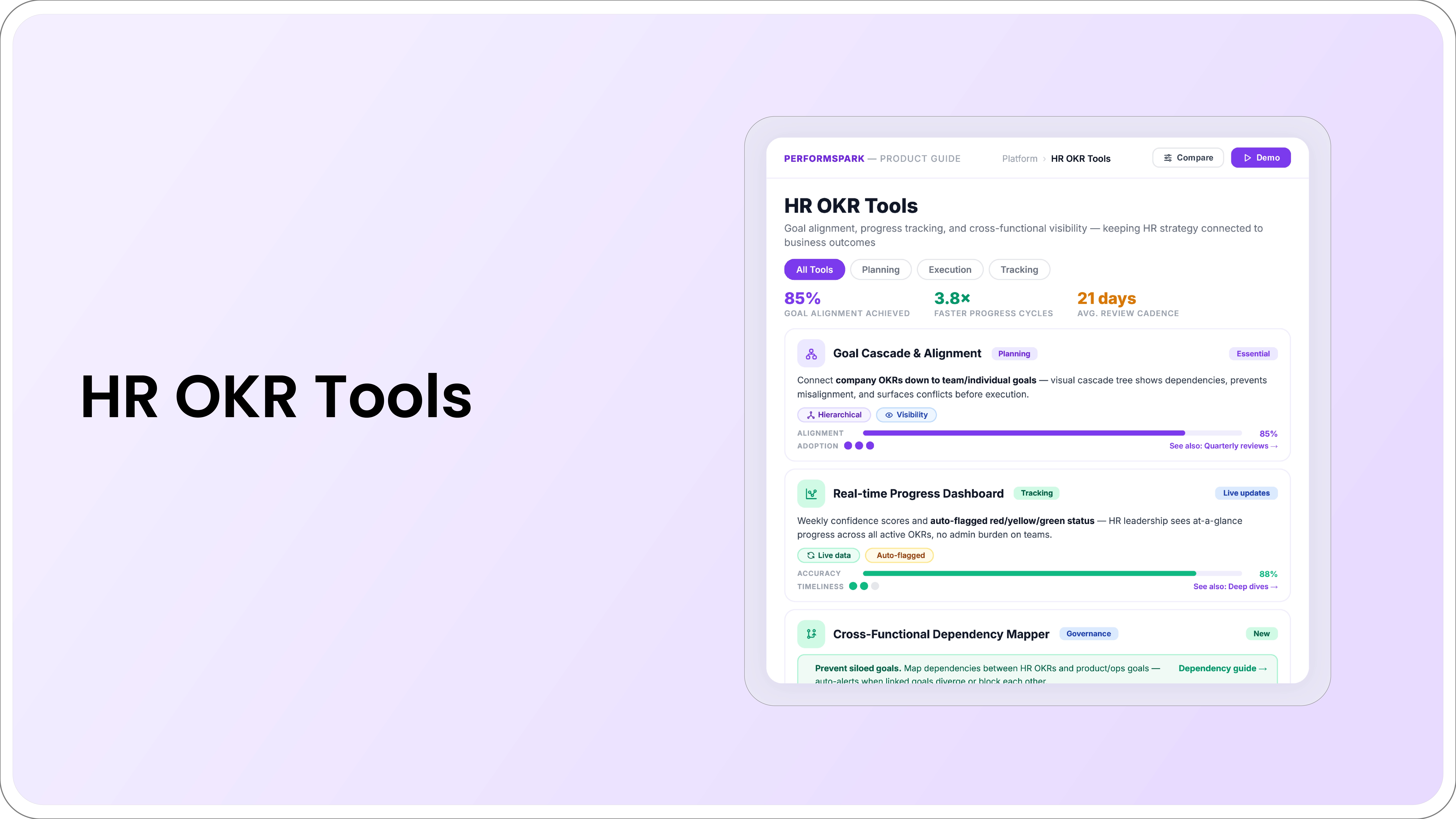
See How Goal Progress Connects to Reviews
Keep company, team, and individual goals visible during manager check-ins and performance reviews instead of rebuilding the performance story at the end of the cycle.
6. PerformYard: Goals Closely Connected to Reviews
PerformYard Goal Management emphasizes cascading goals, individual and team progress, visual reporting, and bringing goal progress into performance-review forms.
The PerformYard alternatives comparison addresses the wider platform question.
Verify in the demo: Goal change history, review linkage, reporting, and manager administration.
7. Betterworks: Continuous Performance and Business-Outcome Alignment
Betterworks positions goals and OKRs as part of a continuous performance system connected to feedback, conversations, skills, and business outcomes.
Verify in the demo: Organizational hierarchy, cross-team alignment, integrations, manager workflows, reporting, permissions, and administration.
8. WorkBoard: Strategy Execution and Enterprise OKRs
WorkBoardAI is positioned as a strategy-execution and OKR platform rather than primarily an HR performance application. Its public product information connects strategy, outcomes, OKRs, KPIs, portfolios, initiatives, operating cadence, and performance.
Verify in the demo: Which system should own employee goals, how HR workflows interact with the strategy layer, integration responsibilities, and whether the operating model matches your leadership cadence.
9. Weekdone: OKRs With Weekly Check-Ins
Weekdone publicly supports annual and quarterly OKRs across company, department, team, and personal levels, plus goal hierarchy, weekly check-ins, progress reporting, feedback, and one-on-one discussions.
Verify in the demo: Administration at your scale, reporting, permissions, employee-data management, integrations, and how goal evidence moves into any separate performance-review process.
10. Asana Goals: Strategy Connected to Projects and Daily Work
Asana Goals connects company objectives with projects, portfolios, tasks, and milestones. It is especially relevant when the core problem is keeping strategic goals connected to execution work.
Verify in the demo: Whether Asana should own goals, whether another system must own employee performance, and how approved goal evidence moves between those systems without manual reconciliation.
How to Choose Between an OKR Tool, Project Platform, and Performance Suite
Choose an OKR-first tool when the main problem is strategy alignment, quarterly OKR cadence, cross-functional objectives, and progress visibility. The OKR software selection guide goes deeper on that use case.
Choose a project-and-work platform when goals must stay directly connected to projects, tasks, portfolios, and delivery work. Confirm how performance reviews and employee records will be handled elsewhere.
Choose a performance suite when employee goals need to sit alongside reviews, manager check-ins, feedback, development, and performance reporting. The broader performance management software buyer guide covers those requirements.
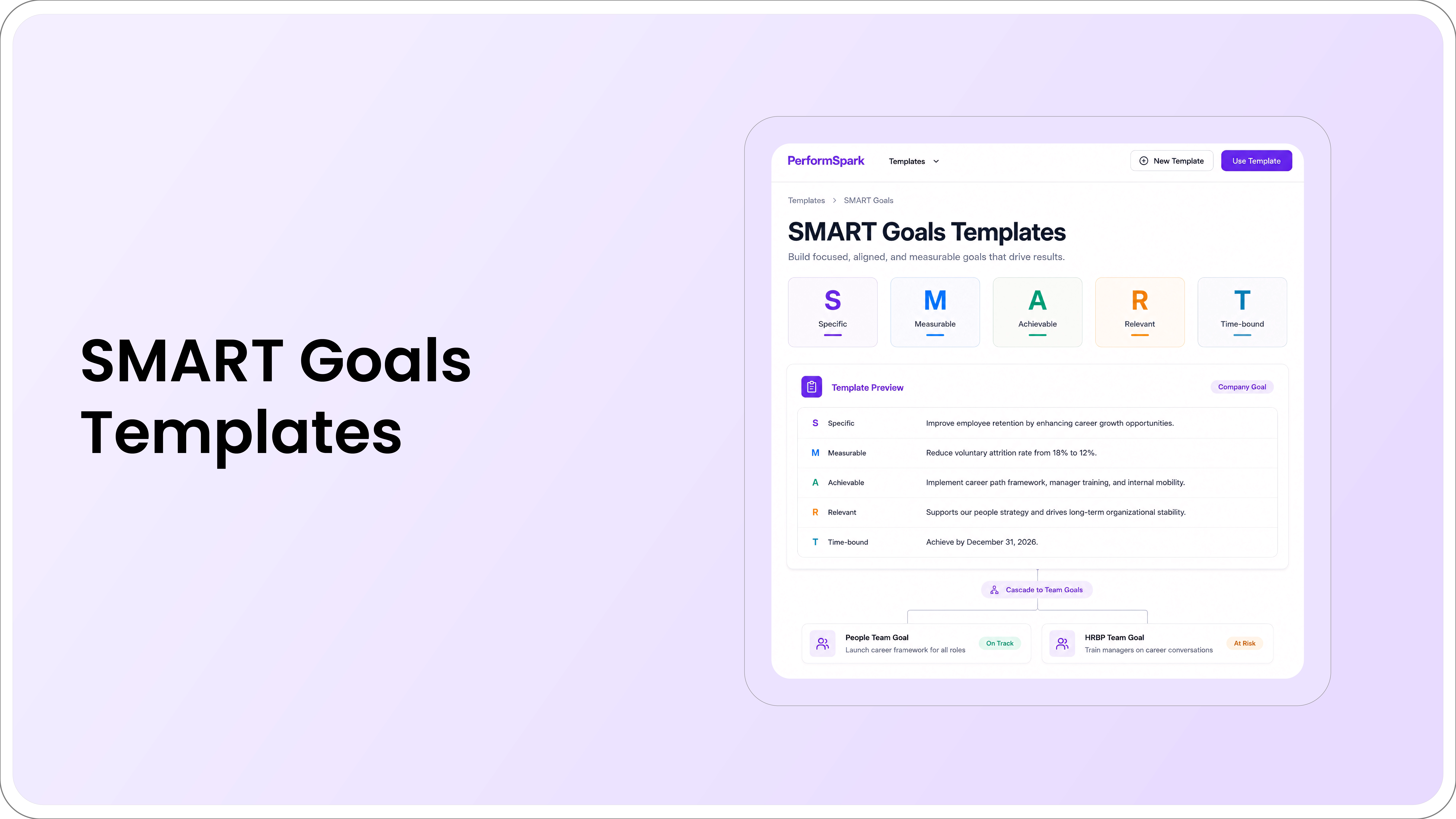
For development-focused employee objectives, test whether a goal can connect appropriately to an individual development plan without changing its meaning or exposing information to the wrong audience.
Run the Same Goal Management Demo With Every Vendor
A polished vendor tour makes comparison difficult because each company demonstrates its strongest workflow. Give every finalist the same scenario:
- Create one company objective with a measurable outcome and review date.
- Create a team goal that contributes to it without copying the company metric verbatim.
- Create an individual goal with an owner, baseline, target, evidence source, and dependency.
- Have the employee update progress and add context.
- Have the manager review the goal during a recurring check-in.
- Change the priority and revise the goal without erasing the original record.
- Change the employee's manager and verify ownership and visibility.
- Show how the goal appears in a later performance review.
- Run a report for active, at-risk, stale, changed, and completed goals.
- Demonstrate what happens when an integration or source-data update fails.
If integrations are material, compare each demonstration against the organization's actual data requirements and the vendor's current documentation. PerformSpark's own integration overview and integration directory should be evaluated the same way, including supported fields, direction, permissions, error handling, and setup requirements.
Use a Weighted Goal Management Scorecard
| Decision area | Example weight | Evidence to score |
|---|---|---|
| Goal model and alignment | 20% | Required frameworks, hierarchy, shared goals, dependencies, revisions |
| Manager and employee workflow | 20% | Creation, updates, check-ins, comments, ownership, ease of recurring use |
| Performance connection | 15% | Review context, development connection, evidence boundaries |
| Reporting and governance | 15% | Status, stale goals, permissions, changes, exports, auditability |
| Integrations and data quality | 15% | Required systems, fields, sync direction, errors, manager changes |
| Administration and implementation | 10% | Configuration, rollout, support, training, ongoing ownership |
| Commercial fit | 5% | Current contract, services, modules, support, renewal, and exit requirements |
These weights are an example, not a universal formula. Change them before vendor demos so the final score reflects the organization's real priorities rather than whichever product has the longest feature list.
Common Goal Management Software Buying Mistakes
Buying a framework instead of a workflow. Supporting OKRs or SMART goals is not enough if managers and employees do not have a realistic way to update and discuss them throughout the cycle.
Using goal completion as the entire performance rating. Goal evidence can inform performance decisions, but role expectations, quality, behavior, changes in scope, dependencies, and other verified context may also matter. The employee performance goal examples show how to define evidence and influence more carefully.
Ignoring changed goals. A goal that becomes obsolete should be revised through a controlled process. Do not leave an outdated objective active and then rate the employee against it later.
Confusing rigid cascading with useful alignment. Goal relationships should clarify contribution and dependencies without assigning employees outcomes they cannot control. The goal alignment guide explores that distinction.
Ignoring recurring reminders and manager habits. Notifications can support progress, but they should not become noise. Evaluate the timing and ownership logic of performance management notifications rather than simply counting reminder features.
Accepting an integration logo as proof. Verify the exact objects, fields, direction, timing, ownership changes, error handling, permissions, services, and plan requirements.
Which Goal Management Software Is Best for Your Team?
There is no single winner for every organization. The shortlist becomes easier once the buyer decides which system should own the goal and which workflow must surround it.
- If strategy execution and enterprise OKR cadence are the primary problem, evaluate dedicated OKR and strategy platforms deeply.
- If goals must stay connected to projects and execution work, evaluate work-management platforms and define how employee performance will be handled elsewhere.
- If HR needs goals connected to manager check-ins, performance reviews, development, and reporting, evaluate performance-management platforms as the primary system of record.
Before purchase, define the goal framework, ownership model, update cadence, evidence source, manager workflow, review connection, permissions, integrations, and reporting questions. Then require every finalist to demonstrate the same scenario.
Test Your Goal Management Process in PerformSpark
Bring one company objective, one employee goal, one manager check-in, one mid-cycle change, and one review scenario to a focused walkthrough.
Book a PerformSpark Demo →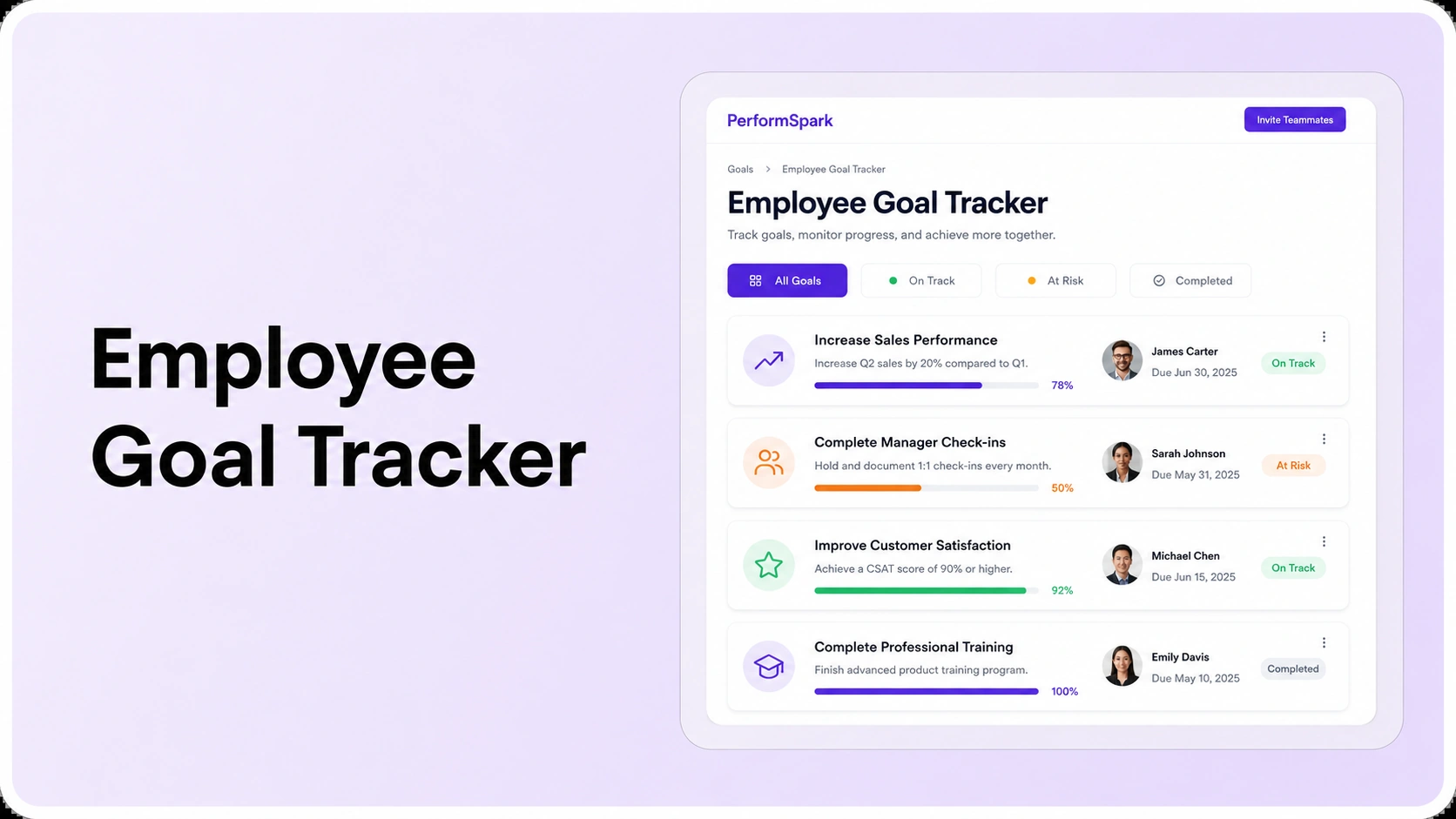



.svg)

.svg)
.svg)

