
.svg)
Clearer Capability Expectations
Show employees the level of proficiency they are expected to work toward instead of leaving the expectation open to interpretation.
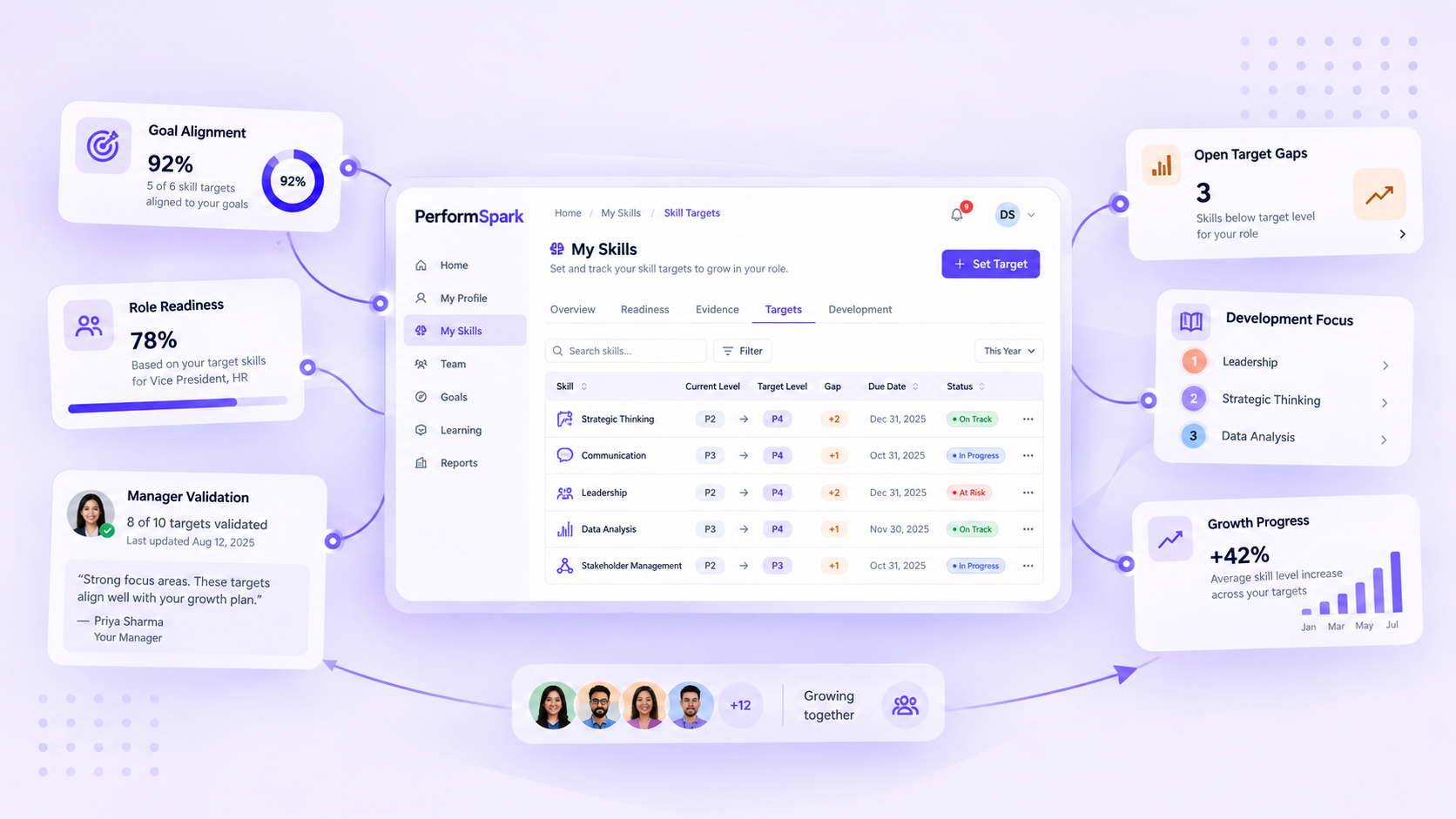
Define the proficiency employees are expected to work toward and view those targets alongside current skill levels, evidence, validation, and readiness so managers can make development expectations easier to understand.

Expected proficiency
Role expectations
Development direction

Why Skill Targets Matter
Managers may know which skills matter for a role, but development becomes harder to guide when the expected level is not clearly defined. Skill targets create a reference point for comparing current capability with what the employee is expected to work toward.

Target Expectations
Skill Targets give teams a way to define required skill expectations and compare them with current employee capability. Targets can be considered alongside proficiency, evidence, validation, certifications, and readiness so managers and employees have a clearer reference point for development.
.svg)
Set the level of capability an employee is expected to work toward for a relevant skill.
.svg)
Use role-specific capability expectations so the same skill can be understood in the context of the role.

Place current proficiency alongside the target to make the expected development direction easier to see.

Use target information with current capability, evidence, and validation when discussing role readiness.
Current proficiency shows where capability stands today. A skill target defines what is expected. Evidence supports the skill record. Validation adds manager review. Readiness helps show what the relationship between current and expected capability means for development.
How Skill Targets Work
A five-step workflow keeps target expectations connected to proficiency, evidence, validation, and readiness.
.svg)
Start with a skill connected to the employee's role, development needs, or future capability expectations.
.svg)
Look at the employee's current recorded level before defining what they are expected to work toward.
.svg)
Set the target capability level that reflects the relevant role or development expectation.

Consider available evidence, validation, certifications, and other skill information alongside the current and target levels.
.svg)
Bring the current-versus-target comparison into readiness, development, learning, or performance conversations where relevant.
Benefits
Show employees the level of proficiency they are expected to work toward instead of leaving the expectation open to interpretation.
.svg)
Use a defined target to make development conversations more specific to the capability that needs attention.
.svg)
Connect target expectations with the role or development path rather than treating every skill level the same.
Give managers a shared reference point when discussing expected capability and development priorities.
Use current and target levels with evidence and validation to add structure to role-readiness discussions.
.svg)
Use target expectations as context for goals, development plans, learning actions, or other next steps where relevant.
Explore Skills Features
Move from skill evidence and current proficiency to targets, manager validation, readiness, and development follow-through.
Explore Skills Management →Capture examples that show how an employee demonstrates a skill.
Document current capability before comparing it with expectations.
Define the proficiency employees are expected to work toward.
Add manager review to employee skill information.
Compare current capability with targets and role expectations.
Keep development actions connected to employee skill information.
Connected Performance Workflow
Use target skill levels as capability context across reviews, goals, check-ins, development plans, improvement workflows, feedback, and calibration where those connections are relevant.
Consider broader feedback alongside current and target skill levels when discussing development needs.
Use skill targets as additional context when discussing capability expectations and development priorities.
Use a relevant skill target to help shape focused development or performance goals.
Clarify the capability level that may need attention when a relevant skill is part of an improvement plan.
.svg)
Review progress toward relevant skill targets between formal performance conversations.
Use current and target skill levels to focus individual development priorities.
Consider broader feedback alongside skill expectations when discussing strengths and development needs.
.svg)
Provide skill context when recognizing demonstrated strengths and progress toward expected capability.
Give talent discussions additional capability context when managers compare performance assessments.
FAQs
Have questions about skill targets? Here are the key differences between current proficiency, target expectations, readiness, and performance ratings.
See how PerformSpark Skills connects current proficiency, skill targets, evidence, validation, and readiness so managers and employees have a clearer direction for development.

Make performance reviews your growth lever
No credit card required • Setup and training included • Annual contract minimums may apply



Map employee skills, uncover gaps, and connect development to reviews, goals, IDPs, and performance.
JUST LAUNCHED
Skills Management is now live
.svg)

.svg)
.svg)

