.svg)
Clearer Skill Gap Analysis
Compare current proficiency with target capability instead of relying on a standalone skills list.
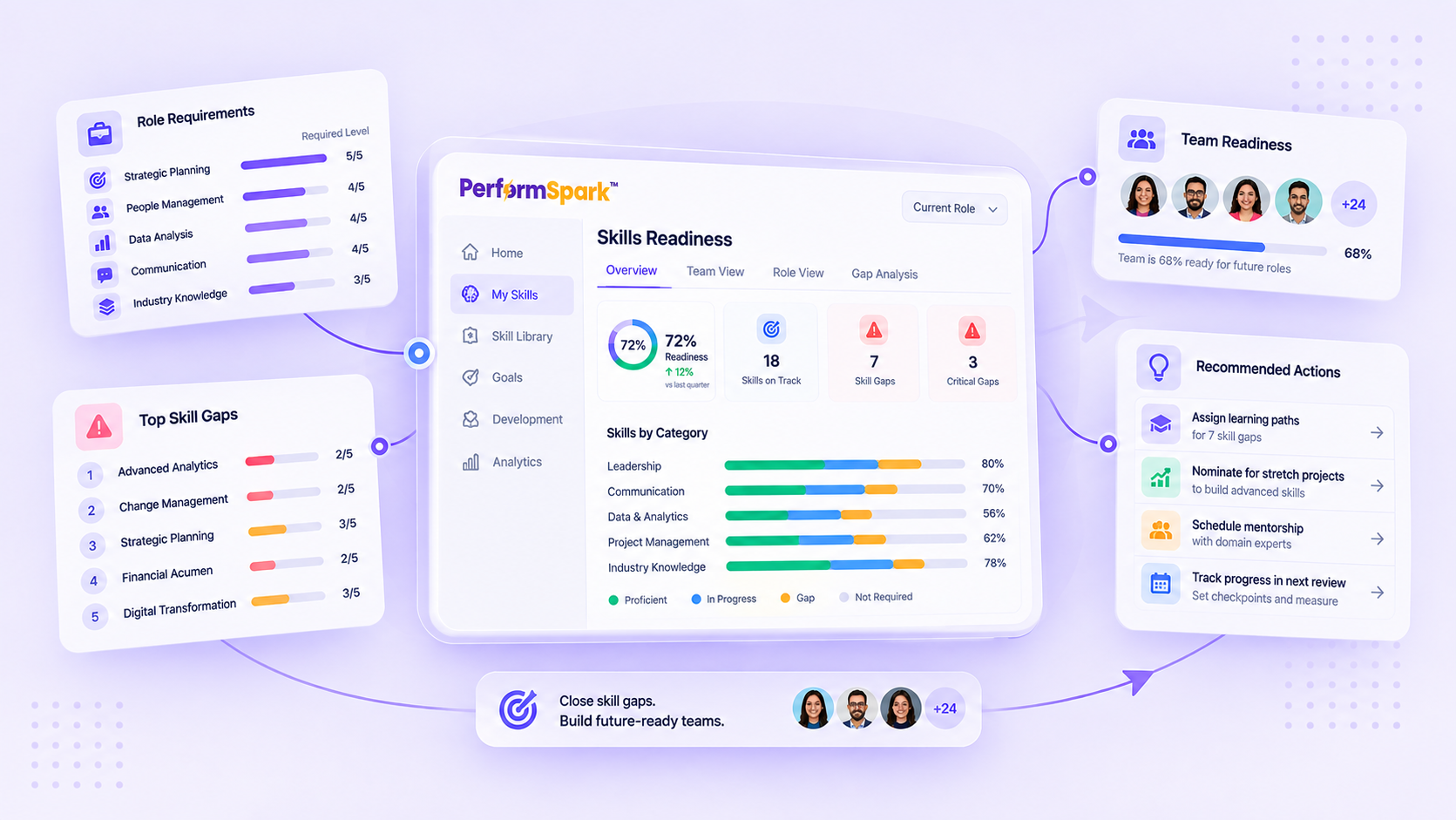
Compare current employee capability with target proficiency and role expectations so managers can see where skills align, where readiness gaps remain, and where development should focus next.

Current capability
Role expectations
Readiness gaps

Why Skills Gaps Matter
Knowing which skills an employee has is useful, but it does not show whether those skills meet the level expected for a role. A skill gap analysis compares current capability with target proficiency and role expectations so managers can see where capability aligns and where development is still needed.

Readiness Comparison
Skills Readiness & Gap View brings current proficiency, skill targets, role expectations, evidence, validation, certifications, and readiness information into a clearer comparison. It helps managers understand where capability aligns with expectations and where readiness gaps may require further development.
.svg)
Start with the employee's recorded capability for the skills that matter to the role.
.svg)
Look at the target proficiency or role-specific capability expected for those skills.

Compare current capability with the relevant target to see where the employee meets expectations and where gaps remain.

Bring the comparison into development, learning, career, or performance conversations where relevant.
Current proficiency shows where capability stands today. Skill targets define what is expected. Evidence and manager validation add context. Certifications can matter where relevant. The readiness view brings those inputs together so managers can discuss alignment, gaps, and development direction more clearly.
How Skills Readiness & Gap View Works
A five-step workflow keeps skill gap analysis connected to proficiency, targets, role expectations, and development context.
.svg)
Start with the role expectations or skills that should be considered in the readiness conversation.
.svg)
Look at the employee's recorded proficiency and other available skill information.
.svg)
Consider the relevant target proficiency or role-specific capability expectation.

Use the readiness view to identify where current capability aligns with expectations and where a readiness gap remains.
.svg)
Bring the readiness gap into development, learning, career, or performance conversations where relevant.
Benefits
Compare current proficiency with target capability instead of relying on a standalone skills list.
.svg)
Give managers a structured way to assess where capability aligns with role expectations and where development may still be needed.
.svg)
Use current skills, targets, evidence, validation, and certifications as context when discussing readiness for a role.
Focus development conversations on the capabilities that sit below the relevant target or role expectation.
Use team readiness and team skills views to understand capability coverage and readiness gaps across a manager's team.
.svg)
Use readiness-gap context to support goals, development plans, learning actions, career conversations, or other next steps where relevant.
Explore Skills Features
Move from skill evidence and current proficiency to targets, manager validation, readiness, and development follow-through.
Explore Skills Management →Capture examples that show how an employee demonstrates a skill.
Document current capability before comparing it with expectations.
Define the proficiency employees are expected to work toward.
Add manager review to employee skill information.
Compare current capability with targets and role expectations.
Keep development actions connected to employee skill information.
Connected Performance Workflow
Skills Readiness & Gap View belongs to the Skills product. It gives managers additional context they can draw on across PerformSpark workflows without replacing performance ratings, promotion decisions, or formal talent decisions.
Connect feedback to strengths and development gaps.
Add skill context to feedback and make reviews more meaningful.
Turn priorities into measurable skill-based goals.
Clarify capability expectations during improvement.
.svg)
Discuss skill progress between reviews.
Turn skill gaps into structured development plans.
Add broader input to capability discussions.
.svg)
Provide context for recognizing demonstrated strengths and capability growth.
Support more consistent performance discussions.
FAQs
Have questions about skill gap analysis and skills readiness? Here are the key differences between current proficiency, target capability, readiness gaps, and performance ratings.
See how PerformSpark helps managers connect skill evidence, readiness gaps, and development actions with performance conversations.

Make performance reviews your growth lever
No credit card required • Setup and training included • Annual contract minimums may apply


Map employee skills, uncover gaps, and connect development to reviews, goals, IDPs, and performance.
JUST LAUNCHED
Skills Management is now live
.svg)

.svg)
.svg)

