




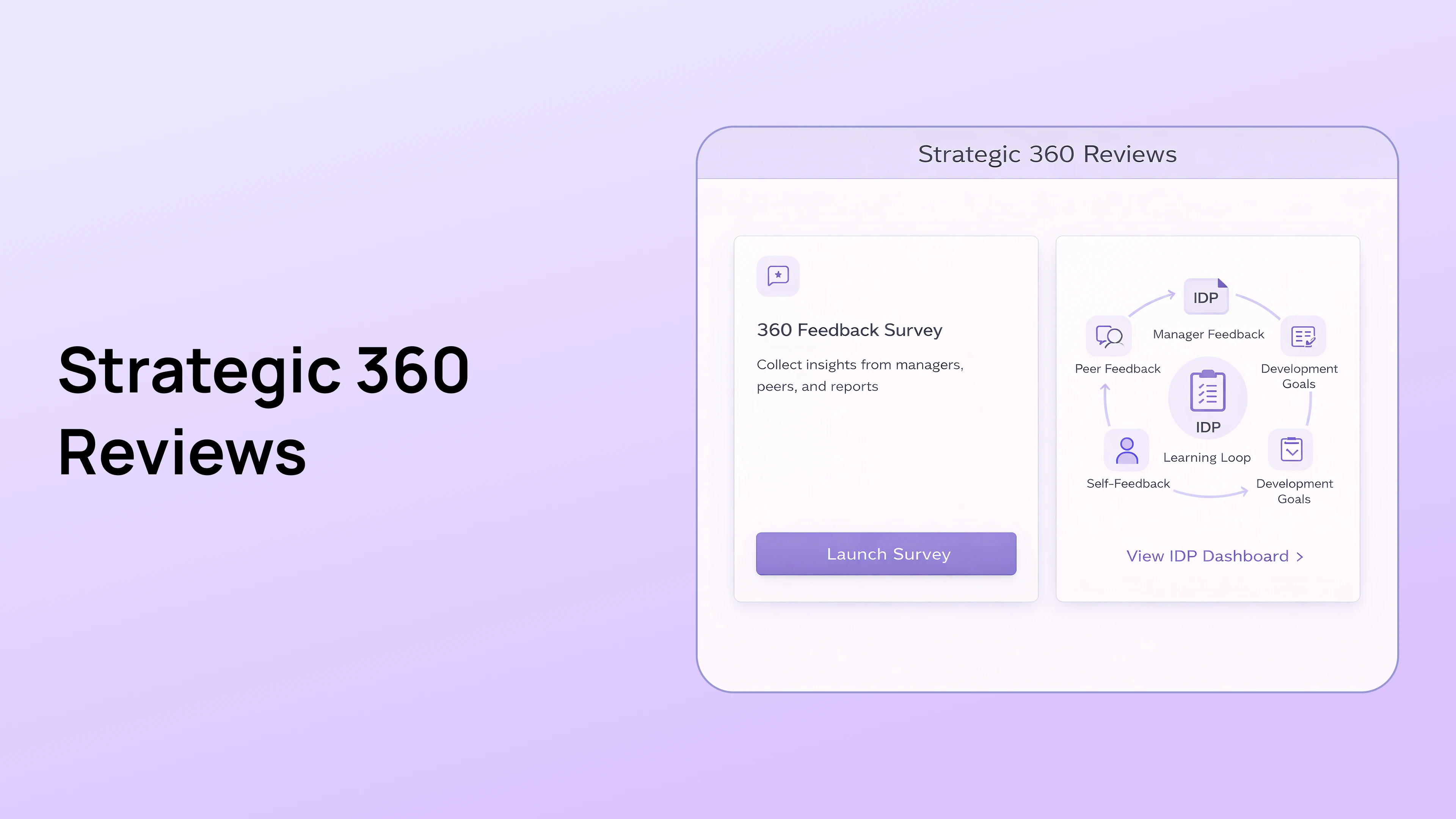
360 Degree Feedback

How to Turn 360 Feedback Into an Individual Development Plan

Learn how to turn 360-degree feedback into an individual development plan through relevant raters, a structured debrief, focused themes, practical activities, milestones, and manager support.

Updated :
February 3, 2026

Mahesh Kumar

Founder, TraineryHCM.com
Manager and employee turning 360 feedback into an individual development plan

Table of Contents

A 360-degree review becomes useful when the employee can understand the feedback, identify a meaningful theme, and turn that theme into development activity and practice. Sending a report without a debrief or follow-up can leave the employee uncertain about what matters and what to do next.

The goal is not to convert every comment into a development task. The employee and manager should review the complete pattern, consider the role context, choose one or two priorities, and create an individual development plan with activities, support, milestones, and follow-up dates.

This guide explains how to move from 360-degree feedback to an actionable IDP while protecting relevance, confidentiality, and human judgment.

What Is a 360-Degree Review?

A 360-degree review collects structured feedback from people who have had a relevant opportunity to observe an employee's work. Depending on the role and purpose, raters may include:

  • The employee
  • The manager
  • Peers
  • Direct reports
  • Cross-functional partners
  • Internal or external customers

360 feedback is most useful for observable behaviors such as communication, collaboration, leadership, delegation, decision-making, customer focus, and cross-functional influence. It is less suitable for evaluating work raters cannot see.

Developmental vs. Evaluative 360 Feedback

Organizations may use multi-source feedback for development, evaluation, or a defined combination. The purpose should be clear before raters respond.

AreaDevelopmental 360Evaluative use
Primary purposeIdentify strengths and development prioritiesProvide one source of information in a formal assessment
Employee messageLearning and behavior changeContribution to an approved review decision
Rater expectationsConstructive, observable feedbackEvidence relevant to defined criteria
Confidentiality designMay aggregate peer or direct-report responsesMust fit the organization's review and evidence rules
Follow-upDebrief and development planManager assessment, calibration, and development where appropriate

Using 360 feedback in a formal review is not automatically inappropriate, but the organization should define the weight, rater selection, evidence standards, confidentiality, and review process. Do not surprise employees or raters by changing the purpose after responses are collected.

Why 360 Feedback Often Fails to Produce Development

Too many themes

A broad report may cover many competencies and comments. Without prioritization, the employee may not know which behavior would make the greatest difference.

Comments without context

A short comment may describe one event, personal preference, or work the rater only partly observed. The debrief should distinguish a representative pattern from an isolated statement.

No manager or coach debrief

Employees may focus on a single negative comment, dismiss the entire report, or miss important patterns. A structured debrief helps them interpret the feedback without treating every response as equally reliable.

No development opportunity

A goal such as β€œimprove leadership” is not actionable. The employee needs work, practice, feedback, and support that allow the behavior to change.

No follow-through

When the report disappears after delivery, the employee and manager return to normal work without reviewing progress.

Step 1: Define the Purpose and Scope

Before launching the review, document:

  • Who will participate
  • Which competencies or behaviors will be assessed
  • How raters will be selected
  • Whether responses are attributed, confidential, or aggregated
  • Who can see raw and summarized information
  • How the results will be used
  • Who will conduct the debrief
  • How development actions will be tracked

Keep the survey focused on behaviors relevant to the role and development objective. More questions do not automatically create better insight.

Step 2: Select Raters for Relevance

Choose raters who have directly observed the employee in the behavior being assessed. A rater should not be selected merely because they are senior, friendly with the employee, or available.

Consider:

  • How recently the rater worked with the employee
  • How often they interacted
  • Which behaviors they observed
  • Whether different working relationships are represented
  • Whether the group protects confidentiality where aggregation is promised

The number of raters should be large enough to provide relevant perspectives and meet the organization's confidentiality design, but small enough that every participant has meaningful observation. There is no universal number for every role.

Step 3: Ask Behavior-Focused Questions

Questions should describe observable work rather than personality.

Weak: β€œIs this person a good leader?”

Stronger: β€œHow consistently does this person clarify the decision, owner, and next action after cross-functional meetings?”

Weak: β€œIs this person strategic?”

Stronger: β€œHow effectively does this person compare options, explain assumptions and risks, and recommend a course of action?”

Open-text prompts can ask:

  • Which behavior should the employee continue?
  • Which behavior would make the greatest positive difference if strengthened?
  • What specific example supports the feedback?
  • What should the employee do differently in a similar situation?

Step 4: Prepare the Feedback Before the Debrief

The facilitator should review:

  • Response completeness
  • Comments unrelated to the defined competency
  • Personality labels or inappropriate language
  • Potentially identifying details where confidentiality was promised
  • Contradictory feedback
  • Patterns across rater groups
  • Important differences between self and others' perspectives

Do not edit feedback merely to remove disagreement. The purpose is to protect the process and organize the information, not to make every response positive.

Step 5: Run a Structured 360 Feedback Debrief

The debrief should help the employee understand the information and choose a practical response.

Begin with purpose and control

Remind the employee how the feedback was collected and used. Explain that the report contains perceptions from specific working relationships, not a complete statement about the person's character or future.

Review strengths first

Identify behaviors that others value and the situations in which they appear. Strengths may be capabilities to continue, scale, or use in a development goal.

Look for patterns

Consider whether a theme:

  • Appears across multiple relevant raters
  • Includes specific examples
  • Connects to the employee's role or goals
  • Matches or differs from the employee's self-view
  • Can be influenced through action and practice

Discuss differences without forcing agreement

The employee may not agree with every comment. Ask what context is missing, which parts are useful, and what could be tested through future observation.

End with one or two priorities

Do not convert the full report into a long development list. Choose the behavior that matters most and can be practiced through available work.

Step 6: Turn a Feedback Theme Into an IDP Goal

Use five questions:

  1. What behavior or capability should change?
  2. Why does it matter to the employee and role?
  3. What would successful change look like?
  4. Which activities and work opportunities will provide practice?
  5. What support and review cadence are needed?

The IDP best practices guide provides a complete process, and the IDP examples and templates provide adaptable role examples.

360 Feedback to IDP Example 1: Meeting Facilitation

Feedback theme: Peers value the employee's subject expertise but report that meetings often end without a clear decision or owner.

Development goal: Facilitate cross-functional meetings that produce a documented decision, owner, next action, and due date.

Activities:

  • Observe two experienced facilitators
  • Use a structured agenda and decision template
  • Co-facilitate one meeting
  • Lead two meetings independently
  • Request short feedback from participants and the manager

Manager support: Identify suitable meetings, review the first agenda, observe one session, and debrief afterward.

Milestones: Observation by [date]; supported facilitation by [date]; independent practice and review by [date].

360 Feedback to IDP Example 2: Delegation

Feedback theme: Direct reports describe the manager as supportive but say decision authority is sometimes unclear and work is reclaimed too quickly.

Development goal: Delegate recurring responsibilities with clear outcomes, decision boundaries, checkpoints, and support.

Activities:

  • Select two responsibilities suitable for delegation
  • Write expected outcomes and authority
  • Conduct the delegation conversation
  • Use agreed checkpoints without taking back the work
  • Gather employee and manager feedback

Manager support: Help select assignments, review the delegation plan, and coach the manager after each checkpoint.

360 Feedback to IDP Example 3: Executive Communication

Feedback theme: Stakeholders trust the employee's analysis but need recommendations and decisions to be clearer.

Development goal: Present complex information using the business question, key evidence, assumptions, risks, options, and a recommended action.

Activities: Rewrite one existing report, observe an executive update, practice with the manager, and lead one stakeholder presentation.

Success evidence: The employee can deliver a concise recommendation and respond to questions using the underlying evidence.

Step 7: Track Development in Normal Check-Ins

Add the active goal to regular 1-on-1 check-ins. A brief update can cover:

  • What the employee practiced
  • What feedback was received
  • What changed
  • What remains difficult
  • What support the manager owes
  • What happens before the next review

Use notifications to support milestones when appropriate, but avoid replacing the coaching conversation with automated reminders.

Step 8: Close the Development Goal

At the target review date, assess:

  • Activities and milestones completed
  • Work samples or observed behavior
  • Follow-up feedback from relevant people
  • Employee reflection
  • Manager observations
  • Whether the behavior is more consistent
  • What practice should continue

Completing a course or assignment is not sufficient by itself. Review whether the employee can apply the behavior in relevant work.

Should 360 Feedback Be Anonymous?

There is no single rule for every program. Organizations may use attributed, confidential, or aggregated feedback depending on the purpose, group size, local requirements, and trust level.

Consider:

  • Whether the employee needs to discuss a specific event with the rater
  • Whether confidentiality encourages more candid feedback
  • Whether the group is large enough to protect aggregation
  • How inappropriate or concerning comments will be handled
  • Whether raters understand the visibility rules

Do not promise anonymity that the process or group size cannot protect.

How AI May Support 360 Feedback

AI may help summarize authorized responses, group similar themes, identify missing examples, or prompt reviewers to use behavior-focused language. Users should be able to inspect the source comments and correct or reject the output.

AI should not independently:

  • Determine that feedback is biased or truthful
  • Diagnose a personality or skill gap
  • Select the employee's development priority
  • Assign a course or career path without human review
  • Decide a performance rating

Review the AI performance review software guide for data, permissions, transparency, and oversight questions.

How Often Should 360 Reviews Run?

The right cadence depends on the purpose, role, change expected, rater burden, and time required for development. A broad review should not be repeated before the employee has had a reasonable opportunity to practice and demonstrate change.

Use lighter feedback through projects, feedback surveys, check-ins, or manager coaching between formal 360 cycles when appropriate.

Common 360-to-IDP Mistakes

  • Collecting feedback without defining its purpose
  • Selecting raters who did not observe the behavior
  • Using vague personality questions
  • Promising confidentiality the process cannot protect
  • Sending the report without a debrief
  • Treating every comment as equally reliable
  • Creating too many development goals
  • Choosing a goal without available practice opportunities
  • Omitting manager support
  • Failing to review progress after the report
  • Treating AI summaries as the final interpretation

360 Feedback to IDP Checklist

  • The program purpose is documented.
  • Raters have relevant observation.
  • Questions describe observable behavior.
  • Visibility and confidentiality rules are clear.
  • Feedback receives an appropriate quality review.
  • A manager, coach, or qualified facilitator runs the debrief.
  • Strengths and development themes are considered.
  • Only one or two priorities move into the IDP.
  • The plan includes practice, milestones, and manager support.
  • Progress is reviewed in normal performance conversations.

Connect Feedback With Employee Development

PerformSpark connects 360 reviews with performance reviews, goals, check-ins, feedback, individual development plans, milestones, manager support, and reporting.

Explore PerformSpark pricing or book a personalized demo to see how feedback themes can move into focused development actions without losing the employee and manager conversation.

Quick Takeaways: Turning 360 Feedback Into an IDP

  • Define the program purpose, select raters with relevant observation, and use behavior-focused questions.
  • Provide a structured debrief so the employee can understand patterns and context without treating every comment equally.
  • Move only one or two meaningful themes into the development plan.
  • Connect each IDP goal to practice, manager support, milestones, and regular follow-up.

A 360-degree review becomes useful when the employee can understand the feedback, identify a meaningful theme, and turn that theme into development activity and practice. Sending a report without a debrief or follow-up can leave the employee uncertain about what matters and what to do next.

The goal is not to convert every comment into a development task. The employee and manager should review the complete pattern, consider the role context, choose one or two priorities, and create an individual development plan with activities, support, milestones, and follow-up dates.

This guide explains how to move from 360-degree feedback to an actionable IDP while protecting relevance, confidentiality, and human judgment.

What Is a 360-Degree Review?

A 360-degree review collects structured feedback from people who have had a relevant opportunity to observe an employee's work. Depending on the role and purpose, raters may include:

  • The employee
  • The manager
  • Peers
  • Direct reports
  • Cross-functional partners
  • Internal or external customers

360 feedback is most useful for observable behaviors such as communication, collaboration, leadership, delegation, decision-making, customer focus, and cross-functional influence. It is less suitable for evaluating work raters cannot see.

Developmental vs. Evaluative 360 Feedback

Organizations may use multi-source feedback for development, evaluation, or a defined combination. The purpose should be clear before raters respond.

AreaDevelopmental 360Evaluative use
Primary purposeIdentify strengths and development prioritiesProvide one source of information in a formal assessment
Employee messageLearning and behavior changeContribution to an approved review decision
Rater expectationsConstructive, observable feedbackEvidence relevant to defined criteria
Confidentiality designMay aggregate peer or direct-report responsesMust fit the organization's review and evidence rules
Follow-upDebrief and development planManager assessment, calibration, and development where appropriate

Using 360 feedback in a formal review is not automatically inappropriate, but the organization should define the weight, rater selection, evidence standards, confidentiality, and review process. Do not surprise employees or raters by changing the purpose after responses are collected.

Why 360 Feedback Often Fails to Produce Development

Too many themes

A broad report may cover many competencies and comments. Without prioritization, the employee may not know which behavior would make the greatest difference.

Comments without context

A short comment may describe one event, personal preference, or work the rater only partly observed. The debrief should distinguish a representative pattern from an isolated statement.

No manager or coach debrief

Employees may focus on a single negative comment, dismiss the entire report, or miss important patterns. A structured debrief helps them interpret the feedback without treating every response as equally reliable.

No development opportunity

A goal such as β€œimprove leadership” is not actionable. The employee needs work, practice, feedback, and support that allow the behavior to change.

No follow-through

When the report disappears after delivery, the employee and manager return to normal work without reviewing progress.

Step 1: Define the Purpose and Scope

Before launching the review, document:

  • Who will participate
  • Which competencies or behaviors will be assessed
  • How raters will be selected
  • Whether responses are attributed, confidential, or aggregated
  • Who can see raw and summarized information
  • How the results will be used
  • Who will conduct the debrief
  • How development actions will be tracked

Keep the survey focused on behaviors relevant to the role and development objective. More questions do not automatically create better insight.

Step 2: Select Raters for Relevance

Choose raters who have directly observed the employee in the behavior being assessed. A rater should not be selected merely because they are senior, friendly with the employee, or available.

Consider:

  • How recently the rater worked with the employee
  • How often they interacted
  • Which behaviors they observed
  • Whether different working relationships are represented
  • Whether the group protects confidentiality where aggregation is promised

The number of raters should be large enough to provide relevant perspectives and meet the organization's confidentiality design, but small enough that every participant has meaningful observation. There is no universal number for every role.

Step 3: Ask Behavior-Focused Questions

Questions should describe observable work rather than personality.

Weak: β€œIs this person a good leader?”

Stronger: β€œHow consistently does this person clarify the decision, owner, and next action after cross-functional meetings?”

Weak: β€œIs this person strategic?”

Stronger: β€œHow effectively does this person compare options, explain assumptions and risks, and recommend a course of action?”

Open-text prompts can ask:

  • Which behavior should the employee continue?
  • Which behavior would make the greatest positive difference if strengthened?
  • What specific example supports the feedback?
  • What should the employee do differently in a similar situation?

Step 4: Prepare the Feedback Before the Debrief

The facilitator should review:

  • Response completeness
  • Comments unrelated to the defined competency
  • Personality labels or inappropriate language
  • Potentially identifying details where confidentiality was promised
  • Contradictory feedback
  • Patterns across rater groups
  • Important differences between self and others' perspectives

Do not edit feedback merely to remove disagreement. The purpose is to protect the process and organize the information, not to make every response positive.

Step 5: Run a Structured 360 Feedback Debrief

The debrief should help the employee understand the information and choose a practical response.

Begin with purpose and control

Remind the employee how the feedback was collected and used. Explain that the report contains perceptions from specific working relationships, not a complete statement about the person's character or future.

Review strengths first

Identify behaviors that others value and the situations in which they appear. Strengths may be capabilities to continue, scale, or use in a development goal.

Look for patterns

Consider whether a theme:

  • Appears across multiple relevant raters
  • Includes specific examples
  • Connects to the employee's role or goals
  • Matches or differs from the employee's self-view
  • Can be influenced through action and practice

Discuss differences without forcing agreement

The employee may not agree with every comment. Ask what context is missing, which parts are useful, and what could be tested through future observation.

End with one or two priorities

Do not convert the full report into a long development list. Choose the behavior that matters most and can be practiced through available work.

Step 6: Turn a Feedback Theme Into an IDP Goal

Use five questions:

  1. What behavior or capability should change?
  2. Why does it matter to the employee and role?
  3. What would successful change look like?
  4. Which activities and work opportunities will provide practice?
  5. What support and review cadence are needed?

The IDP best practices guide provides a complete process, and the IDP examples and templates provide adaptable role examples.

360 Feedback to IDP Example 1: Meeting Facilitation

Feedback theme: Peers value the employee's subject expertise but report that meetings often end without a clear decision or owner.

Development goal: Facilitate cross-functional meetings that produce a documented decision, owner, next action, and due date.

Activities:

  • Observe two experienced facilitators
  • Use a structured agenda and decision template
  • Co-facilitate one meeting
  • Lead two meetings independently
  • Request short feedback from participants and the manager

Manager support: Identify suitable meetings, review the first agenda, observe one session, and debrief afterward.

Milestones: Observation by [date]; supported facilitation by [date]; independent practice and review by [date].

360 Feedback to IDP Example 2: Delegation

Feedback theme: Direct reports describe the manager as supportive but say decision authority is sometimes unclear and work is reclaimed too quickly.

Development goal: Delegate recurring responsibilities with clear outcomes, decision boundaries, checkpoints, and support.

Activities:

  • Select two responsibilities suitable for delegation
  • Write expected outcomes and authority
  • Conduct the delegation conversation
  • Use agreed checkpoints without taking back the work
  • Gather employee and manager feedback

Manager support: Help select assignments, review the delegation plan, and coach the manager after each checkpoint.

360 Feedback to IDP Example 3: Executive Communication

Feedback theme: Stakeholders trust the employee's analysis but need recommendations and decisions to be clearer.

Development goal: Present complex information using the business question, key evidence, assumptions, risks, options, and a recommended action.

Activities: Rewrite one existing report, observe an executive update, practice with the manager, and lead one stakeholder presentation.

Success evidence: The employee can deliver a concise recommendation and respond to questions using the underlying evidence.

Step 7: Track Development in Normal Check-Ins

Add the active goal to regular 1-on-1 check-ins. A brief update can cover:

  • What the employee practiced
  • What feedback was received
  • What changed
  • What remains difficult
  • What support the manager owes
  • What happens before the next review

Use notifications to support milestones when appropriate, but avoid replacing the coaching conversation with automated reminders.

Step 8: Close the Development Goal

At the target review date, assess:

  • Activities and milestones completed
  • Work samples or observed behavior
  • Follow-up feedback from relevant people
  • Employee reflection
  • Manager observations
  • Whether the behavior is more consistent
  • What practice should continue

Completing a course or assignment is not sufficient by itself. Review whether the employee can apply the behavior in relevant work.

Should 360 Feedback Be Anonymous?

There is no single rule for every program. Organizations may use attributed, confidential, or aggregated feedback depending on the purpose, group size, local requirements, and trust level.

Consider:

  • Whether the employee needs to discuss a specific event with the rater
  • Whether confidentiality encourages more candid feedback
  • Whether the group is large enough to protect aggregation
  • How inappropriate or concerning comments will be handled
  • Whether raters understand the visibility rules

Do not promise anonymity that the process or group size cannot protect.

How AI May Support 360 Feedback

AI may help summarize authorized responses, group similar themes, identify missing examples, or prompt reviewers to use behavior-focused language. Users should be able to inspect the source comments and correct or reject the output.

AI should not independently:

  • Determine that feedback is biased or truthful
  • Diagnose a personality or skill gap
  • Select the employee's development priority
  • Assign a course or career path without human review
  • Decide a performance rating

Review the AI performance review software guide for data, permissions, transparency, and oversight questions.

How Often Should 360 Reviews Run?

The right cadence depends on the purpose, role, change expected, rater burden, and time required for development. A broad review should not be repeated before the employee has had a reasonable opportunity to practice and demonstrate change.

Use lighter feedback through projects, feedback surveys, check-ins, or manager coaching between formal 360 cycles when appropriate.

Common 360-to-IDP Mistakes

  • Collecting feedback without defining its purpose
  • Selecting raters who did not observe the behavior
  • Using vague personality questions
  • Promising confidentiality the process cannot protect
  • Sending the report without a debrief
  • Treating every comment as equally reliable
  • Creating too many development goals
  • Choosing a goal without available practice opportunities
  • Omitting manager support
  • Failing to review progress after the report
  • Treating AI summaries as the final interpretation

360 Feedback to IDP Checklist

  • The program purpose is documented.
  • Raters have relevant observation.
  • Questions describe observable behavior.
  • Visibility and confidentiality rules are clear.
  • Feedback receives an appropriate quality review.
  • A manager, coach, or qualified facilitator runs the debrief.
  • Strengths and development themes are considered.
  • Only one or two priorities move into the IDP.
  • The plan includes practice, milestones, and manager support.
  • Progress is reviewed in normal performance conversations.

Connect Feedback With Employee Development

PerformSpark connects 360 reviews with performance reviews, goals, check-ins, feedback, individual development plans, milestones, manager support, and reporting.

Explore PerformSpark pricing or book a personalized demo to see how feedback themes can move into focused development actions without losing the employee and manager conversation.

Frequently Asked Questions

How many raters should be included in a 360 review?

Should 360 feedback be anonymous?

Can 360 feedback be used in performance reviews?

How often should organizations run 360 reviews?

What is the biggest mistake after a 360 review?

Related Blogs

No items found.
Text reading 'Potential starts here.' with 'here.' in blue.

Make performance reviews your growth lever

No credit card required β€’ Free setup & training included β€’ Cancel anytime

CTA ShapeCTA Shape