



Performance Management Implementations

5 Employee Performance KPIs That Act as Leading Indicators

Five practical employee performance KPIs that help HR identify developing goal, coaching, follow-through, feedback, and review-evidence risks before outcomes are final.

Updated :
July 15, 2026

Mahesh Kumar

Founder, TraineryHCM.com

Table of Contents

Quick answer: Employee performance KPIs act as leading indicators when they reveal a change early enough for a manager or HR team to investigate and respond. Five useful examples are at-risk goal aging, manager check-in continuity, action-item closure, employee feedback direction, and performance-evidence coverage. None should predict an individual outcome or trigger an employment decision by itself.

Last reviewed: July 24, 2026

A missed goal, a final review rating, or a resignation is a completed outcome. It tells HR what happened, but it may arrive too late to change the result. A leading indicator focuses on the conditions developing before that outcome: unresolved dependencies, missing coaching, repeated commitments that remain open, deteriorating employee signals, or weak evidence before a review.

What is the difference between leading and lagging performance indicators?

A leading performance indicator measures a condition that can still be changed before a result is final. A lagging indicator records a completed result, such as goal attainment, a final rating, regrettable turnover, or review-cycle completion.

HR needs both. Leading indicators help teams decide where to investigate or provide support. Lagging indicators help determine whether the performance system produced the intended results. A metric is not genuinely leading merely because it appears on a live dashboard. It must create enough time for a relevant action.

KPIPractical definitionExample calculationHuman response
At-risk goal agingDays active goals remain at risk without a documented decisionSum of at-risk days Γ· number of at-risk goalsReview dependencies, scope, owner, and target
Check-in continuityExpected manager check-ins completed in the defined periodCompleted expected check-ins Γ· scheduled expected check-ins Γ— 100Confirm workload, leave, role design, and coaching support
Action-item closureAgreed performance actions completed or consciously revised by their due dateClosed or revised due actions Γ· all actions due Γ— 100Clarify ownership and remove repeated blockers
Feedback directionComparable change in selected survey items or recurring themesCurrent comparable score minus prior comparable scoreValidate the pattern with context and confidential discussion
Evidence coverageDraft reviews supported by current goals, examples, and prior feedbackDrafts meeting evidence criteria Γ· drafts reviewed Γ— 100Request missing evidence before calibration

1. How does at-risk goal aging reveal performance risk early?

At-risk goal aging shows how long a goal remains in a problem state without a documented decision. The early signal is not that a goal turned red. It is that the risk persists while the owner, dependency, scope, or target remains unresolved.

Define the status rules first. A goal might become at risk when a milestone is missed, a required dependency has no owner, the forecast falls below an agreed range, or the employee explicitly flags a problem. Then measure both the share of active goals at risk and the age of those risks.

Worked example: A team has four at-risk goals aged 3, 6, 14, and 17 days. Average at-risk age is 10 days. That average does not prove poor employee performance. HR should inspect the distribution: the two older goals may share one approval bottleneck that leadership can remove.

Failure point: teams often punish honest risk reporting. When a red status harms the employee, goals stay green until failure is unavoidable. Measure whether risks receive timely decisions, not whether a team has the fewest red goals.

2. Why is manager check-in continuity a leading indicator?

Check-in continuity can reveal a coaching gap before goals or working relationships deteriorate. Measure whether the organization delivered the agreed management rhythm, then examine quality and context rather than treating attendance as proof of effective coaching.

Define which conversations count, the expected cadence by role, and valid exclusions such as leave, onboarding, manager changes, or seasonal operating patterns. Compare a manager with their own baseline and similar work groups before escalating a change.

Worked example: A manager normally completes seven of eight expected biweekly check-ins. Over six weeks, the rate falls to three of eight while several team goals become overdue at risk. The useful response is a conversation about capacity, priorities, and manager support. It is not an automatic conclusion about the manager's capability.

Failure point: completion metrics can produce empty meetings. Pair continuity with a small quality check: current priorities discussed, blockers recorded, development considered when relevant, and clear follow-up agreed.

EARLY COACHING SIGNALS

Connect Check-ins to Real Follow-through

Keep goals, blockers, feedback, and agreed actions visible between manager conversations.

3. What does action-item closure tell HR?

Action-item closure shows whether commitments from goals, check-ins, feedback, and development conversations turn into completed work or conscious decisions. Repeatedly overdue actions can reveal unclear ownership, unrealistic workload, weak manager follow-through, or a dependency outside the employee's control.

Count an action as closed when it is completed, intentionally revised, or canceled with a documented reason. This prevents teams from completing obsolete tasks merely to improve the number. Segment employee-owned, manager-owned, and cross-functional actions because each points to a different remedy.

Worked example: A development action has rolled forward through four check-ins. The employee completed the preparation, but the manager has not arranged the required project exposure. The indicator surfaces a management-system failure. It should not lower the employee's performance assessment.

Failure point: teams create too many vague actions. Every item needs one owner, one due date or review date, and a clear completion condition.

4. Can employee feedback direction act as a leading indicator?

Employee feedback direction can act as an early signal when the same well-defined question or theme changes across comparable groups and periods. Useful topics include role clarity, workload manageability, manager support, confidence in priorities, and the ability to raise risks.

Do not combine unrelated survey items into a mysterious risk score. Check question wording, response population, participation, confidentiality thresholds, and organizational events before comparing results. Open-ended comments can explain a pattern, but sentiment analysis should not be used to label an individual employee.

Worked example: Team confidence in priority clarity falls across two short pulses after a restructuring, while at-risk goal age rises. The combined evidence supports a priority-reset discussion. It does not prove that engagement caused lower performance.

Failure point: collecting feedback without action teaches employees that the survey is observation rather than listening. Assign an owner, communicate what was heard, and state what will or will not change.

5. How does performance-evidence coverage prevent review problems?

Performance-evidence coverage measures whether draft reviews are supported before ratings are finalized. A strong draft refers to current expectations, relevant work examples, prior feedback, and changed goals instead of relying on recent memory or a manager's general impression.

Create a short evidence checklist rather than a formula that calculates the rating. For example: current goals reviewed, material goal changes recorded, examples linked to the rating period, employee input considered, and development or conduct topics previously discussed where appropriate.

The EEOC recommends that appraisals reflect actual job performance and that comparable performance receive consistent ratings. Evidence coverage helps HR identify missing support before performance calibration, while managers still have time to clarify the record.

Failure point: evidence volume can reward roles with easily counted output and disadvantage collaborative, long-cycle, or less visible work. Review evidence relevance and job context, not document count.

How should HR set thresholds for leading performance KPIs?

Set thresholds from a documented baseline, relevant comparison group, duration, and action rule. Avoid copying universal targets because cadence, role design, goal length, team size, and data quality vary across organizations.

  1. Write the metric definition. Specify numerator, denominator, exclusions, owner, and update frequency.
  2. Observe a baseline. Understand normal variation before defining an alert.
  3. Require persistence or combination. One missed check-in may mean little; a sustained decline combined with an older goal risks deserves review.
  4. Name the human action. An alert should lead to a question, resource decision, or process check.
  5. Review false alarms. Record when the indicator was misleading and refine the rule.

What should HR avoid when tracking employee performance KPIs?

Avoid keystroke counts, online-status time, message volume, isolated sentiment scores, and opaque productivity rankings as proxies for performance. These measures often confuse visible activity with job outcomes and can miss context, accessibility needs, collaboration, and work completed outside the monitored channel.

Use the minimum data needed for a defined management purpose. Tell employees what is measured, how it is interpreted, who can access it, and what decisions it cannot make. EEOC materials warn that automated technologies used to monitor performance or support employment decisions can create discrimination risks. Human review is necessary, but it is not enough unless the underlying measure is job-relevant and consistently applied.

How can HR build an early-warning performance dashboard?

Build the dashboard around questions managers can answer, not colors executives can watch. A useful view shows the trend, duration, comparison period, data limitations, supporting records, and named owner for follow-up.

  • Use goal management for current status, dependencies, and at-risk age.
  • Use structured check-ins for coaching continuity and action ownership.
  • Use feedback and surveys for comparable team-level signals.
  • Use review evidence and rating distributions to prepare for calibration.
  • Use reporting and analytics to combine system-level patterns while preserving human interpretation.

Research basis: The measurement approach draws on OSHA's leading-indicator guidance, CIPD's current performance-management factsheet, and EEOC performance-appraisal best practices. The automated-monitoring safeguard reflects the EEOC's explanation of AI in employment activities.
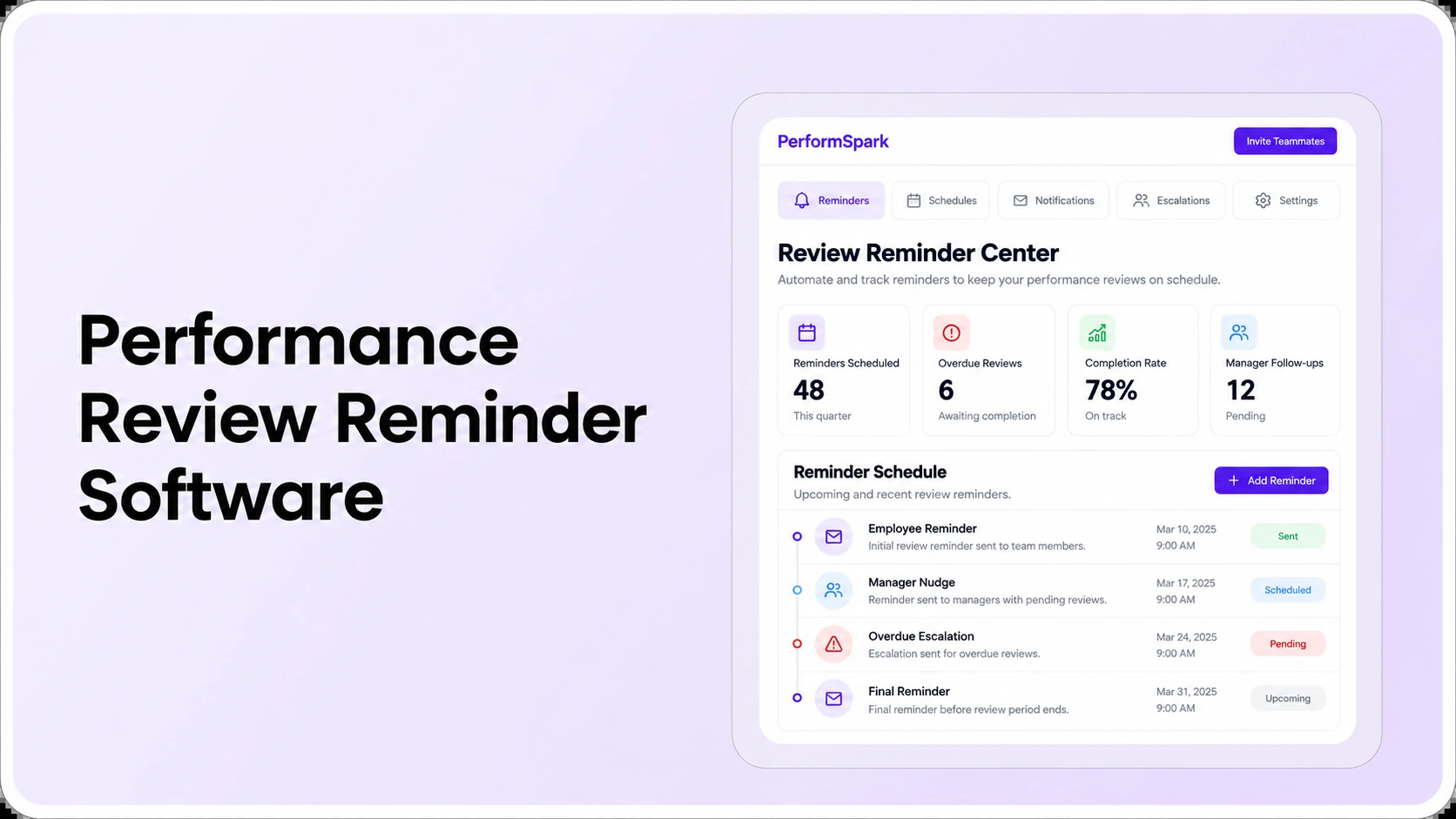
CONNECTED PERFORMANCE DATA

See Risks Early. Keep Decisions Human.

Connect goals, check-ins, feedback, reviews, and reporting in one performance workflow.

Book a Demo Β β†’

Key Takeaways:‍

  • A leading performance KPI is useful only when it creates time for investigation and a relevant human response.
  • At-risk goal aging, check-in continuity, action closure, feedback direction, and evidence coverage reveal different parts of the performance system.
  • Thresholds should use a documented baseline, comparable context, duration, and named action rather than a universal benchmark.
  • Multiple indicators can guide investigation, but no single metric should determine a rating, promotion, retention action, or employment decision.
  • Performance dashboards should improve goals, coaching, resources, and consistency rather than rank employees through surveillance proxies.

Quick answer: Employee performance KPIs act as leading indicators when they reveal a change early enough for a manager or HR team to investigate and respond. Five useful examples are at-risk goal aging, manager check-in continuity, action-item closure, employee feedback direction, and performance-evidence coverage. None should predict an individual outcome or trigger an employment decision by itself.

Last reviewed: July 24, 2026

A missed goal, a final review rating, or a resignation is a completed outcome. It tells HR what happened, but it may arrive too late to change the result. A leading indicator focuses on the conditions developing before that outcome: unresolved dependencies, missing coaching, repeated commitments that remain open, deteriorating employee signals, or weak evidence before a review.

What is the difference between leading and lagging performance indicators?

A leading performance indicator measures a condition that can still be changed before a result is final. A lagging indicator records a completed result, such as goal attainment, a final rating, regrettable turnover, or review-cycle completion.

HR needs both. Leading indicators help teams decide where to investigate or provide support. Lagging indicators help determine whether the performance system produced the intended results. A metric is not genuinely leading merely because it appears on a live dashboard. It must create enough time for a relevant action.

KPIPractical definitionExample calculationHuman response
At-risk goal agingDays active goals remain at risk without a documented decisionSum of at-risk days Γ· number of at-risk goalsReview dependencies, scope, owner, and target
Check-in continuityExpected manager check-ins completed in the defined periodCompleted expected check-ins Γ· scheduled expected check-ins Γ— 100Confirm workload, leave, role design, and coaching support
Action-item closureAgreed performance actions completed or consciously revised by their due dateClosed or revised due actions Γ· all actions due Γ— 100Clarify ownership and remove repeated blockers
Feedback directionComparable change in selected survey items or recurring themesCurrent comparable score minus prior comparable scoreValidate the pattern with context and confidential discussion
Evidence coverageDraft reviews supported by current goals, examples, and prior feedbackDrafts meeting evidence criteria Γ· drafts reviewed Γ— 100Request missing evidence before calibration

1. How does at-risk goal aging reveal performance risk early?

At-risk goal aging shows how long a goal remains in a problem state without a documented decision. The early signal is not that a goal turned red. It is that the risk persists while the owner, dependency, scope, or target remains unresolved.

Define the status rules first. A goal might become at risk when a milestone is missed, a required dependency has no owner, the forecast falls below an agreed range, or the employee explicitly flags a problem. Then measure both the share of active goals at risk and the age of those risks.

Worked example: A team has four at-risk goals aged 3, 6, 14, and 17 days. Average at-risk age is 10 days. That average does not prove poor employee performance. HR should inspect the distribution: the two older goals may share one approval bottleneck that leadership can remove.

Failure point: teams often punish honest risk reporting. When a red status harms the employee, goals stay green until failure is unavoidable. Measure whether risks receive timely decisions, not whether a team has the fewest red goals.

2. Why is manager check-in continuity a leading indicator?

Check-in continuity can reveal a coaching gap before goals or working relationships deteriorate. Measure whether the organization delivered the agreed management rhythm, then examine quality and context rather than treating attendance as proof of effective coaching.

Define which conversations count, the expected cadence by role, and valid exclusions such as leave, onboarding, manager changes, or seasonal operating patterns. Compare a manager with their own baseline and similar work groups before escalating a change.

Worked example: A manager normally completes seven of eight expected biweekly check-ins. Over six weeks, the rate falls to three of eight while several team goals become overdue at risk. The useful response is a conversation about capacity, priorities, and manager support. It is not an automatic conclusion about the manager's capability.

Failure point: completion metrics can produce empty meetings. Pair continuity with a small quality check: current priorities discussed, blockers recorded, development considered when relevant, and clear follow-up agreed.

EARLY COACHING SIGNALS

Connect Check-ins to Real Follow-through

Keep goals, blockers, feedback, and agreed actions visible between manager conversations.

3. What does action-item closure tell HR?

Action-item closure shows whether commitments from goals, check-ins, feedback, and development conversations turn into completed work or conscious decisions. Repeatedly overdue actions can reveal unclear ownership, unrealistic workload, weak manager follow-through, or a dependency outside the employee's control.

Count an action as closed when it is completed, intentionally revised, or canceled with a documented reason. This prevents teams from completing obsolete tasks merely to improve the number. Segment employee-owned, manager-owned, and cross-functional actions because each points to a different remedy.

Worked example: A development action has rolled forward through four check-ins. The employee completed the preparation, but the manager has not arranged the required project exposure. The indicator surfaces a management-system failure. It should not lower the employee's performance assessment.

Failure point: teams create too many vague actions. Every item needs one owner, one due date or review date, and a clear completion condition.

4. Can employee feedback direction act as a leading indicator?

Employee feedback direction can act as an early signal when the same well-defined question or theme changes across comparable groups and periods. Useful topics include role clarity, workload manageability, manager support, confidence in priorities, and the ability to raise risks.

Do not combine unrelated survey items into a mysterious risk score. Check question wording, response population, participation, confidentiality thresholds, and organizational events before comparing results. Open-ended comments can explain a pattern, but sentiment analysis should not be used to label an individual employee.

Worked example: Team confidence in priority clarity falls across two short pulses after a restructuring, while at-risk goal age rises. The combined evidence supports a priority-reset discussion. It does not prove that engagement caused lower performance.

Failure point: collecting feedback without action teaches employees that the survey is observation rather than listening. Assign an owner, communicate what was heard, and state what will or will not change.

5. How does performance-evidence coverage prevent review problems?

Performance-evidence coverage measures whether draft reviews are supported before ratings are finalized. A strong draft refers to current expectations, relevant work examples, prior feedback, and changed goals instead of relying on recent memory or a manager's general impression.

Create a short evidence checklist rather than a formula that calculates the rating. For example: current goals reviewed, material goal changes recorded, examples linked to the rating period, employee input considered, and development or conduct topics previously discussed where appropriate.

The EEOC recommends that appraisals reflect actual job performance and that comparable performance receive consistent ratings. Evidence coverage helps HR identify missing support before performance calibration, while managers still have time to clarify the record.

Failure point: evidence volume can reward roles with easily counted output and disadvantage collaborative, long-cycle, or less visible work. Review evidence relevance and job context, not document count.

How should HR set thresholds for leading performance KPIs?

Set thresholds from a documented baseline, relevant comparison group, duration, and action rule. Avoid copying universal targets because cadence, role design, goal length, team size, and data quality vary across organizations.

  1. Write the metric definition. Specify numerator, denominator, exclusions, owner, and update frequency.
  2. Observe a baseline. Understand normal variation before defining an alert.
  3. Require persistence or combination. One missed check-in may mean little; a sustained decline combined with an older goal risks deserves review.
  4. Name the human action. An alert should lead to a question, resource decision, or process check.
  5. Review false alarms. Record when the indicator was misleading and refine the rule.

What should HR avoid when tracking employee performance KPIs?

Avoid keystroke counts, online-status time, message volume, isolated sentiment scores, and opaque productivity rankings as proxies for performance. These measures often confuse visible activity with job outcomes and can miss context, accessibility needs, collaboration, and work completed outside the monitored channel.

Use the minimum data needed for a defined management purpose. Tell employees what is measured, how it is interpreted, who can access it, and what decisions it cannot make. EEOC materials warn that automated technologies used to monitor performance or support employment decisions can create discrimination risks. Human review is necessary, but it is not enough unless the underlying measure is job-relevant and consistently applied.

How can HR build an early-warning performance dashboard?

Build the dashboard around questions managers can answer, not colors executives can watch. A useful view shows the trend, duration, comparison period, data limitations, supporting records, and named owner for follow-up.

  • Use goal management for current status, dependencies, and at-risk age.
  • Use structured check-ins for coaching continuity and action ownership.
  • Use feedback and surveys for comparable team-level signals.
  • Use review evidence and rating distributions to prepare for calibration.
  • Use reporting and analytics to combine system-level patterns while preserving human interpretation.

Research basis: The measurement approach draws on OSHA's leading-indicator guidance, CIPD's current performance-management factsheet, and EEOC performance-appraisal best practices. The automated-monitoring safeguard reflects the EEOC's explanation of AI in employment activities.
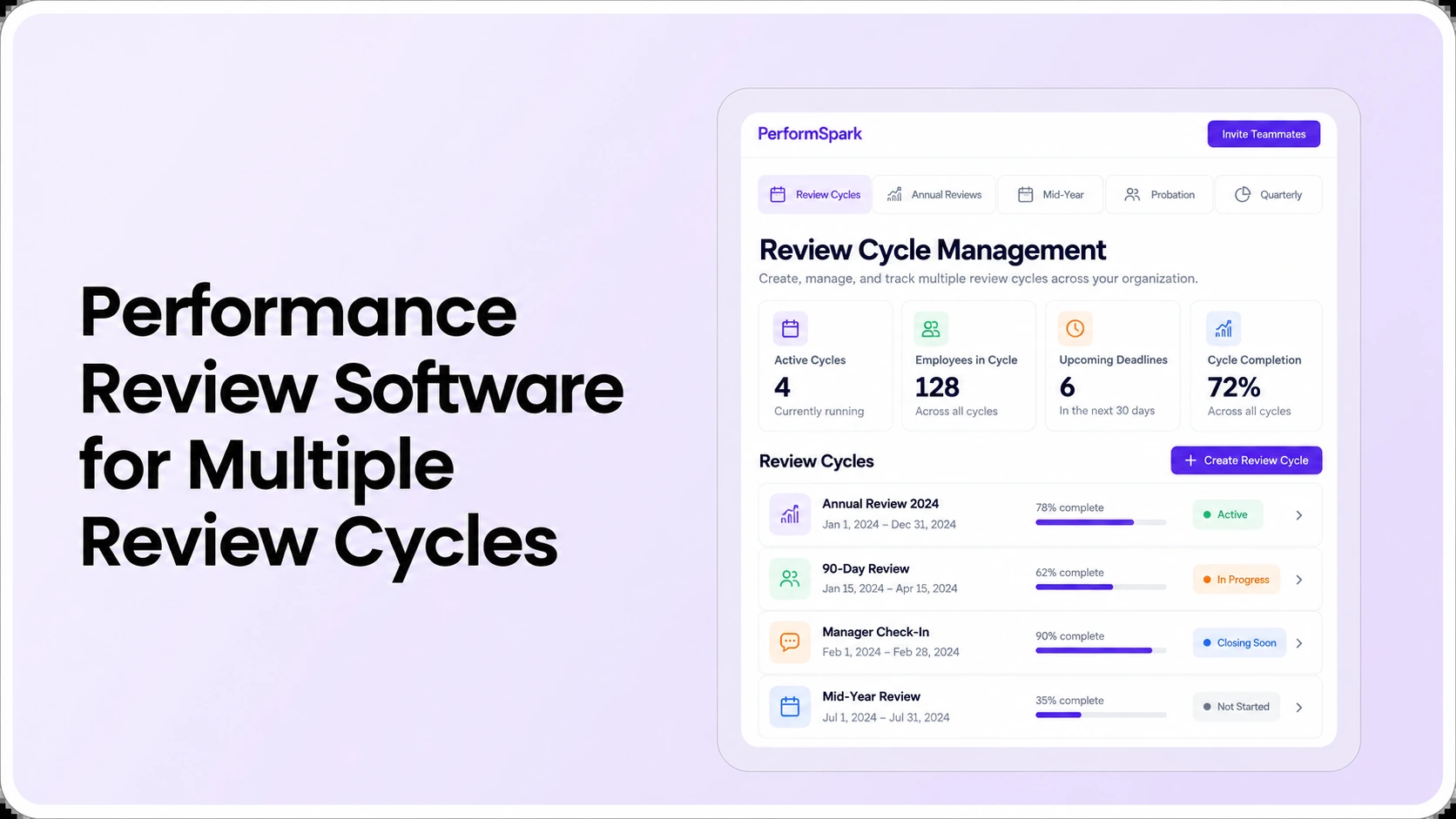
CONNECTED PERFORMANCE DATA

See Risks Early. Keep Decisions Human.

Connect goals, check-ins, feedback, reviews, and reporting in one performance workflow.

Book a Demo Β β†’

Frequently Asked Questions

What are employee performance KPIs?

What is the difference between leading and lagging performance indicators?

Can employee performance KPIs predict future performance?

How many employee performance KPIs should HR track?

How can AI support employee performance KPI analysis?

Text reading 'Potential starts here.' with 'here.' in blue.

Make performance reviews your growth lever

No credit card required β€’ Free setup & training included β€’ Cancel anytime

CTA ShapeCTA Shape