
PerformSpark for HR Business Partners: Business-Unit Performance Visibility Without Waiting on Central HR

The operational reality is that most HRBPs do not have direct system access to the data they need. They depend on central HR to pull rating distributions, share check-in completion reports, or extract the goal progress data that would tell them which managers need coaching before the calibration session.

No IT Required

Manager-Friendly

Future-Proof Growth

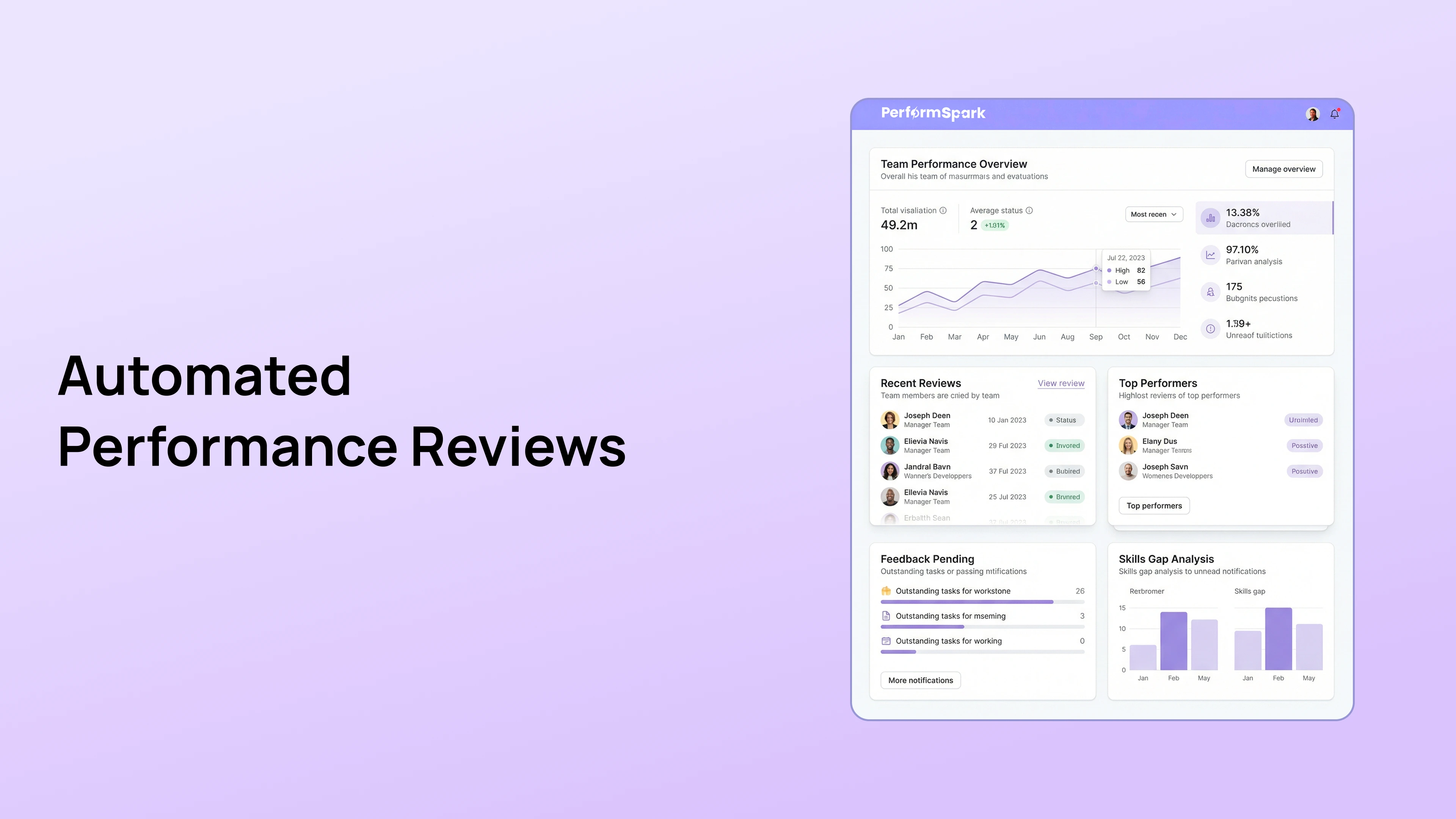
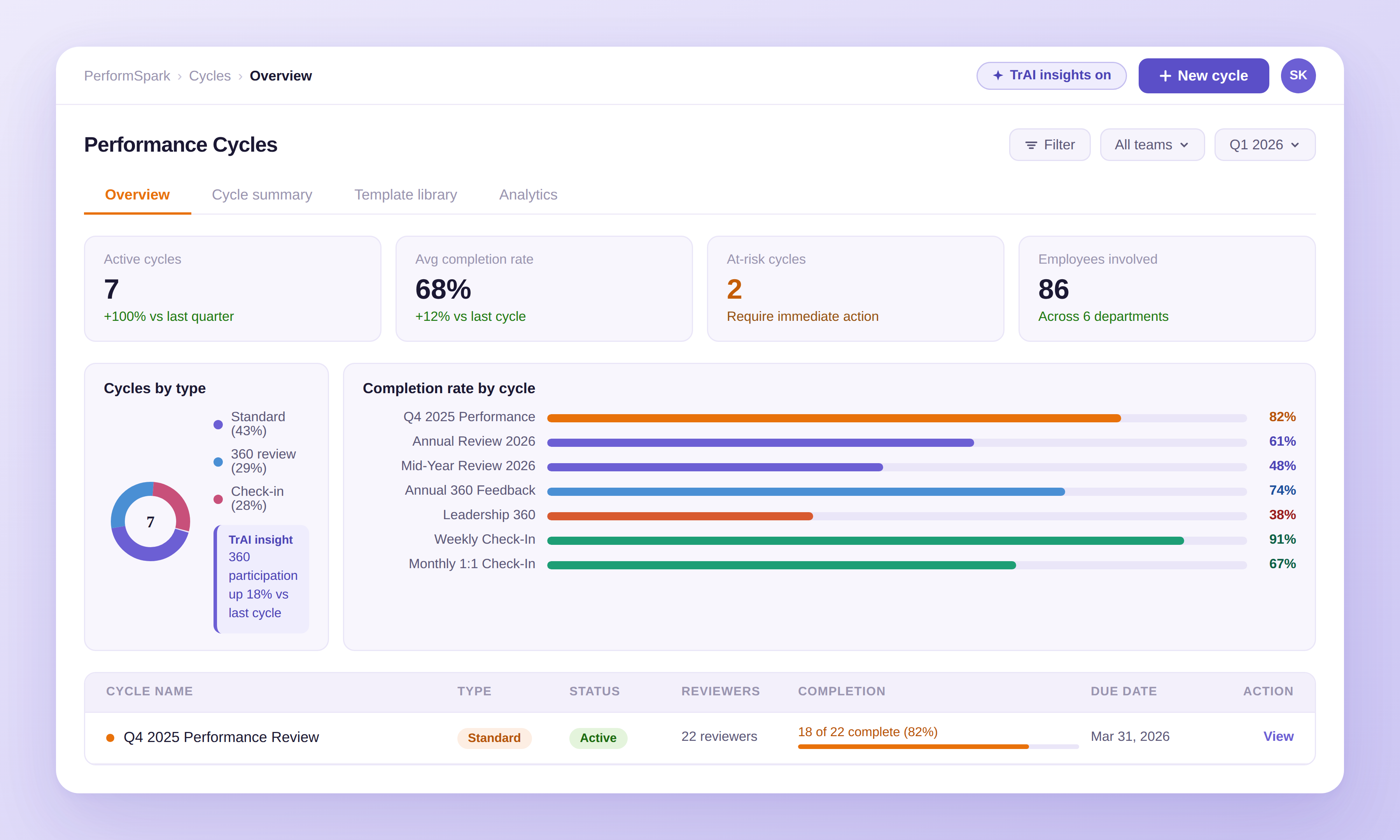
Automated review cycles

Key Takeaways

Filterable Calibration Cohorts

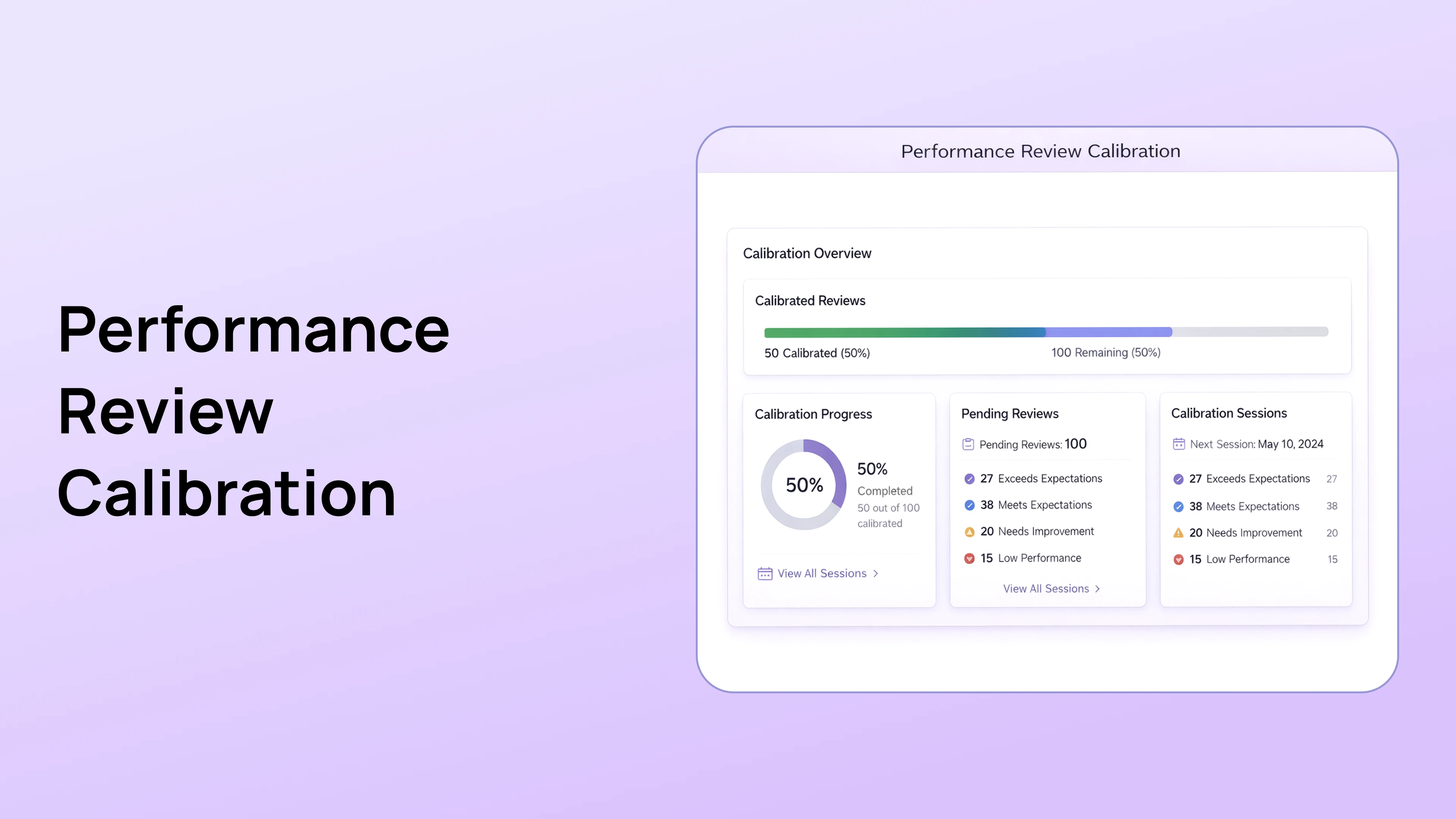
HRBPs run calibration for a specific manager cohort, not the whole organization. PerformSpark's pre-session analysis is filterable by business unit, so the HRBP sees only their cohort's distribution without central HR extracting and sharing data.

Localized Attrition Signals

The attrition signals that matter to an HRBP are at the team level, a specific manager's check-in cadence dropping, a specific team's pulse scores declining. PerformSpark's business-unit dashboard gives HRBPs direct visibility into these signals.

Evidence-Led Conversation Coaching

HRBPs spend significant time coaching managers on performance conversation language. PerformSpark's check-in records and IDP documentation give the HRBP the evidence layer for those coaching conversations, specific data rather than managerial impressions.

Proactive Process Monitoring

HRBPs are often the first to know when a performance management process is not working at the manager level. PerformSpark surfaces the operational signals, check-in completion rates, review completion rates, IDP creation rates - that tell the HRBP which managers need the most support before review cycles get into trouble.

What HRBPs Use PerformSpark For

Designed as a comprehensive operational system, PerformSpark shifts the HRBP focus from tedious data collection to strategic leadership alignment.

Running calibration for a specific business unit cohort

HRBPs typically own calibration for a specific group of managers, a division, a function, or a department. PerformSpark's TrAI generates the pre-session analysis filtered to that specific cohort: rating distributions by manager, outlier flags, and bias patterns within the HRBP's scope.

Monitoring check-in cadence for their manager cohort

HRBPs who embed in business units develop an informal sense of which managers are coaching consistently and which are not. PerformSpark replaces that informal sensing with a quantified view: check-in frequency by manager, by direct report, and by team. updated in real time.

Supporting managers through difficult conversations

HRBPs coach managers through comfortable and uncomfortable conversations, underperformance discussions, rating delivery, and PIP initiation. PerformSpark's check-in records and IDP documentation give HRBPs the supporting evidence layer for these conversations.

Identifying attrition risk in their business unit

HRBPs are often the first to hear about a resignation. PerformSpark gives HRBPs leading indicators: check-in cadence drops for specific employees, pulse score declines correlated with manager coaching frequency, and recognition trends that precede disengagement.

Tracking IDP and PIP progress for their cohort

HRBPs are accountable to business-unit leadership for development outcomes. PerformSpark's IDP and PIP dashboards give HRBPs a real-time view of development plan creation rates, milestone completion rates, and developmental conversation frequency for their specific cohort.

The Data Obstacle Block: Needs vs. Standard Access

Data the HRBP Needs
Without PerformSpark (The Old Way)
With PerformSpark (The Modern Way)
1
Rating distribution for their calibration cohort
Facilitate division reviews easily with local context
Request from central HR, wait 2–3 days, receive a static spreadsheet.
TrAI generates automatically, filterable to their cohort, available the day before the session.
2
Check-in frequency by manager in their unit
Identify check-in gaps before reviews starts
No direct visibility unless managers self-report manually.
Live view by manager, direct report, and team - updated in real time.
3
IDP completion rates for their business unit
Promote talent development and career loops
Annual HR ops report, if it exists at all.
Real-time dashboard filterable to their manager cohort.
4
Pulse score trends for their teams
Quantify connection drops & team attrition risk
Quarterly engagement survey summary from central HR.
Monthly pulse data by team, correlated directly with check-in cadence.
5
PIP documentation status for their employees
Provide evidence-based coaching history
Constant email exchanges with central HR and the manager.
Direct visibility into active PIPs, milestones, and coaching history.
Rating distribution for their calibration cohort
Facilitate division reviews easily with local context
Without PerformSpark (The Old Way)
Request from central HR, wait 2–3 days, receive a static spreadsheet.
With PerformSpark (The Modern Way)
TrAI generates automatically, filterable to their cohort, available the day before the session.
Check-in frequency by manager in their unit
Identify check-in gaps before reviews starts
Without PerformSpark (The Old Way)
No direct visibility unless managers self-report manually.
With PerformSpark (The Modern Way)
Live view by manager, direct report, and team - updated in real time.
IDP completion rates for their business unit
Promote talent development and career loops
Without PerformSpark (The Old Way)
Annual HR ops report, if it exists at all.
With PerformSpark (The Modern Way)
Real-time dashboard filterable to their manager cohort.
Pulse score trends for their teams
Quantify connection drops & team attrition risk
Without PerformSpark (The Old Way)
Quarterly engagement survey summary from central HR.
With PerformSpark (The Modern Way)
Monthly pulse data by team, correlated directly with check-in cadence.
PIP documentation status for their employees
Provide evidence-based coaching history
Without PerformSpark (The Old Way)
Constant email exchanges with central HR and the manager.
With PerformSpark (The Modern Way)
Direct visibility into active PIPs, milestones, and coaching history.

How HRBPs Use TrAI for Business-Unit Calibration

TrAI's pre-session calibration analysis is the most operationally significant tool for HRBPs who run calibration for a specific manager cohort. The traditional HRBP preparation workflow for a calibration session: pull rating data from central HR (2 to 3 days), build the distribution view by manager in Excel, calculate cohort averages, identify outliers manually, print or share the analysis 48 hours before the session.

"For HRBPs who run two calibration cycles per year, this represents 4 to 6 days of recovered preparation time annually - time that shifts from data preparation to manager coaching and business partner work."

With TrAI: the HRBP receives the automatically generated analysis, rating distribution for their specific cohort, outlier flags, leniency and severity bias patterns - in the PerformSpark dashboard. They review it, identify the three to five discussions that will need facilitation, prepare one evidence question per anticipated discussion point, and go into the calibration session with a facilitation plan rather than a spreadsheet.

Your questions answered

Have questions about PerformSpark? Here are some of the most common queries to help you get started.

Ready to Manage Performance Fairly and Effectively?

Create structured, transparent PIPs that guide improvement and protect your organization.

Contact us

What does an HR Business Partner do in the performance management process?

What types of performance reviews can this software manage?

How does PerformSpark help HRBPs coach managers?

What is the difference between an HR Business Partner and an HR leader in PerformSpark?

Run structured review cycles that improve performance and deliver measurable growth.

Contact Us

Make performance reviews your growth lever

No credit card required • Free setup & training included • Cancel anytime

CTA ShapeCTA Shape