
Check-In and 1-on-1 Software That Makes Coaching Cadence Visible
The most predictive indicator of whether a knowledge worker will leave voluntarily is not compensation, not team size, and not workload. It is whether their manager is having regular structured coaching conversations with them.
Four Survey and Feedback Types - Connected to Performance Data
In PerformSpark's platform data, the pattern before voluntary resignation is consistent across industries:
- Weeks 12–8 before resignation: Manager check-in frequency begins to drop below the established cadence
- Weeks 8–4: Pulse survey scores begin to decline
- Weeks 4–2: Goal update frequency drops; engagement signals are lowest
- Week of resignation: The resignation arrives
An HR leader with an automated alert at the 14-day check-in threshold has 8 to 10 weeks of lead time to intervene. An HR leader without that visibility learns about the problem when the resignation letter arrives.
What PerformSpark Check-In Software Does
.svg)
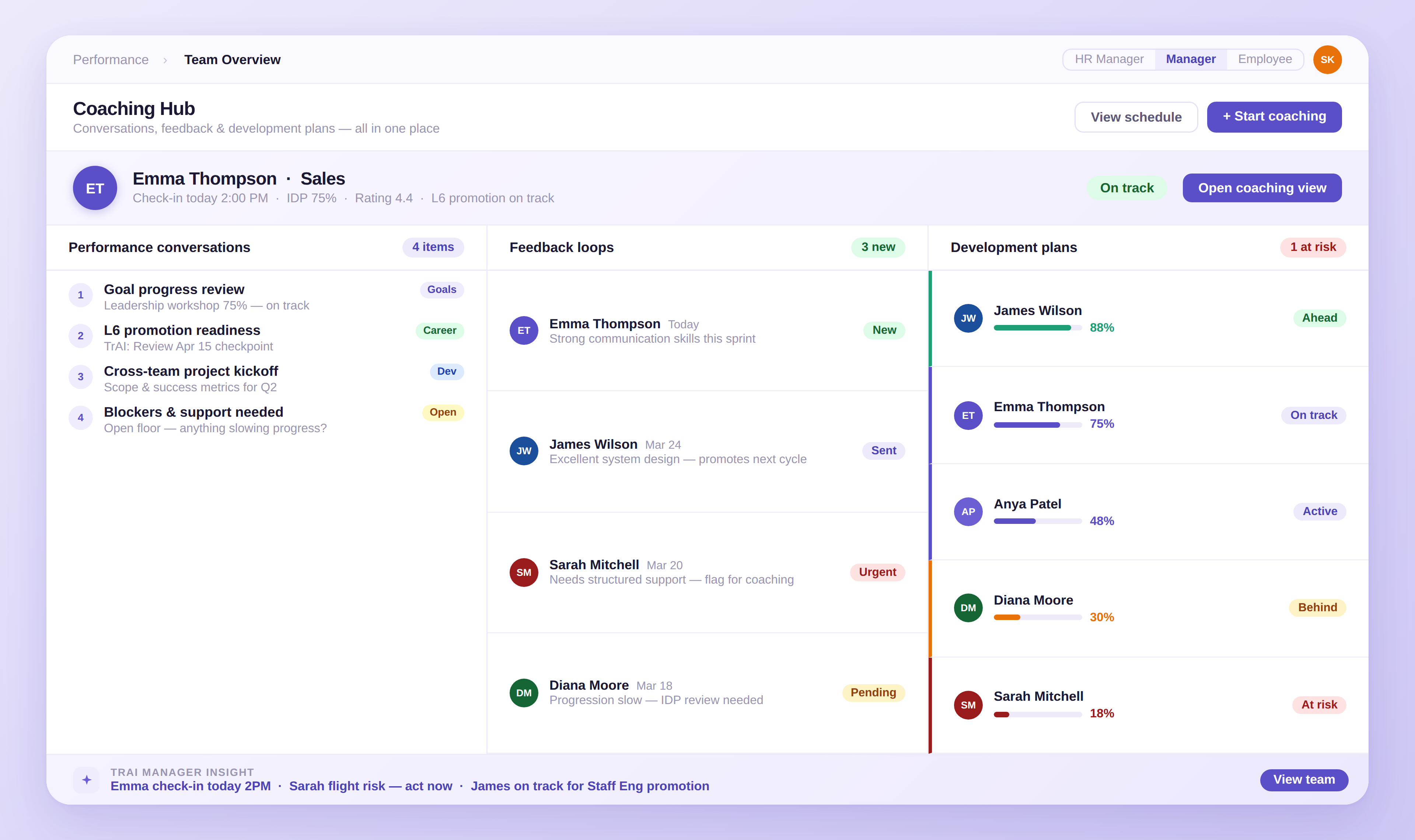
Tracks coaching frequency across the full manager cohort
Every check-in logged in PerformSpark creates a timestamped coaching record. HR leaders can see check-in frequency by manager, by direct report, and by team in a live view that updates as check-ins are logged. Managers with consistent 1-on-1s are visible. Managers whose cadence has dropped are visible.

Stores meeting notes connected to performance records
Check-in notes become part of the employee's performance history. When a manager conducts the annual review, they have a full year of documented coaching conversations to reference, specific feedback given, commitments made, development discussions held. The review is written from evidence, not from memory.
.svg)
Connects to IDP and PIP workflows
Development commitments discussed in a check-in connect directly to the employee's IDP record. Performance concerns surfaced in a check-in that escalate to a formal PIP carry a documented pre-PIP coaching history that makes the formal process more defensible.
Surfaces goal progress in the check-in agenda
Employees' active goals appear in the check-in view so goal progress is a standing agenda item. Managers do not need to navigate to a separate goal management view, it is part of the 1-on-1 interface.
Alerts HR to coaching cadence drops
When a manager has not logged a check-in for more than the configured threshold, typically 14 days - PerformSpark generates an alert in the HR dashboard and can send an optional automated reminder to the manager.
What a Well-Structured Check-In Conversation Covers
Effective check-ins balance operational updates with developmental coaching. PerformSpark templates cover the essential foundations:
.svg)
Goal progress
Status updates on active OKRs and SMART goal milestones.
.svg)
Current priorities and blockers
What is the employee working on and what needs manager involvement?
.svg)
Development discussion
Update on any active IDP commitments or skill-building activity.
Feedback exchange
What is working and what could the manager do differently?
The GROW model for modern coaching
The GROW coaching model, Goal, Reality, Options, Will, is a structured framework managers can apply within the development section of check-in conversations to shift from status updates to genuine coaching discussions.

FAQ
Frequently Asked Questions
Ready to Manage Performance Fairly and Effectively?
Create structured, transparent PIPs that guide improvement and protect your organization.
What is manager 1-on-1 check-in software?
How often should managers hold 1-on-1 check-ins?
How does check-in frequency predict employee attrition?
What should be included in a manager 1-on-1 check-in?
Does PerformSpark connect check-in notes to performance reviews?
How do check-in records support PIP and IDP conversations?
See PerformSpark Running a Professional Services Review Cycle
Book a 30-minute demo. We will walk through cross-practice calibration, project-based goal tracking, and development plan management for a consulting team.




.svg)

.svg)
.svg)

