


.webp)
Table of Content
Performance Management for Healthcare Organizations: The Complete Guide (2026)
Healthcare organizations face a version of performance management that is uniquely high-stakes. The connection between individual staff performance and patient outcomes is direct and measurable. Regulatory bodies including the Joint Commission, CMS, and state licensing authorities require documented evidence of performance standards, corrective action processes, and competency assessments. Staff turnover, particularly among clinical roles, carries financial and care-continuity costs that are significantly higher than in most other industries.
A well-designed performance management system in healthcare does more than evaluate individual staff members. It protects patient safety, reduces legal exposure, demonstrates regulatory compliance, and provides the documented development framework that clinical staff need to advance their careers and stay engaged in demanding roles.
This page covers what makes healthcare performance management distinct, the specific components that effective clinical systems include, and how to build a process that works across a complex, compliance-driven environment.
Why Is Performance Management Different in Healthcare?
Three factors make healthcare performance management structurally different from performance management in most other industries:
The regulatory compliance dimension
Healthcare organizations are subject to ongoing audits from regulatory bodies that expect documented evidence of performance standards, corrective action processes, and competency maintenance. A performance management system that produces defensible documentation, structured review records, calibrated ratings, development plans connected to identified skill gaps, and PIPs with clear timelines and outcomes, is not just good HR practice. It is a regulatory requirement.
Joint Commission and CMS surveys examine whether performance management processes exist and whether they are consistently applied. Organizations that cannot demonstrate consistent, documented performance standards across their clinical workforce face compliance risk that extends well beyond HR.
The patient outcomes connection
In healthcare, individual staff performance connects directly to patient safety, patient experience scores, and adverse event rates. An underperforming clinical staff member is not just a productivity issue, it is a patient safety issue. Performance management systems that identify competency gaps early, provide structured development support, and document the organization's response create both better care outcomes and a defensible record if an adverse event is later challenged.
The turnover cost reality
Healthcare organizations face some of the highest employee turnover costs of any industry. Nursing turnover alone costs hospitals tens of thousands of dollars per departure when accounting for recruitment, onboarding, temporary staffing, and the productivity gap during the transition period. Performance management done well, with consistent development conversations, clear career pathways, and recognition of clinical contribution, is one of the most cost-effective retention investments available to a healthcare HR team.
What Are the Key Components of Effective Healthcare Performance Management?
Clinical competency-based goal setting
Healthcare performance goals should focus on the specific clinical competencies required for the role and the regulatory standards the organization must demonstrate. Research from PerformYard's 2025 State of Healthcare Performance Management report found that 86.4% of healthcare organizations use 1-5 goals per employee focused on critical clinical competencies, a targeted approach that supports both performance improvement and compliance documentation.
Goals should connect to both individual development needs and organizational performance priorities: patient safety metrics, patient experience scores, clinical protocol adherence, and documentation standards.
Structured review cycles with role-specific templates
Healthcare organizations using 15-20 performance review questions, including a mix of competency ratings and open-ended clinical assessment questions, achieve 95.44% review completion rates, according to PerformYard's 2025 research. Short forms feel insufficient for the complexity of clinical roles and produce lower completion rates and less useful documentation.
Review templates should be customized by role type: clinical staff (nurses, therapists, physicians) require different competency frameworks than administrative or operational staff. Role-specific templates produce more useful performance data and demonstrate to regulatory bodies that assessments are meaningful rather than generic.
360-degree feedback for clinical and leadership roles
In healthcare, peer and patient feedback are particularly valuable supplements to manager assessment. Clinical staff work closely with colleagues in ways that managers do not always observe directly. 360-degree feedback that includes peer input from other clinical staff, not just manager ratings, provides a more complete picture of clinical competency, team collaboration, and patient interaction quality.
360 surveys in clinical environments should be structured around observable behaviors tied to role competencies, not general personality traits. This produces more actionable feedback and more defensible documentation.
Documentation standards that support regulatory compliance
Every performance conversation in a healthcare organization should produce a documented record in the performance management system. Check-in notes, feedback records, development plan updates, and formal review ratings should all be stored in a centralized system rather than scattered across email threads and paper files.
This documentation serves two purposes: it informs future performance conversations and provides the audit trail that regulatory surveys require. Healthcare organizations that can demonstrate systematic, consistent performance management practices across their workforce are significantly better positioned in Joint Commission and CMS surveys.
How Does Calibration Work in a Clinical Environment?
Calibration, the process of comparing performance ratings across managers to ensure consistent standards, is particularly important in healthcare for two reasons.
First, healthcare organizations typically have complex reporting structures where clinical staff may be assessed by charge nurses, unit managers, department directors, and clinical supervisors with varying levels of experience in performance evaluation. Without calibration, the same level of clinical performance can receive different ratings depending on which manager is doing the assessing.
Second, healthcare compensation and advancement decisions, including merit increases, shift preferences, and promotion to charge or supervisory roles, must be demonstrably fair across the workforce. Calibrated ratings provide the evidentiary basis for these decisions and reduce legal exposure if they are challenged.
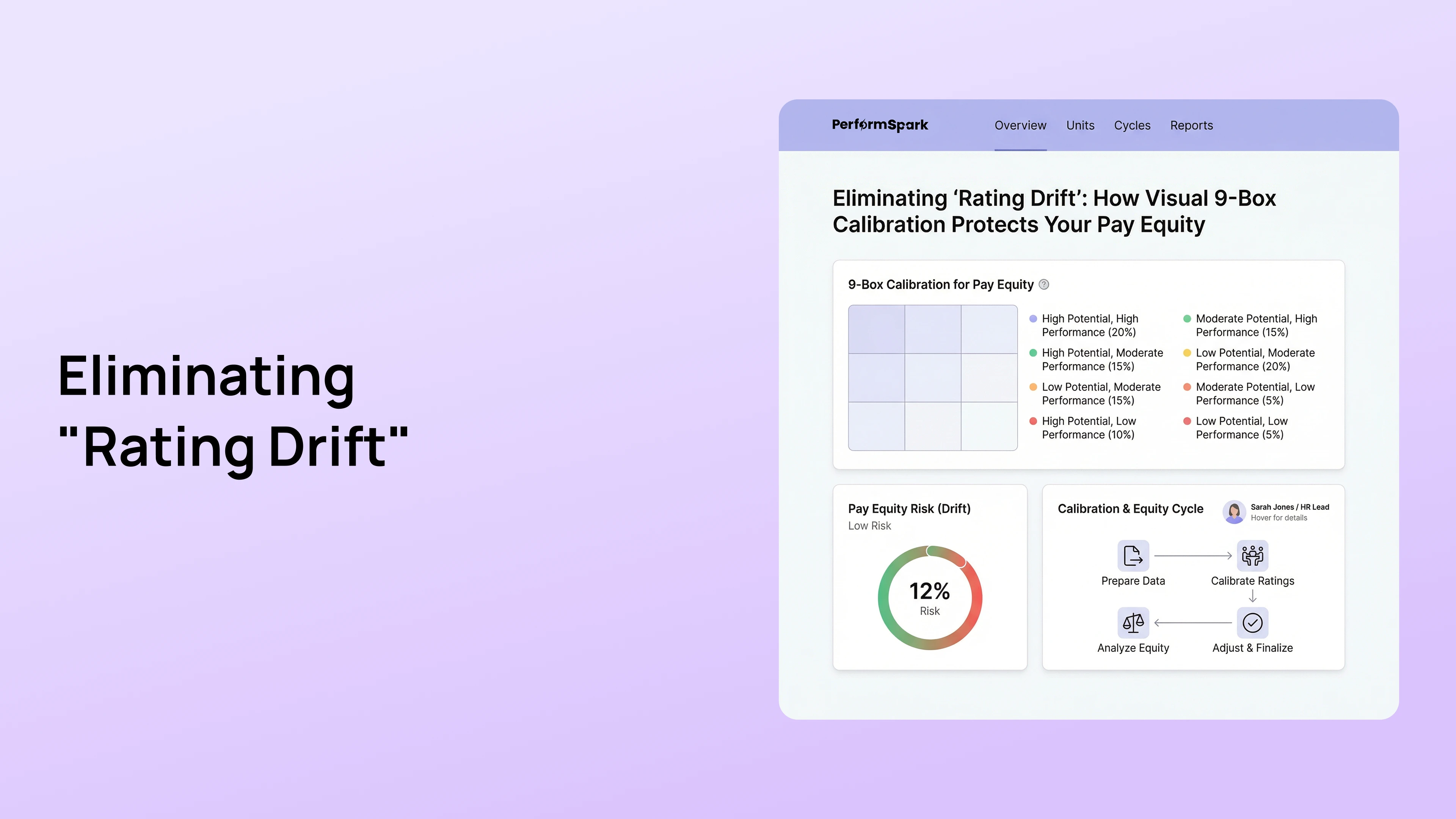
Effective calibration in a healthcare organization follows the same structure as calibration in any other sector: pre-session distribution analysis, session review of flagged outliers with supporting evidence, and post-session rating adjustments before compensation decisions are made. TrAI pre-computes these distribution outliers automatically, giving HR facilitators the data they need to run a focused, efficient calibration session even across large clinical workforces.
How Do You Handle Underperformance in a Healthcare Setting?
Underperformance in a clinical role requires a structured, documented response that is more urgent and more consequential than underperformance in most other industries. A clinical staff member who is not meeting competency standards is a patient safety risk, and the organization's response must reflect that urgency while also demonstrating fair process.
The structured PIP in a healthcare context should include:
- A specific description of the competency gap, documented with observed examples tied to patient care standards.
- Measurable improvement targets with a defined timeline, typically 30, 60, or 90 days for clinical performance issues.
- Specified support resources: additional training, clinical supervision, mentoring from a senior clinician, or simulation lab practice.
- Formal check-in points documented in the performance management system throughout the PIP period.
- A clear outcome statement: what constitutes successful completion of the PIP and what happens if the competency standard is not reached.
A well-documented PIP in a healthcare setting protects the organization legally, demonstrates to regulatory bodies that competency concerns are addressed systematically, and gives the staff member a genuine opportunity to improve with structured support.
How Do You Choose Performance Management Software for a Healthcare Organization?
Healthcare organizations evaluating performance management platforms should prioritize several criteria beyond those that apply to most industries:
- Role-specific review templates. The platform should support different competency frameworks for different role types, clinical versus administrative versus operational, without requiring significant technical customization.
- Structured PIP workflows. Healthcare organizations need PIP documentation that is connected to the employee's review history, goal record, and clinical competency assessments, not a separate document process that is disconnected from the performance system.
- Calibration support. Built-in distribution analysis and calibration session support, ideally with AI-powered outlier detection, reduces the manual workload of running calibration across large or complex clinical workforces.
- Documentation completeness. Every check-in, feedback record, development plan update, and formal review must be stored in a centralized, searchable system that can produce a complete performance history on request.
- Implementation timeline. Healthcare organizations frequently have active survey cycles and regulatory review windows. A platform that requires months of implementation before a review cycle can launch creates real scheduling risk.
PerformSpark includes structured PIP workflows, AI-assisted calibration via TrAI, customizable review templates, and complete check-in and feedback documentation in a single platform at $6 per user per month. Typical implementation runs one to two weeks.
Performance Management Built for Healthcare
PerformSpark gives healthcare HR teams structured review cycles, AI-assisted calibration, documented PIP workflows, and continuous check-in records — all in one platform at $6 per user per month. Setup in one to two weeks, no implementation consultants required. Book a Demo
Performance Management for Healthcare Organizations: The Complete Guide (2026)
Healthcare organizations face a version of performance management that is uniquely high-stakes. The connection between individual staff performance and patient outcomes is direct and measurable. Regulatory bodies including the Joint Commission, CMS, and state licensing authorities require documented evidence of performance standards, corrective action processes, and competency assessments. Staff turnover, particularly among clinical roles, carries financial and care-continuity costs that are significantly higher than in most other industries.
A well-designed performance management system in healthcare does more than evaluate individual staff members. It protects patient safety, reduces legal exposure, demonstrates regulatory compliance, and provides the documented development framework that clinical staff need to advance their careers and stay engaged in demanding roles.
This page covers what makes healthcare performance management distinct, the specific components that effective clinical systems include, and how to build a process that works across a complex, compliance-driven environment.
Why Is Performance Management Different in Healthcare?
Three factors make healthcare performance management structurally different from performance management in most other industries:
The regulatory compliance dimension
Healthcare organizations are subject to ongoing audits from regulatory bodies that expect documented evidence of performance standards, corrective action processes, and competency maintenance. A performance management system that produces defensible documentation, structured review records, calibrated ratings, development plans connected to identified skill gaps, and PIPs with clear timelines and outcomes, is not just good HR practice. It is a regulatory requirement.
Joint Commission and CMS surveys examine whether performance management processes exist and whether they are consistently applied. Organizations that cannot demonstrate consistent, documented performance standards across their clinical workforce face compliance risk that extends well beyond HR.
The patient outcomes connection
In healthcare, individual staff performance connects directly to patient safety, patient experience scores, and adverse event rates. An underperforming clinical staff member is not just a productivity issue, it is a patient safety issue. Performance management systems that identify competency gaps early, provide structured development support, and document the organization's response create both better care outcomes and a defensible record if an adverse event is later challenged.
The turnover cost reality
Healthcare organizations face some of the highest employee turnover costs of any industry. Nursing turnover alone costs hospitals tens of thousands of dollars per departure when accounting for recruitment, onboarding, temporary staffing, and the productivity gap during the transition period. Performance management done well, with consistent development conversations, clear career pathways, and recognition of clinical contribution, is one of the most cost-effective retention investments available to a healthcare HR team.
What Are the Key Components of Effective Healthcare Performance Management?
Clinical competency-based goal setting
Healthcare performance goals should focus on the specific clinical competencies required for the role and the regulatory standards the organization must demonstrate. Research from PerformYard's 2025 State of Healthcare Performance Management report found that 86.4% of healthcare organizations use 1-5 goals per employee focused on critical clinical competencies, a targeted approach that supports both performance improvement and compliance documentation.
Goals should connect to both individual development needs and organizational performance priorities: patient safety metrics, patient experience scores, clinical protocol adherence, and documentation standards.
Structured review cycles with role-specific templates
Healthcare organizations using 15-20 performance review questions, including a mix of competency ratings and open-ended clinical assessment questions, achieve 95.44% review completion rates, according to PerformYard's 2025 research. Short forms feel insufficient for the complexity of clinical roles and produce lower completion rates and less useful documentation.
Review templates should be customized by role type: clinical staff (nurses, therapists, physicians) require different competency frameworks than administrative or operational staff. Role-specific templates produce more useful performance data and demonstrate to regulatory bodies that assessments are meaningful rather than generic.
360-degree feedback for clinical and leadership roles
In healthcare, peer and patient feedback are particularly valuable supplements to manager assessment. Clinical staff work closely with colleagues in ways that managers do not always observe directly. 360-degree feedback that includes peer input from other clinical staff, not just manager ratings, provides a more complete picture of clinical competency, team collaboration, and patient interaction quality.
360 surveys in clinical environments should be structured around observable behaviors tied to role competencies, not general personality traits. This produces more actionable feedback and more defensible documentation.
Documentation standards that support regulatory compliance
Every performance conversation in a healthcare organization should produce a documented record in the performance management system. Check-in notes, feedback records, development plan updates, and formal review ratings should all be stored in a centralized system rather than scattered across email threads and paper files.
This documentation serves two purposes: it informs future performance conversations and provides the audit trail that regulatory surveys require. Healthcare organizations that can demonstrate systematic, consistent performance management practices across their workforce are significantly better positioned in Joint Commission and CMS surveys.
How Does Calibration Work in a Clinical Environment?
Calibration, the process of comparing performance ratings across managers to ensure consistent standards, is particularly important in healthcare for two reasons.
First, healthcare organizations typically have complex reporting structures where clinical staff may be assessed by charge nurses, unit managers, department directors, and clinical supervisors with varying levels of experience in performance evaluation. Without calibration, the same level of clinical performance can receive different ratings depending on which manager is doing the assessing.
Second, healthcare compensation and advancement decisions, including merit increases, shift preferences, and promotion to charge or supervisory roles, must be demonstrably fair across the workforce. Calibrated ratings provide the evidentiary basis for these decisions and reduce legal exposure if they are challenged.
Effective calibration in a healthcare organization follows the same structure as calibration in any other sector: pre-session distribution analysis, session review of flagged outliers with supporting evidence, and post-session rating adjustments before compensation decisions are made. TrAI pre-computes these distribution outliers automatically, giving HR facilitators the data they need to run a focused, efficient calibration session even across large clinical workforces.
How Do You Handle Underperformance in a Healthcare Setting?
Underperformance in a clinical role requires a structured, documented response that is more urgent and more consequential than underperformance in most other industries. A clinical staff member who is not meeting competency standards is a patient safety risk, and the organization's response must reflect that urgency while also demonstrating fair process.
The structured PIP in a healthcare context should include:
- A specific description of the competency gap, documented with observed examples tied to patient care standards.
- Measurable improvement targets with a defined timeline, typically 30, 60, or 90 days for clinical performance issues.
- Specified support resources: additional training, clinical supervision, mentoring from a senior clinician, or simulation lab practice.
- Formal check-in points documented in the performance management system throughout the PIP period.
- A clear outcome statement: what constitutes successful completion of the PIP and what happens if the competency standard is not reached.
A well-documented PIP in a healthcare setting protects the organization legally, demonstrates to regulatory bodies that competency concerns are addressed systematically, and gives the staff member a genuine opportunity to improve with structured support.
How Do You Choose Performance Management Software for a Healthcare Organization?
Healthcare organizations evaluating performance management platforms should prioritize several criteria beyond those that apply to most industries:
- Role-specific review templates. The platform should support different competency frameworks for different role types, clinical versus administrative versus operational, without requiring significant technical customization.
- Structured PIP workflows. Healthcare organizations need PIP documentation that is connected to the employee's review history, goal record, and clinical competency assessments, not a separate document process that is disconnected from the performance system.
- Calibration support. Built-in distribution analysis and calibration session support, ideally with AI-powered outlier detection, reduces the manual workload of running calibration across large or complex clinical workforces.
- Documentation completeness. Every check-in, feedback record, development plan update, and formal review must be stored in a centralized, searchable system that can produce a complete performance history on request.
- Implementation timeline. Healthcare organizations frequently have active survey cycles and regulatory review windows. A platform that requires months of implementation before a review cycle can launch creates real scheduling risk.
PerformSpark includes structured PIP workflows, AI-assisted calibration via TrAI, customizable review templates, and complete check-in and feedback documentation in a single platform at $6 per user per month. Typical implementation runs one to two weeks.
Performance Management Built for Healthcare
PerformSpark gives healthcare HR teams structured review cycles, AI-assisted calibration, documented PIP workflows, and continuous check-in records — all in one platform at $6 per user per month. Setup in one to two weeks, no implementation consultants required. Book a Demo




.svg)

.svg)
.svg)