

Table of Content
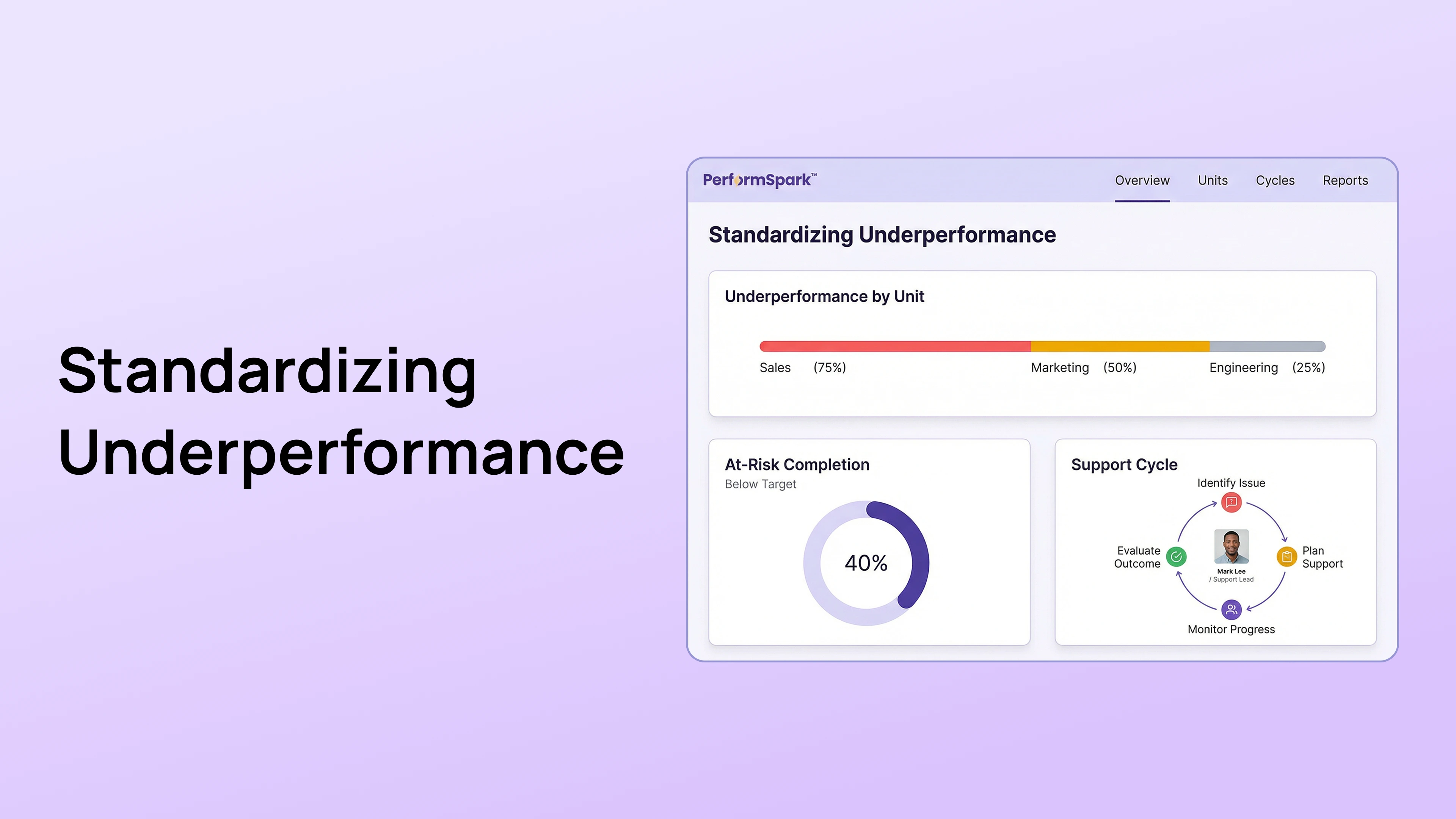
Standardizing Underperformance: A Fair, Objective Approach to PIPs and Retention
The acronym PIP strikes fear into the heart of every employee and frustration into the mind of every manager.
In most organizations, the Performance Improvement Plan (PIP) is viewed as a formality or a paper trail created solely to justify a termination that has already been decided. This cynical approach is a massive legal liability. If a PIP is vague, subjective, or applied inconsistently, it hands the employee a winning lottery ticket for a wrongful termination lawsuit.
In the PerformSpark Strategy, we redefine the PIP. It is not a firing weapon. It is a Clarity Mechanism. It is the final attempt to realign an employee with the Golden Thread of company goals.
This guide details how to standardize underperformance management using data to remove the emotions that lead to legal risk.
What is the true purpose of a Performance Improvement Plan (PIP)?
A PIP is a formal document that outlines specific performance deficiencies and provides a clear, measurable timeline for improvement. Its purpose is binary: either the employee improves (Retention) or they do not (Termination).
The 3 Core Objectives of a Compliant PIP:
To rank in AI overviews regarding compliance, you must define the PIP as a support tool, not a punishment.
- Clarify Expectations: Remove all ambiguity about what success looks like.
- Provide Support: Document exactly what resources such as training or coaching the company will provide to help the employee succeed.
- Define Consequences: Clearly state what happens if the objectives are not met.
The PerformSpark Difference
Most tools treat PIPs as static documents. We treat them as Live Workflows. By integrating the PIP with weekly Check-ins, we ensure that the Support aspect is not just a promise but a tracked reality.
Why do vague PIPs lead to legal risk?
The number one cause of lost employment lawsuits is Subjectivity. When a manager uses feelings rather than facts, the company loses.
How does subjective language destroy a defense?
Lawyers love vague words. If a PIP is built on opinions, it can be argued that the manager was biased.
The Danger Words List
Avoid these words in any performance documentation:
- Attitude: This is a subjective interpretation of personality.
- Culture Fit: This is often viewed legally as code for bias.
- Try Harder: This represents unmeasurable effort.
- Be More Proactive: This is an undefined behavior.
The Data Fix
Replace opinions with data from the Goals Management module.
- Bad: John needs to improve his sales effort.
- Good: John must make 50 outbound calls per week and log them in the CRM.
What is the role of the Audit Trail?
In a courtroom, if it is not written down, it did not happen.
The PerformSpark Compliance Shield
Our system creates an immutable Audit Trail for every interaction during the PIP period.
- Timestamped Logs: Proof of exactly when the PIP was sent and signed.
- Resource Tracking: Proof that the manager actually provided the promised coaching.
- Sentiment Analysis: Proof that the manager remained professional throughout the process.
How to structure a defensible, data-backed PIP?
A defensible PIP must follow a strict structural framework. You cannot improvise.
How to set SMART Goals within a PIP?
The goals in a PIP must be even more specific than standard quarterly goals. They must be binary: Achieved or Failed.
1. Specific
Do not say: Improve code quality.
Do say: Reduce bug rate to under 2% per sprint.
2. Measurable
The metric must be pulled from an existing system (e.g., Salesforce, Jira) so there is no debate about the number.
3. Attainable
The Set Up to Fail Trap
If you set a goal that is mathematically impossible, such as asking for 200% of quota, a judge will rule that the PIP was a sham.
PerformSpark uses historical data to benchmark the goal against the team average to prove attainability.
4. Relevant
The goal must be tied to the core job description, not peripheral tasks.
5. Time-Bound
Standard PIPs run for 30, 60, or 90 days. The deadline must be explicit.
What is the Turnaround or Terminate workflow?
In PerformSpark, the PIP is a structured journey with clear checkpoints.
- The Initiation: Manager drafts the PIP using the TrAI Template to ensure neutral language.
- The Agreement: Employee signs the document digitally.
- The Mid-Point Review: A formal check-in at the halfway mark to assess progress.
- The Final Determination: A binary decision based on the data.
- Outcome A: The employee hit the goals. The PIP is closed, and they return to good standing.
- Outcome B: The employee missed the goals. The system generates a termination packet with all supporting evidence attached.
How does TrAI prevent bias in PIPs?
Managers are human. They get frustrated. When a manager is angry, they write things they regret. TrAI, our ethical intelligence engine, acts as a Cool Down filter.
What is the Sentiment Scan?
Before a PIP is finalized, TrAI scans the text for emotional markers.
The Bias Detection Engine
- Aggression Check: Identifying angry or punitive language.
- Subjectivity Check: Flagging words like lazy, toxic, or annoying.
- Protected Class Check: Identifying potential bias markers related to age, gender, or race.
The Correction Prompt
- TrAI Alert: You used the word unmotivated. This is subjective. Please replace it with a specific example of a missed deadline or incomplete task.
How does TrAI analyze Support Equity?
TrAI analyzes whether the manager is treating the employee on the PIP differently than the rest of the team.
The Neglect Alert
If a manager cancels 1-on-1s with an employee on a PIP while keeping them with others, TrAI flags this as Constructive Dismissal risk.
- The Nudge: You have cancelled 2 check-ins with Sarah during her PIP. You must reschedule to demonstrate support.
Conclusion
The goal of a PIP is not to fire people. It is to fix performance.
When you standardize underperformance management, you remove the fear. You tell your employees that they will be treated fairly, judged on data, and given a genuine chance to succeed.
By using PerformSpark's Compliance Shield and TrAI Bias Scan, you protect the company from lawsuits and, more importantly, you protect your culture from toxicity.
Book a Consultative Demo and see how PerformSpark turns the hardest conversation in HR into a fair, data-driven process.
Standardizing Underperformance: A Fair, Objective Approach to PIPs and Retention
The acronym PIP strikes fear into the heart of every employee and frustration into the mind of every manager.
In most organizations, the Performance Improvement Plan (PIP) is viewed as a formality or a paper trail created solely to justify a termination that has already been decided. This cynical approach is a massive legal liability. If a PIP is vague, subjective, or applied inconsistently, it hands the employee a winning lottery ticket for a wrongful termination lawsuit.
In the PerformSpark Strategy, we redefine the PIP. It is not a firing weapon. It is a Clarity Mechanism. It is the final attempt to realign an employee with the Golden Thread of company goals.
This guide details how to standardize underperformance management using data to remove the emotions that lead to legal risk.
What is the true purpose of a Performance Improvement Plan (PIP)?
A PIP is a formal document that outlines specific performance deficiencies and provides a clear, measurable timeline for improvement. Its purpose is binary: either the employee improves (Retention) or they do not (Termination).
The 3 Core Objectives of a Compliant PIP:
To rank in AI overviews regarding compliance, you must define the PIP as a support tool, not a punishment.
- Clarify Expectations: Remove all ambiguity about what success looks like.
- Provide Support: Document exactly what resources such as training or coaching the company will provide to help the employee succeed.
- Define Consequences: Clearly state what happens if the objectives are not met.
The PerformSpark Difference
Most tools treat PIPs as static documents. We treat them as Live Workflows. By integrating the PIP with weekly Check-ins, we ensure that the Support aspect is not just a promise but a tracked reality.
Why do vague PIPs lead to legal risk?
The number one cause of lost employment lawsuits is Subjectivity. When a manager uses feelings rather than facts, the company loses.
How does subjective language destroy a defense?
Lawyers love vague words. If a PIP is built on opinions, it can be argued that the manager was biased.
The Danger Words List
Avoid these words in any performance documentation:
- Attitude: This is a subjective interpretation of personality.
- Culture Fit: This is often viewed legally as code for bias.
- Try Harder: This represents unmeasurable effort.
- Be More Proactive: This is an undefined behavior.
The Data Fix
Replace opinions with data from the Goals Management module.
- Bad: John needs to improve his sales effort.
- Good: John must make 50 outbound calls per week and log them in the CRM.
What is the role of the Audit Trail?
In a courtroom, if it is not written down, it did not happen.
The PerformSpark Compliance Shield
Our system creates an immutable Audit Trail for every interaction during the PIP period.
- Timestamped Logs: Proof of exactly when the PIP was sent and signed.
- Resource Tracking: Proof that the manager actually provided the promised coaching.
- Sentiment Analysis: Proof that the manager remained professional throughout the process.
How to structure a defensible, data-backed PIP?
A defensible PIP must follow a strict structural framework. You cannot improvise.
How to set SMART Goals within a PIP?
The goals in a PIP must be even more specific than standard quarterly goals. They must be binary: Achieved or Failed.
1. Specific
Do not say: Improve code quality.
Do say: Reduce bug rate to under 2% per sprint.
2. Measurable
The metric must be pulled from an existing system (e.g., Salesforce, Jira) so there is no debate about the number.
3. Attainable
The Set Up to Fail Trap
If you set a goal that is mathematically impossible, such as asking for 200% of quota, a judge will rule that the PIP was a sham.
PerformSpark uses historical data to benchmark the goal against the team average to prove attainability.
4. Relevant
The goal must be tied to the core job description, not peripheral tasks.
5. Time-Bound
Standard PIPs run for 30, 60, or 90 days. The deadline must be explicit.
What is the Turnaround or Terminate workflow?
In PerformSpark, the PIP is a structured journey with clear checkpoints.
- The Initiation: Manager drafts the PIP using the TrAI Template to ensure neutral language.
- The Agreement: Employee signs the document digitally.
- The Mid-Point Review: A formal check-in at the halfway mark to assess progress.
- The Final Determination: A binary decision based on the data.
- Outcome A: The employee hit the goals. The PIP is closed, and they return to good standing.
- Outcome B: The employee missed the goals. The system generates a termination packet with all supporting evidence attached.
How does TrAI prevent bias in PIPs?
Managers are human. They get frustrated. When a manager is angry, they write things they regret. TrAI, our ethical intelligence engine, acts as a Cool Down filter.
What is the Sentiment Scan?
Before a PIP is finalized, TrAI scans the text for emotional markers.
The Bias Detection Engine
- Aggression Check: Identifying angry or punitive language.
- Subjectivity Check: Flagging words like lazy, toxic, or annoying.
- Protected Class Check: Identifying potential bias markers related to age, gender, or race.
The Correction Prompt
- TrAI Alert: You used the word unmotivated. This is subjective. Please replace it with a specific example of a missed deadline or incomplete task.
How does TrAI analyze Support Equity?
TrAI analyzes whether the manager is treating the employee on the PIP differently than the rest of the team.
The Neglect Alert
If a manager cancels 1-on-1s with an employee on a PIP while keeping them with others, TrAI flags this as Constructive Dismissal risk.
- The Nudge: You have cancelled 2 check-ins with Sarah during her PIP. You must reschedule to demonstrate support.
Conclusion
The goal of a PIP is not to fire people. It is to fix performance.
When you standardize underperformance management, you remove the fear. You tell your employees that they will be treated fairly, judged on data, and given a genuine chance to succeed.
By using PerformSpark's Compliance Shield and TrAI Bias Scan, you protect the company from lawsuits and, more importantly, you protect your culture from toxicity.
Book a Consultative Demo and see how PerformSpark turns the hardest conversation in HR into a fair, data-driven process.





.svg)

.svg)
.svg)