

Table of Content
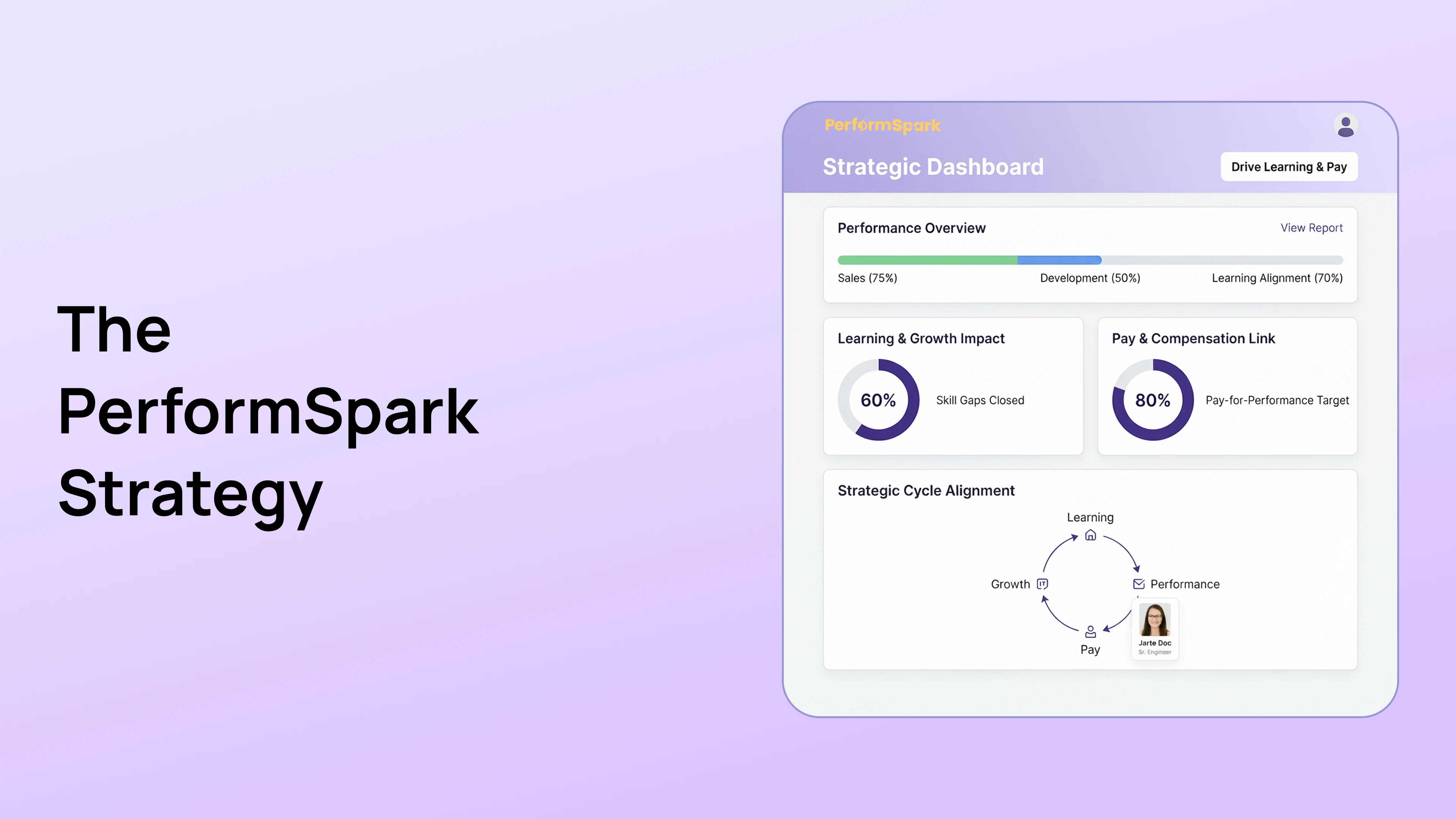
The PerformSpark Strategy: Why Your Performance Data Must Drive Learning and Pay
In the last decade, HR technology has solved the problem of "digitization." We have successfully moved employee files from filing cabinets to the cloud. But in solving the storage problem, we created a new one: The Data Silo Crisis.
Today, your organization likely has a Learning Management System (LMS) that tracks which courses employees have completed. You have a compensation system that knows what they are paid. And you have a Performance system where managers write annual reviews.
The problem? These systems do not talk to each other.
Because they are disconnected, your "people strategy" is essentially guesswork. You are paying people based on budgets, not value. You are assigning training based on trends, not skill gaps.
At PerformSpark, we propose a different architecture. We call it The PerformSpark Strategy. It is built on a single, irrefutable premise: Performance Data must be the "Source of Truth" for every other HR decision.
If you do not have accurate, continuous performance data, your learning strategy is blind, and your compensation strategy is unfair.
The Cost of the "Disconnected" Ecosystem
Before we can implement the solution, we must audit the damage caused by the current state of HR tech. The 'Alignment Gap' we discuss in our comprehensive Performance blueprint is actually a data failure.
1. The Learning Disconnect (The "Spray and Pray" Method)
Without performance data driving it, Learning & Development (L&D) becomes a generic commodity. HR teams buy a massive library of 10,000 courses and hope employees watch them.
- The Reality: High performers are often forced to sit through compliance training they don't need, while struggling employees fail to receive the specific coaching required to achieve their goals.
- The Data Miss: Your performance review notes that John struggles with "Strategic Planning," but your LMS is suggesting he watch a video on "Time Management."
2. The Compensation Black Box (The "Budget" Method)
Compensation is often determined by the loudest voice in the room or a fixed percentage across the board (e.g., "Everyone gets 3%").
- The Reality: You underpay your silent high performers (causing turnover) and overpay average performers (wasting budget).
- The Data Miss: There is no algorithmic link between "Goal Achievement" and "Bonus Payout." It is a manual, biased calculation done in a spreadsheet.
The PerformSpark Strategy: The "Golden Thread" Architecture
The PerformSpark Strategy is not just about buying software; it is about building a data pipeline. We visualize this as a Golden Thread that runs through the entire employee lifecycle.
This thread begins with Performance.
Why Performance is the Anchor
Performance is the only dataset that reflects "Reality."
- LMS data reflects intent (what they learned).
- Payroll data reflects history (what we agreed to pay them).
- Performance data (Goals, Check-ins, Feedback) reflects impact (what they are actually delivering today).
Therefore, the PerformSpark Strategy dictates that Performance Data triggers the rest.
The Logic Flow:
- Input: Manager flags a skill gap in a Check-in (Performance Data).
- Process: The system automatically triggers a specific IDP suggestion (Learning).
- Outcome: Improvement is verified in the next review, unlocking a raise (Compensation).
The Growth Triangle as a Data Model
In our methodology, the Growth Triangle is not just a philosophy; it is a data schema. It represents the synergy between Performance, Learning, and Compensation.
To execute this, we must stop treating "Goals" as text fields. They are data points.
From "Text" to "Telemetry"
In legacy systems, a goal is a sentence: "Increase sales by 10%." In PerformSpark, that goal is a data object containing:
- Metric: 10% Increase.
- Timeline: Q4.
- Difficulty Score: High.
- Strategic Tag: "Revenue Growth."
By structuring goals as data, we enable TrAI (our Ethical AI Engine) to analyze them. TrAI doesn't just read the goal; it monitors the progress of that goal to predict outcomes in Learning and Pay.
The Role of "Continuous Telemetry"
Traditional HR relies on "Snapshots" (The Annual Review). The PerformSpark Strategy relies on "Telemetry" (The Weekly Check-in). Using the ATA Model (Align, Track, Achieve), we generate 52 data points per year per employee, rather than one.
- Week 1-10: Employee is "Green" on all goals.
- Week 11: Employee dips to "Yellow."
- Week 12: Check-in data shows "Blocker: Lack of SQL knowledge."
Because we captured this data point in Week 12 (via the Track phase of ATA), we can intervene immediately. In a legacy system, you wouldn't find out until the Exit Interview.
The Bridge - Turning Performance Gaps into Learning Strategy
In the traditional "siloed" world, a low performance rating is a dead end. A manager marks an employee as "Needs Improvement," HR files the report, and the employee feels demoralized. The data sits in a digital graveyard.
In the PerformSpark Strategy, a low rating is not an endpoint; it is a Signal.
It is the raw data input that triggers the Learning engine. By connecting your Goals directly to your Individual Development Plans (IDPs), we transform "Bad News" (missed goals) into "Good Strategy" (targeted upskilling).
The "Skill vs. Will" Diagnosis
Before assigning training, we must diagnose the root cause. This is where Human-Centric Consulting meets AI. A missed goal usually stems from one of two issues:
- The Skill Gap: The employee wants to do it, but doesn't know how.
- The Will Gap: The employee knows how but lacks the motivation or focus
Legacy systems cannot tell the difference. TrAI, our intelligence engine, can.
How TrAI Decodes the Data
By analyzing data from weekly Check-ins (using the ATA Model), TrAI looks for patterns.
- Scenario A (Skill Issue): The employee has high activity levels and logs many tasks (High Effort), but misses the final metric. TrAI Suggestion: Assign Training. The will is there; the capability is missing.
- Scenario B (Will Issue): The employee has low login rates, misses check-ins, and has declining peer feedback scores. TrAI Suggestion: Manager Intervention. No amount of training courses will fix a motivation problem.
This distinction saves organizations millions by preventing them from wasting L&D budgets on employees who are disengaged rather than unskilled.
The Dynamic IDP: Beyond the Static PDF
Most Individual Development Plans (IDPs) are static documents saved in a folder in January and never opened again. This renders them useless.
For performance data to drive learning, the IDP must be a Living Dashboard. In PerformSpark, the IDP is integrated directly into the employee's daily workflow.
The "Just-in-Time" Learning Trigger
Imagine a Sales Representative misses their quota for "New Enterprise Deals" two months in a row.
- The Old Way: The manager waits for the annual review to suggest negotiation training. The revenue is already lost.
- The PerformSpark Way: The system detects the trend in the Performance Analytics dashboard. It immediately prompts the manager during the next 1:1: "John has missed the 'Enterprise' metric twice. Would you like to add 'Advanced Negotiation Tactics' to his IDP?"
This is Just-in-Time Learning. It fixes the problem while it is happening, not after the damage is done.
Automating the 70/20/10 Rule
A robust learning strategy is not just about watching videos. The PerformSpark Strategy adheres to the 70/20/10 Rule, and our IDP tool structures development accordingly:
- 70% Experiential: The IDP assigns a "Stretch Project" (e.g., "Lead the Q3 Marketing Audit"). This links learning back to Performance Goals.
- 20% Social: The IDP assigns a Mentor (e.g., "Shadow the VP of Sales for 3 calls"). This leverages internal talent.
- 10% Formal: The IDP assigns a Course (e.g., "Complete 'Data Analysis 101'").
By forcing this structure, we ensure that learning results in behavior change, not just "course completion" badges.
Internal Mobility: The Ultimate Retention Engine
As we identified earlier, the #1 driver of voluntary turnover in 2026 will be a lack of perceived career growth. Employees leave because they don't see a future.
Connecting Performance to Learning solves this. It allows you to build Succession Pipelines based on data, not favoritism.
Visualizing the Bench
Using the 9-Box Grid, HR leaders can map the organization's talent health. But unlike static grids, ours is powered by the "Golden Thread" of data.
- The "Ready Now" Candidate: High Performance + High Potential.
- The "Ready Soon" Candidate: High Potential + Moderate Performance (Needs specific IDP support).
When a leadership role opens up, you don't need to guess who is ready. The system shows you exactly who has hit their goals and completed the necessary development milestones to step up. This creates a culture of internal mobility that drastically reduces recruiting costs.
The Anchor - Compensation, Fairness, and ROI
The fastest way to destroy an employee's trust is to tell them they are a "High Performer" all year, only to give them an "Average" raise in December.
This is the Expectation Gap. It happens when Performance Strategy and Compensation Strategy operate in isolation.
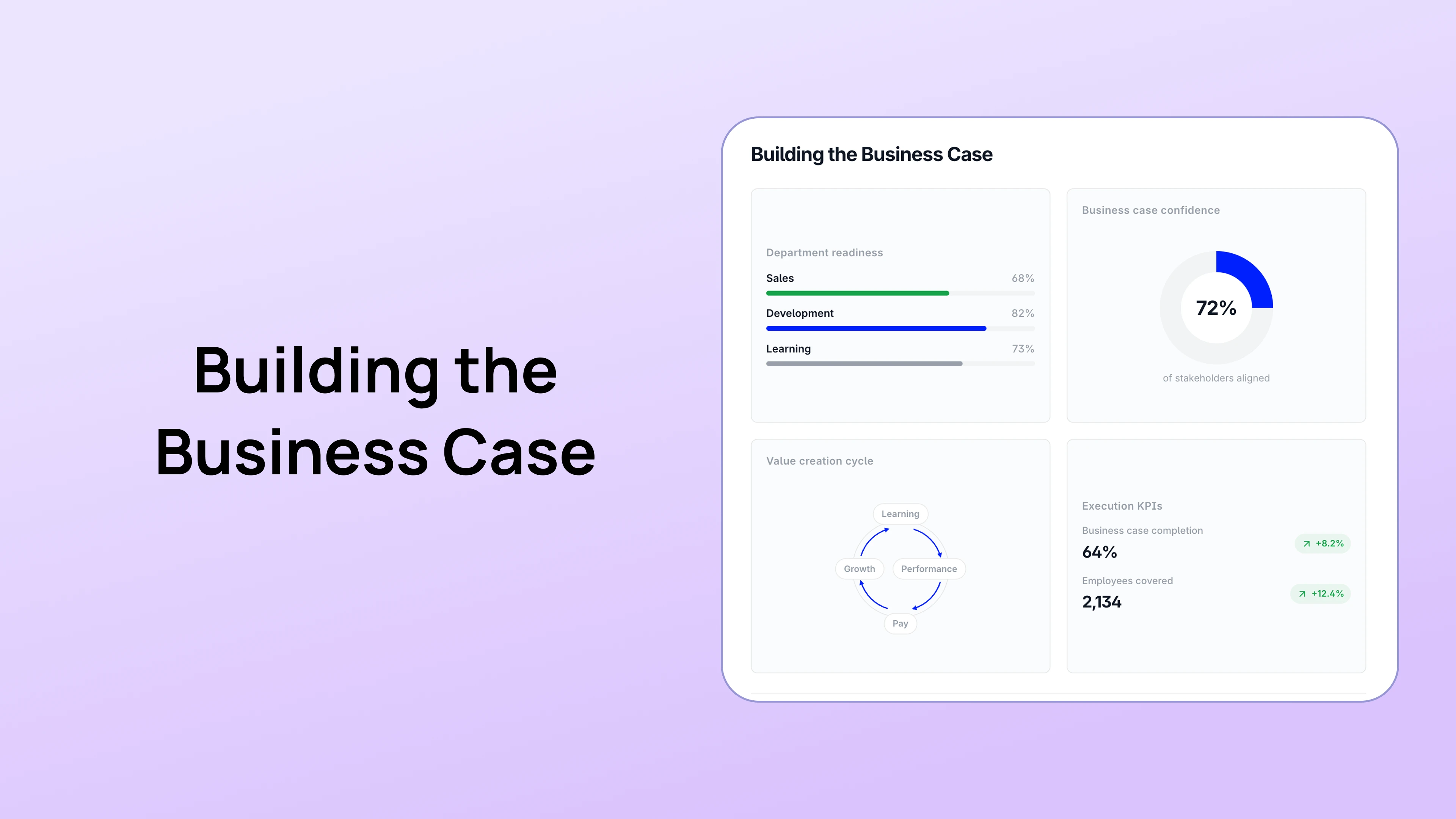
In the PerformSpark Strategy, Compensation is not a separate event; it is the logical mathematical conclusion of the Golden Thread. If Performance (Pillar 1) was the input, and Learning (Pillar 2) was the process, then Compensation (Pillar 3) is the validation.
The "Black Box" Problem of Modern Pay
In most organizations, bonus pools are allocated based on manager advocacy rather than raw data.
- The Problem: The "Loud Manager" gets their team 5% raises, while the "Quiet Manager" gets their team 2%.
- The Consequence: This inconsistency breeds resentment and opens the organization to massive legal liability regarding Pay Equity.
To solve this, we must replace "Manager Discretion" with "Algorithmic Calibration."
Calibration: The Great Equalizer
Calibration is often viewed as a bureaucratic nightmare of endless meetings. But with the right data architecture, it becomes your primary risk-management tool.
Using Performance Calibration Software, you move from subjective feelings to objective facts.
How the "Golden Thread" Powers Calibration
When leaders sit down to calibrate ratings, they are not just looking at a name on a spreadsheet. In PerformSpark, they see the entire data story:
- Goal Achievement: Did they hit their objective targets? (Data from Pillar 1)
- Skill Growth: Did they complete their IDP milestones? (Data from Pillar 2)
- Peer Sentiment: What did their cross-functional teammates say in the 360 review?
This creates a Defensible Rating. When a manager argues, "I feel like Sarah deserves a top rating," the system can counter with data: "Sarah missed 40% of her goals and failed to complete her certification. The data support a 'Meets Expectations' rating."
TrAI as the Guardian of Fairness
This is where TrAI, our Ethical Intelligence Engine, provides its highest value. During calibration sessions, human bias is inevitable. TrAI runs in the background as an impartial auditor.
- Fairness Signals: If TrAI detects that a specific department is consistently rating remote employees lower than in-office employees (Proximity Bias), it flags this anomaly for HR immediately.
- Budget Optimization: TrAI can model scenarios live. "If we increase the bonus pool for Top Talent by 1%, how does that impact our retention risk forecast?" This turns Compensation from a "Cost Center" into a strategic lever for retention.
The Pay-for-Performance Matrix
Ultimately, the goal is to create a transparent link between effort and reward. We recommend using a Merit Matrix that combines Performance Ratings with Position-in-Range.
- Q4: High Potential / Low Pay Range: These employees are your biggest flight risk. The system should aggressively recommend a market adjustment.
- Q1: Low Performance / High Pay Range: These employees are an efficiency drain. The system should recommend a wage freeze and a Performance Improvement Plan (PIP).
By automating these recommendations, you remove the emotion from the decision and focus your budget where it generates the highest ROI: retaining your best people.
Conclusion: The Era of the Connected Ecosystem
We started this guide by identifying the Data Silo Crisis. We explored how disconnected systems lead to strategic drifting, wasted learning budgets, and unfair pay.
The PerformSpark Strategy offers the alternative.
By treating the Growth Triangle (Performance, Learning, Compensation) as a single, unified data pipeline, you achieve three things that every C-Suite leader covets:
- Clarity: Everyone knows what to work on (Goals).
- Capability: Everyone has the skills to do the work (Learning).
- Commitment: Everyone feels fairly rewarded for the work (Compensation).
This is not just "HR Tech." This is business intelligence.
The Next Step
You have seen the strategy. Now, it is time to see the engine that powers it. Don't let another year pass with disconnected data.
See the PerformSpark Platform in Action and start building your Golden Thread today.
The PerformSpark Strategy: Why Your Performance Data Must Drive Learning and Pay
In the last decade, HR technology has solved the problem of "digitization." We have successfully moved employee files from filing cabinets to the cloud. But in solving the storage problem, we created a new one: The Data Silo Crisis.
Today, your organization likely has a Learning Management System (LMS) that tracks which courses employees have completed. You have a compensation system that knows what they are paid. And you have a Performance system where managers write annual reviews.
The problem? These systems do not talk to each other.
Because they are disconnected, your "people strategy" is essentially guesswork. You are paying people based on budgets, not value. You are assigning training based on trends, not skill gaps.
At PerformSpark, we propose a different architecture. We call it The PerformSpark Strategy. It is built on a single, irrefutable premise: Performance Data must be the "Source of Truth" for every other HR decision.
If you do not have accurate, continuous performance data, your learning strategy is blind, and your compensation strategy is unfair.
The Cost of the "Disconnected" Ecosystem
Before we can implement the solution, we must audit the damage caused by the current state of HR tech. The 'Alignment Gap' we discuss in our comprehensive Performance blueprint is actually a data failure.
1. The Learning Disconnect (The "Spray and Pray" Method)
Without performance data driving it, Learning & Development (L&D) becomes a generic commodity. HR teams buy a massive library of 10,000 courses and hope employees watch them.
- The Reality: High performers are often forced to sit through compliance training they don't need, while struggling employees fail to receive the specific coaching required to achieve their goals.
- The Data Miss: Your performance review notes that John struggles with "Strategic Planning," but your LMS is suggesting he watch a video on "Time Management."
2. The Compensation Black Box (The "Budget" Method)
Compensation is often determined by the loudest voice in the room or a fixed percentage across the board (e.g., "Everyone gets 3%").
- The Reality: You underpay your silent high performers (causing turnover) and overpay average performers (wasting budget).
- The Data Miss: There is no algorithmic link between "Goal Achievement" and "Bonus Payout." It is a manual, biased calculation done in a spreadsheet.
The PerformSpark Strategy: The "Golden Thread" Architecture
The PerformSpark Strategy is not just about buying software; it is about building a data pipeline. We visualize this as a Golden Thread that runs through the entire employee lifecycle.
This thread begins with Performance.
Why Performance is the Anchor
Performance is the only dataset that reflects "Reality."
- LMS data reflects intent (what they learned).
- Payroll data reflects history (what we agreed to pay them).
- Performance data (Goals, Check-ins, Feedback) reflects impact (what they are actually delivering today).
Therefore, the PerformSpark Strategy dictates that Performance Data triggers the rest.
The Logic Flow:
- Input: Manager flags a skill gap in a Check-in (Performance Data).
- Process: The system automatically triggers a specific IDP suggestion (Learning).
- Outcome: Improvement is verified in the next review, unlocking a raise (Compensation).
The Growth Triangle as a Data Model
In our methodology, the Growth Triangle is not just a philosophy; it is a data schema. It represents the synergy between Performance, Learning, and Compensation.
To execute this, we must stop treating "Goals" as text fields. They are data points.
From "Text" to "Telemetry"
In legacy systems, a goal is a sentence: "Increase sales by 10%." In PerformSpark, that goal is a data object containing:
- Metric: 10% Increase.
- Timeline: Q4.
- Difficulty Score: High.
- Strategic Tag: "Revenue Growth."
By structuring goals as data, we enable TrAI (our Ethical AI Engine) to analyze them. TrAI doesn't just read the goal; it monitors the progress of that goal to predict outcomes in Learning and Pay.
The Role of "Continuous Telemetry"
Traditional HR relies on "Snapshots" (The Annual Review). The PerformSpark Strategy relies on "Telemetry" (The Weekly Check-in). Using the ATA Model (Align, Track, Achieve), we generate 52 data points per year per employee, rather than one.
- Week 1-10: Employee is "Green" on all goals.
- Week 11: Employee dips to "Yellow."
- Week 12: Check-in data shows "Blocker: Lack of SQL knowledge."
Because we captured this data point in Week 12 (via the Track phase of ATA), we can intervene immediately. In a legacy system, you wouldn't find out until the Exit Interview.
The Bridge - Turning Performance Gaps into Learning Strategy
In the traditional "siloed" world, a low performance rating is a dead end. A manager marks an employee as "Needs Improvement," HR files the report, and the employee feels demoralized. The data sits in a digital graveyard.
In the PerformSpark Strategy, a low rating is not an endpoint; it is a Signal.
It is the raw data input that triggers the Learning engine. By connecting your Goals directly to your Individual Development Plans (IDPs), we transform "Bad News" (missed goals) into "Good Strategy" (targeted upskilling).
The "Skill vs. Will" Diagnosis
Before assigning training, we must diagnose the root cause. This is where Human-Centric Consulting meets AI. A missed goal usually stems from one of two issues:
- The Skill Gap: The employee wants to do it, but doesn't know how.
- The Will Gap: The employee knows how but lacks the motivation or focus
Legacy systems cannot tell the difference. TrAI, our intelligence engine, can.
How TrAI Decodes the Data
By analyzing data from weekly Check-ins (using the ATA Model), TrAI looks for patterns.
- Scenario A (Skill Issue): The employee has high activity levels and logs many tasks (High Effort), but misses the final metric. TrAI Suggestion: Assign Training. The will is there; the capability is missing.
- Scenario B (Will Issue): The employee has low login rates, misses check-ins, and has declining peer feedback scores. TrAI Suggestion: Manager Intervention. No amount of training courses will fix a motivation problem.
This distinction saves organizations millions by preventing them from wasting L&D budgets on employees who are disengaged rather than unskilled.
The Dynamic IDP: Beyond the Static PDF
Most Individual Development Plans (IDPs) are static documents saved in a folder in January and never opened again. This renders them useless.
For performance data to drive learning, the IDP must be a Living Dashboard. In PerformSpark, the IDP is integrated directly into the employee's daily workflow.
The "Just-in-Time" Learning Trigger
Imagine a Sales Representative misses their quota for "New Enterprise Deals" two months in a row.
- The Old Way: The manager waits for the annual review to suggest negotiation training. The revenue is already lost.
- The PerformSpark Way: The system detects the trend in the Performance Analytics dashboard. It immediately prompts the manager during the next 1:1: "John has missed the 'Enterprise' metric twice. Would you like to add 'Advanced Negotiation Tactics' to his IDP?"
This is Just-in-Time Learning. It fixes the problem while it is happening, not after the damage is done.
Automating the 70/20/10 Rule
A robust learning strategy is not just about watching videos. The PerformSpark Strategy adheres to the 70/20/10 Rule, and our IDP tool structures development accordingly:
- 70% Experiential: The IDP assigns a "Stretch Project" (e.g., "Lead the Q3 Marketing Audit"). This links learning back to Performance Goals.
- 20% Social: The IDP assigns a Mentor (e.g., "Shadow the VP of Sales for 3 calls"). This leverages internal talent.
- 10% Formal: The IDP assigns a Course (e.g., "Complete 'Data Analysis 101'").
By forcing this structure, we ensure that learning results in behavior change, not just "course completion" badges.
Internal Mobility: The Ultimate Retention Engine
As we identified earlier, the #1 driver of voluntary turnover in 2026 will be a lack of perceived career growth. Employees leave because they don't see a future.
Connecting Performance to Learning solves this. It allows you to build Succession Pipelines based on data, not favoritism.
Visualizing the Bench
Using the 9-Box Grid, HR leaders can map the organization's talent health. But unlike static grids, ours is powered by the "Golden Thread" of data.
- The "Ready Now" Candidate: High Performance + High Potential.
- The "Ready Soon" Candidate: High Potential + Moderate Performance (Needs specific IDP support).
When a leadership role opens up, you don't need to guess who is ready. The system shows you exactly who has hit their goals and completed the necessary development milestones to step up. This creates a culture of internal mobility that drastically reduces recruiting costs.
The Anchor - Compensation, Fairness, and ROI
The fastest way to destroy an employee's trust is to tell them they are a "High Performer" all year, only to give them an "Average" raise in December.
This is the Expectation Gap. It happens when Performance Strategy and Compensation Strategy operate in isolation.
In the PerformSpark Strategy, Compensation is not a separate event; it is the logical mathematical conclusion of the Golden Thread. If Performance (Pillar 1) was the input, and Learning (Pillar 2) was the process, then Compensation (Pillar 3) is the validation.
The "Black Box" Problem of Modern Pay
In most organizations, bonus pools are allocated based on manager advocacy rather than raw data.
- The Problem: The "Loud Manager" gets their team 5% raises, while the "Quiet Manager" gets their team 2%.
- The Consequence: This inconsistency breeds resentment and opens the organization to massive legal liability regarding Pay Equity.
To solve this, we must replace "Manager Discretion" with "Algorithmic Calibration."
Calibration: The Great Equalizer
Calibration is often viewed as a bureaucratic nightmare of endless meetings. But with the right data architecture, it becomes your primary risk-management tool.
Using Performance Calibration Software, you move from subjective feelings to objective facts.
How the "Golden Thread" Powers Calibration
When leaders sit down to calibrate ratings, they are not just looking at a name on a spreadsheet. In PerformSpark, they see the entire data story:
- Goal Achievement: Did they hit their objective targets? (Data from Pillar 1)
- Skill Growth: Did they complete their IDP milestones? (Data from Pillar 2)
- Peer Sentiment: What did their cross-functional teammates say in the 360 review?
This creates a Defensible Rating. When a manager argues, "I feel like Sarah deserves a top rating," the system can counter with data: "Sarah missed 40% of her goals and failed to complete her certification. The data support a 'Meets Expectations' rating."
TrAI as the Guardian of Fairness
This is where TrAI, our Ethical Intelligence Engine, provides its highest value. During calibration sessions, human bias is inevitable. TrAI runs in the background as an impartial auditor.
- Fairness Signals: If TrAI detects that a specific department is consistently rating remote employees lower than in-office employees (Proximity Bias), it flags this anomaly for HR immediately.
- Budget Optimization: TrAI can model scenarios live. "If we increase the bonus pool for Top Talent by 1%, how does that impact our retention risk forecast?" This turns Compensation from a "Cost Center" into a strategic lever for retention.
The Pay-for-Performance Matrix
Ultimately, the goal is to create a transparent link between effort and reward. We recommend using a Merit Matrix that combines Performance Ratings with Position-in-Range.
- Q4: High Potential / Low Pay Range: These employees are your biggest flight risk. The system should aggressively recommend a market adjustment.
- Q1: Low Performance / High Pay Range: These employees are an efficiency drain. The system should recommend a wage freeze and a Performance Improvement Plan (PIP).
By automating these recommendations, you remove the emotion from the decision and focus your budget where it generates the highest ROI: retaining your best people.
Conclusion: The Era of the Connected Ecosystem
We started this guide by identifying the Data Silo Crisis. We explored how disconnected systems lead to strategic drifting, wasted learning budgets, and unfair pay.
The PerformSpark Strategy offers the alternative.
By treating the Growth Triangle (Performance, Learning, Compensation) as a single, unified data pipeline, you achieve three things that every C-Suite leader covets:
- Clarity: Everyone knows what to work on (Goals).
- Capability: Everyone has the skills to do the work (Learning).
- Commitment: Everyone feels fairly rewarded for the work (Compensation).
This is not just "HR Tech." This is business intelligence.
The Next Step
You have seen the strategy. Now, it is time to see the engine that powers it. Don't let another year pass with disconnected data.
See the PerformSpark Platform in Action and start building your Golden Thread today.




.svg)

.svg)
.svg)