Why Reviews, Learning, and Compensation Must Be Interconnected

Why HR Tech Is Leaving Too Many Behind and How to Fix It

No IT Required

Manager-Friendly

Future-Proof Growth

The Growth Flywheel: A Framework for Rapid People Development

In the most effective organizations we have studied, performance reviews are not just isolated rituals or “CYA” processes. They serve as key operational triggers for something bigger: a continuous growth cycle that connects employee feedback, development opportunities, and compensation, not only within a single system, but as part of a unified workflow

Werefer to this as The Growth Flywheel, and it looks like this:
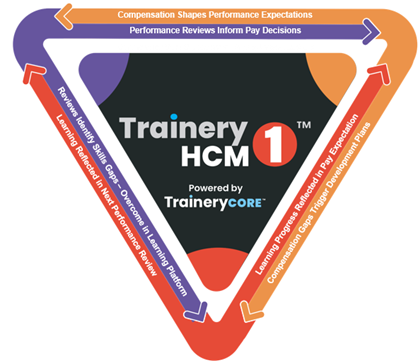


·       Reviews  highlight strengths, gaps, and ambitions.

·       Learning  targets those gaps with specific development – not just content.

·       Compensation  supports growth, turning results into retention and motivation.

·       Progress  now sets up a stronger, more informed cycle ahead.

In this model, each piece not only exists, but also supports the others. It is not just HR managing a process. It is HR running a system for performance acceleration.

Most companies have these three pillars, but few connect them effectively. When they do not, the flywheel breaks:

• Reviews happen but do not lead to development.
• Learning occurs but does not align with business-critical skills.
• Raises are handed out but feel disconnected from actual performance.

This disconnection is not just inefficient. It is demoralizing. Employees feel it. Managers feel it. HR observes the downstream effects in engagement, turnover, and stalled talent development.

The future of strategic HR is not just adopting tools. It is designing systems where each workflow drives the next.

Why HR Tech Is Leaving Too Many Behind and How to Fix It

In today’s landscape of digital workflows, HR technology is experiencing a familiar phase of SaaS evolution and specialization. While enterprise platforms like Workday and SAP revolutionized HR and payroll for large-scale global operations, their growth has come at a cost. As these platforms expanded in complexity and focused on serving the needs of massive multinational organizations, smaller and mid-sized businesses were increasingly overlooked.

The result? A fragmented ecosystem of disconnected platforms, where the very companies that require agile, integrated solutions are forced to navigate siloed tools that fail to keep pace with their evolving needs. This created a gap in the market.

That gap was quickly filled by a new generation of “all-in-one” HR suites offering affordability and simplicity. For many SMBs, these solutions address basic needs across core HR functions. However, as companies expanded, particularly those emphasizing culture, learning, and performance, they found these tools to be too rigid.

What followed was fragmentation. Influenced by frameworks like Drucker’s MBO, Grove’s management systems, and Google’s OKRs, companies started looking for tools that support more precise goal setting and feedback methods. An early sign of this trend was the rise of OKR and review-focused vendors, such as Lattice, which quickly gained popularity among tech-savvy employers who found traditional HR suites too disconnected.

This pattern was consistent across the entire HR stack, including applicant tracking systems, learning platforms, and benefits management. In response, vendors took the opportunity to address more specific needs. This left many organizations struggling with tool sprawl, either by integrating all-in-one suites with add-on point solutions or by managing a confusing array of isolated platforms.

The consequence? HR leaders and managers are left to navigate a complex web of disconnected systems, misaligned expectations, and inconsistent workflows. The very tools meant to drive performance, learning, and growth are now a barrier to all three.

Related Blogs

The Dynamic and Collaborative Future of Talent Development

View Blogs

How to Measure the Effectiveness of Executive Coaching Programs

View Blogs

HCM and a People-First Employee Development Strategy

View Blogs

What’s Next in Performance Management: Trends to Watch

View Blogs

How to Help Your Employees Embrace New Technology

View Blogs

Why Reviews, Learning, and Compensation Must Be Interconnected

View Blogs

Make Performance Reviews Your Growth Lever

No credit card required • Free setup & training included • Cancel anytime

CTA ShapeCTA Shape